
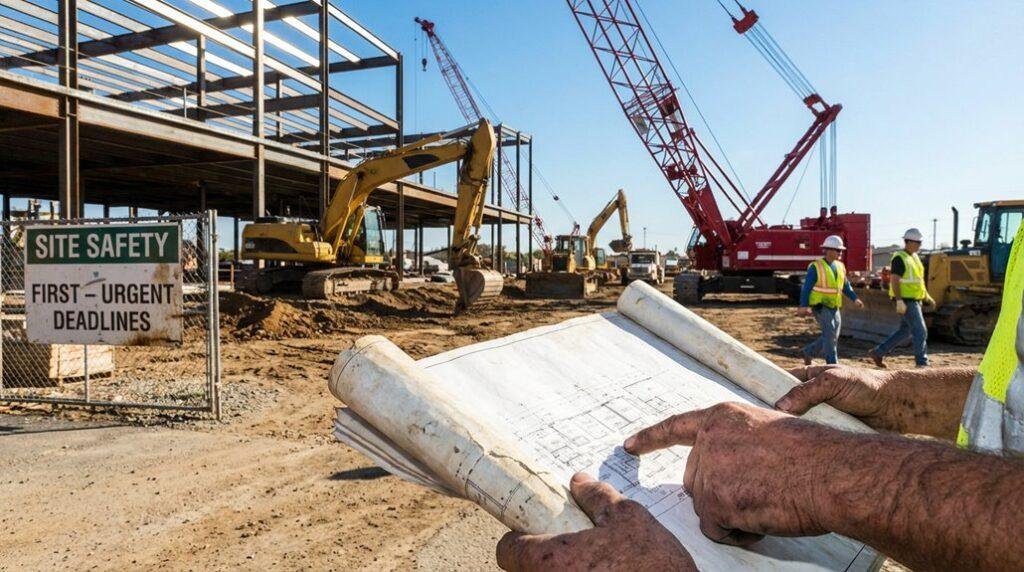
If you have low credit and need swift financing for a large construction project, putting up more equity can enhance your chances by reducing lender risk.
Meanwhile, improving your credit score by paying bills in a timely manner and lowering debt aids too.
You may be interested


Private lenders often provide quicker approvals with flexible terms for borrowers like us who don’t meet strict bank requirements.
Understanding exactly what lenders desire in today’s market can also accelerate funding.
We’ll cover all these strategies shortly.
Key Takeaways
- Private lenders offer faster approvals and flexible terms for large construction projects despite low credit scores.
- Improving credit through timely payments and debt reduction before application enhances loan approval chances.
- Detailed documentation and proof of steady income strengthen applications in tight credit markets.
- Construction-through-permanent loans can lower financing risk and streamline fund disbursement.
- Negotiating competitive rates and structuring deals smartly reduces loan costs and approval delays.
Why Low Credit Scores Delay Construction Loan Approval
Because construction loans carry more risk than traditional mortgages, lenders require higher credit scores to minimize potential losses. Typically, they look for scores above 680, with some types like FHA allowing slightly lower thresholds around 620. These loans often include contingency reserves to cover unforeseen expenses during the building process. Lenders can consider performance metrics to better evaluate borrowers with low credit scores, thus identifying potential success despite the additional risk.
Scores below these minimums raise red flags due to the absence of immediate collateral and increased default risk. As a result, lenders scrutinize application details more intensively, including budgets and plans, and often require additional documentation. A low credit score also pushes the debt-to-income ratio higher, reducing payment capacity and leading to further delays or outright denials.
This heightened caution extends approval timelines and can force borrowers to improve their credit before moving forward. Understanding these barriers helps us steer financing more quickly and more strategically in innovative construction projects.
How Putting Up More Equity Speeds Construction Financing
While construction lending tends toward being cautious, loans for acquiring land with plans to construct require a mandatory 35% equity interest in the entire project to comply with regulatory standards.
How to Improve Your Credit Before Applying for a Construction Loan
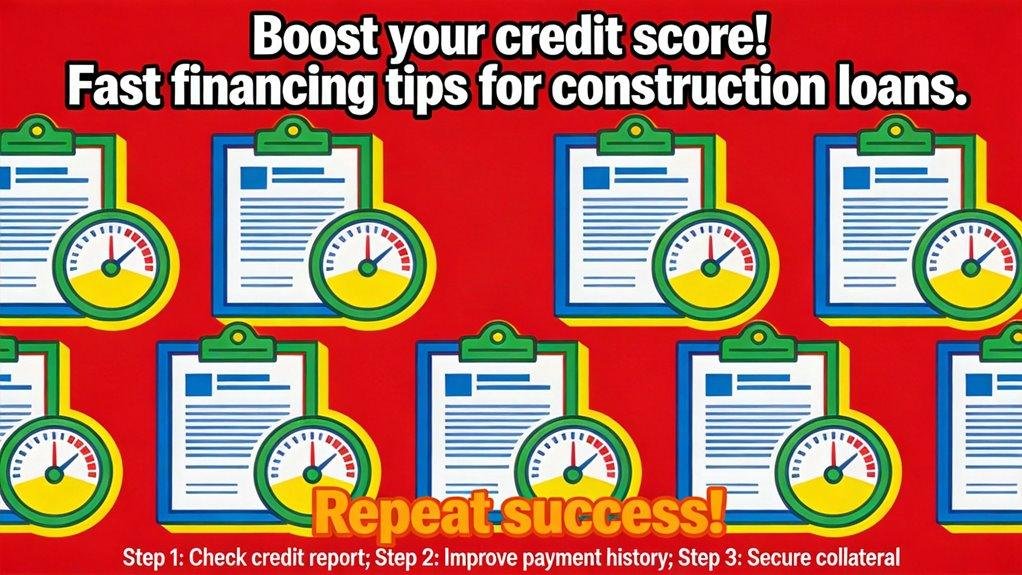
Before applying for a construction loan, we need to focus on optimizing our credit score and maintaining a strong payment history. Checking for errors in our credit reports and making timely payments can have a big impact on our credit standing. For example, aiming for a credit score of 700 or higher can significantly improve your chances of loan approval by demonstrating financial discipline. Additionally, lenders will assess your cash flow when considering your application, as it plays a crucial role in determining your eligibility for credit.
Credit Score Optimization
How can we enhance our credit score to increase our chances for securing a construction loan? Optimizing our credit before applying is crucial, especially since lenders typically require scores between 620 and 720. By focusing on key actions, we can elevate our score and qualify for better loan terms.
Consider these strategies:
- Pay bills on time and reduce outstanding debt to lower our debt-to-income ratio below 45%. It is also important to have a detailed construction plan ready, as lenders require this for loan approval.
- Dispute any errors on our credit reports to avoid unnecessary score deductions.
- Avoid large purchases months before applying to keep our credit utilization low and stable.
- Shop around with lenders and credit unions after improving our score to find competitive rates.
These steps prepare us to approach financing with confidence and secure quick funding for our construction projects.
Payment History Insights
Since our payment history plays a critical role in securing a construction loan, we need to confirm that this accurately reflects our reliability. We should verify there are no late payments, collections, or foreclosures within recent months.
Additionally, any mortgage payments must stay current with no more than a 45-day gap. Lenders look for zero delinquencies during the construction-to-permanent phase, so we must maintain consistent timely payments. If we own non-primary residences, having canceled checks or equivalent proof from the last six months helps.
Moreover, updating credit documents within four months before the loan closing enhances our chances. By proactively managing our payment history and addressing any past issues, we demonstrate financial responsibility and reduce perceived risk. This proactive approach opens doors to swifter, more flexible construction financing.
What Private Credit Options Mean for Faster Construction Financing
When we investigate private credit options for construction financing, we find they offer significant quickness advantages over traditional banks. These lenders approve and close loans much more rapidly by bypassing rigid bank processes and cutting down understating delays.
This brisk pace suits large projects needing swift capital allocation. Here’s why private credit fuels quicker financing:
- Simplified underwriting accelerates funding for urgent timelines.
- Flexible loan structures adjust to unique project needs.
- Customized draw schedules align payments with milestones.
- Looser regulations eliminate prolonged approval waits.
Moreover, access to private credit options can provide a crucial lifeline when traditional avenues fall short, as they help ensure project continuity and success.
What Lenders Really Want in Tighter Construction Loan Markets
Although construction loan markets have tightened, lenders remain focused regarding clear criteria that reflect borrower reliability and project viability. They want to see strong credit scores—typically above 680—with the best rates reserved for scores over 700.
A solid debt-to-income ratio, usually below 43%, is paramount, alongside proof of steady income and a 12-month timely payment history. Down payments play a key role, often requiring 20% or more, though land equity can sometimes lower that.
For projects to progress, lenders demand detailed documentation, including builder contracts, cost estimates, and insurance policies. They also verify builder credentials, licenses, and financial stability to reduce risk. Additionally, understanding alternative lending options can provide valuable avenues when traditional banks decline financing.
Smart Ways to Structure Deals and Cut Construction Loan Costs
While managing construction loans can feel complex, structuring deals strategically offers clear pathways for reducing costs and improving financing terms. We can enhance financing by choosing the right loan structure and negotiating early with lenders.
Here are smart ways to cut construction loan costs:
- Use construction-through-permanent loan models to lower risk and align financing with project timelines.
- Negotiate competitive interest rates and lock them early to protect against market changes.
- Establish a firm budget upfront and maintain cost control throughout the project.
- Incorporate design and material enhancements, such as prefabricated components and efficient layouts.
Frequently Asked Questions
Can Low Credit Borrowers Use Joint Ventures to Secure Construction Financing?
Yes, low credit borrowers can use joint ventures for securing construction financing. By partnering with experienced members or licensed general contractors, we can strengthen our loan applications and meet lender requirements. Joint venture capital structures often accept a wide range of credit scores and offer flexible terms. This approach helps us bridge experience or credit gaps, improving our chances of accessing funds for construction projects with confidence and strategic support.
How Do Construction Loan Approval Times Compare Across Different Lenders?
We see construction loan approvals vary widely. Initial Merchants Bank often takes 30 to 45 days, aided by local underwriting. GO Mortgage can close in 45 to 60 days, sometimes longer for complex cases. The Federal Savings Bank usually ranges from 30 to 60 days depending on appraisals and underwriting. ProFed CU and Gate City Bank emphasize quick checks but don’t specify exact times. Overall, expect about one to two months for approval.
What Documentation Is Essential for Fast Approval of Large Construction Loans?
We need key documents for quick loan approval: entity formation papers like Documents of Organization, tax returns from the last two years, and recent financial statements. Detailed project plans, including budgets and contractor agreements, show readiness. Legal papers like borrowing resolutions, permits, and title reports guarantee compliance. Having these organized lets us move swiftly and confidently. This removes delays and builds lender trust, so our funding can start when timelines demand it.
Are There Geographic Limitations Affecting Construction Loan Availability for Low Credit Borrowers?
Yes, geographic limits do affect some construction loans, especially USDA loans, which require properties in rural or suburban zones. Nevertheless, FHA and VA construction loans don’t have strict location restrictions and are available nationwide, making them more flexible for low credit borrowers. Conventional loans also usually lack geographic barriers. So, while some programs set location rules, plenty of options exist for innovative borrowers looking beyond these limits.
How Do Interest Rates on Private Credit Loans Vary by Project Size?
Interest rates for private credit loans usually increase with project size. Larger projects often get more conservative terms with lower loan-to-cost ratios, which can help reduce rates. Nevertheless, spreads tend to range between 450 and 600 basis points over SOFR depending upon the developer’s track record and risk. Smaller deals with higher risk profiles face higher rates and lower advance rates, while low-risk, larger projects benefit from tighter spreads and better financing terms overall.
