

If your SBA loan application was denied, don’t worry—there are smart funding options customized for subcontractors like you.
Traditional loans often focus too much on credit scores and collateral, ignoring your contracts and future revenue.
You may be interested


Instead, we can help you investigate performance-based financing, private bridge loans, and revenue-based options that move swiftly and align with project timelines.
These solutions preserve your control while keeping cash flowing.
Keep going, and you’ll find out how to pivot rapidly and grow strategically outside SBA limits.
Key Takeaways
- Traditional SBA loans often reject subcontractors due to strict credit and collateral requirements, limiting access to essential growth capital.
- Alternative funding options include revenue-based financing and asset-based lending tailored to subcontractors’ cash flow and unpaid invoices.
- Performance-based underwriting uses digital contracts and project milestones as collateral, enabling faster and more flexible funding decisions.
- Private bridge loans offer rapid capital aligned with project timelines, bypassing the lengthy SBA application process.
- Non-dilutive private credit solutions preserve subcontractors’ ownership while providing essential funds without requiring personal collateral.
The Reality Of The Modern SBA Rejection
We’re seeing that traditional government loans often fall short for subcontractors aiming to grow quickly. The old model relies heavily upon physical collateral, creating a gap that ignores the real value of contracts and future revenue. Lending criteria such as the Debt Service Coverage Ratio have become increasingly strict, making it harder for many subcontractors to qualify despite strong business potential. Understanding the “collateral gap” helps us recognize why SBA loans frequently miss the mark for modern subcontractors. In this context, utilizing monthly receipts as growth capital can provide an alternative solution for subcontractors seeking funding.
Why Traditional Government Loans Are Failing High-Growth Subcontractors
Although government-backed loans have long supported small businesses, they often fall short for high-growth subcontractors nowadays. Strict credit thresholds, heavy collateral demands, and sluggish processing create obstacles that stifle swift growth.
Many subcontractors face rejection despite strong contracts and cash flow, as lenders rely on outdated models that don’t value project pipelines. In this environment, alternative contractor financing offers a smarter path. Notably, 55% of approved applicants in recent studies have personal credit scores of 700 or higher, highlighting the stringent credit expectations of traditional lenders.
Private lenders use real-time contract verification and understand construction payment cycles, providing quicker, more flexible capital. Waiting for traditional SBA approval means losing time, which inflates costs and drains resources.
Pivoting to innovative financing lets subcontractors mobilize rapidly, maintaining momentum and profit margins. Embracing these modern options is crucial for subcontractors who want to lead in 2026’s dynamic market.
Understanding The “Collateral Gap” In 20th-Century Banking
When we examine the root cause for many SBA loan rejections today, the “collateral gap” clearly stands out. Traditional banks rely heavily on immobile, physical collateral, which often doesn’t reflect the subcontractor growth capital tied to contracts and future revenue.
This outdated model restricts loan access despite strong project pipelines. Here’s a snapshot of the 20th-century collateral challenge:
| Collateral Type | Bank Preference |
|---|---|
| Real Estate | High |
| Future Revenue | Low |
| Liquid Assets | Moderate |
| Contract Value | Ignored |
Modern lenders adopt contract-centric underwriting, valuing future revenue and project performance. By pivoting away from old collateral norms, subcontractors reveal quicker, smarter funding aligned with today’s innovation-driven market.
Agile Alternatives To The SBA 7(a) Process
Let’s investigate agile funding options that proceed more swiftly than the SBA 7(a) process. Revenue-based financing taps into your pipeline to deliver mobilization capital promptly. Meanwhile, asset-based lending and private bridge loans turn your unpaid pay apps into immediate cash so you can start projects without delay. These alternatives help subcontractors avoid the lengthy SBA approval and rely on more flexible financing solutions to maintain steady cash flow. Additionally, trade partners can access funding solutions to ensure they have the necessary resources to launch their projects effectively.
Revenue-Based Financing: Mobilization Capital Based On Your Pipeline
Since the traditional SBA 7(a) loan process often delays subcontractors, revenue-based financing offers a swifter, more adaptable alternative customized for our industry’s cash flow realities. This approach ties repayments to a percentage of your actual business revenue, allowing payments to adjust with project progress. Unlike SBA loans, it requires no collateral and approval hinges on your revenue patterns rather than rigid credit standards.
Revenue-based financing moves quickly, often approving and funding within 72 hours, so you can mobilize capital depending on your existing project pipeline. It protects margins by keeping payments proportional to income, reduces risk during slow periods, and aligns smoothly with pay-when-paid cycles. These features specifically address common challenges like delayed client payments that create cash flow gaps.
For subcontractors wanting agility and growth without SBA red tape, this model changes your future contract value into immediate working capital.
Asset-Based Lending: Turning Unpaid Pay Apps Into Immediate Liquidity
Asset-based lending offers subcontractors a powerful way to release cash tied up in unpaid pay applications by advancing funds against invoiced amounts. This approach simplifies qualification compared with SBA loans and accelerates cash flow without requiring owner home collateral. Asset based lending for trades turns your accounts receivable into immediate liquidity, letting you mobilize quickly and keep projects moving. Typically reserved for middle-market companies, this financing is increasingly accessible to larger small businesses that meet revenue requirements and have qualifying assets.
Here’s how it benefits you:
- Access revolving lines or term loans secured by receivables and equipment
- Maintain control over your assets while funding day-to-day operations
- Qualify swiftly with fewer covenants and flexible structures
Private Bridge Loans For Rapid Project Starts
When unpaid pay applications can release cash tied up in receivables, private bridge loans offer another layer of financial agility for subcontractors ready to jumpstart projects. These loans are particularly valuable as they align disbursements with construction progress through draw schedules, ensuring funds are available exactly when needed.
In 2026, private credit for contractors gives you rapid, flexible funding that bypasses the slow SBA 7(a) process. These short-term loans close in as little as 10, 21 intervals, offering milestone-based draws that align with your project timeline.
They don’t demand strict income verification but focus on your contract value and company assets instead. This approach lets us mobilize crews and secure materials quickly, preventing costly delays.
While rates are higher than SBA loans, the speed and agility more than offset that. For subcontractors denied SBA loans, private bridge loans are a smart, modern solution to keep your projects, and profits, moving.
The 48-Hour Pivot: Securing Capital After A Rejection
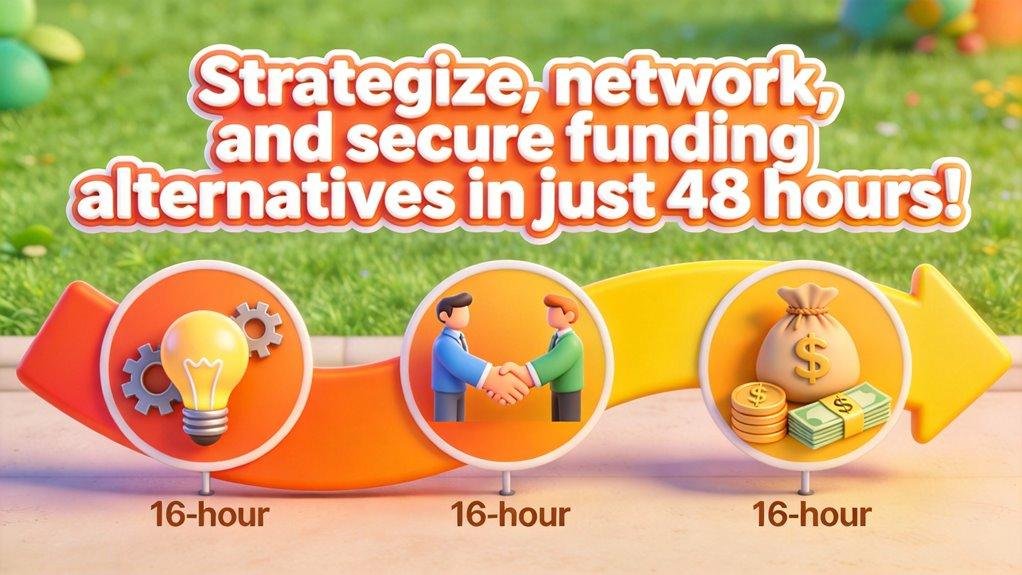
When your SBA loan is rejected, we need to act quickly by connecting your digital contracts to access performance-based underwriting. This approach lets trade-literate lenders accurately assess your cash flow, including retainage and pay-when-paid cycles. By leveraging these perspectives, we can secure capital customized to your project’s real-time progress within 48 hours, keeping your business moving forward. It is important to evaluate alternative funding options promptly to ensure you choose the best path for your business needs. Many construction professionals find that performance over credit scores can provide them with better financing opportunities.
Connecting Your Digital Contracts For Performance-Based Underwriting
Although receiving an SBA rejection can feel like a setback, it presents an opportunity for connecting your digital contracts regarding performance-based underwriting and securing capital rapidly.
Digital contracts tied to measurable outcomes activate access to private lenders who value real-time project data. By integrating your contract management and payment platforms, you facilitate performance based business funding that moves swiftly and intelligently.
- Streamline data sharing with lenders to verify milestones and certified payroll instantly.
- Use customizable dashboards to highlight key performance indicators and reduce disputes.
- Link digital payment systems to guarantee compliance and smooth fund flow tied to results.
Harnessing this digital integration accelerates funding and positions your business for a Quick Yes after an SBA denial.
How To Leverage “Trade-Literate” Lenders Who Understand Retainage
Securing funding swiftly after an SBA rejection requires partnering with lenders who truly understand the construction industry’s cash flow realities.
Post-SBA rejection funding is about finding trade-literate lenders who comprehend retainage and pay-when-paid cycles. These lenders see your contract as collateral, advancing mobilization capital before the initial pay application.
Their understanding accelerates funding approvals, helping you maintain momentum while material and labor costs rise.
| Feature | Benefit |
|---|---|
| Retainage Awareness | Funds released despite delays |
| Contract-Centric Review | Collateral based on pipeline |
| Rapid Decision Timeline | Capital in under 48 hours |
| Mobilization Advances | Immediate material purchase |
| Industry-Specific Terms | Aligned with pay-when-paid |
Leveraging these lenders means you pivot swiftly, stay competitive, and bridge cash flow gaps after an SBA “no.”
Strategic Growth Without SBA Constraints
We can protect our family assets by avoiding personal collateral requirements that often come with SBA loans. Instead, we hasten project velocity by tapping into private credit options designed for subcontractors like us. This approach keeps our growth swift and steady without giving up ownership or risking personal property. Additionally, pursuing non-dilutive funding options can provide the necessary capital without the burden of repayment tied to equity stakes.
Bypassing Personal Collateral Requirements To Protect Your Family Assets
When personal collateral isn’t an option, we need to investigate funding solutions that protect your family assets while fueling business growth. Subcontractor mobilization loans offer a powerful alternative by leveraging your contracts, not your home. Here’s how we can bypass personal collateral requirements effectively:
- Accounts Receivable Financing uses unpaid invoices to secure funds without selling them, maintaining control and reducing risk.
- Equipment Leasing enables crucial purchases with only the leased assets as collateral, preserving your personal wealth.
- Alternative Lending Options provide speedy approval without personal guarantees, ideal when timing and flexibility are paramount.
Accelerating Project Velocity With Non-Dilutive Private Credit
Cutting through the delays and red tape that come with traditional SBA loans, non-dilutive private credit offers subcontractors a quicker way to fuel project momentum.
Unlike SBA loans, these non-sba business loans preserve your equity, bypass personal collateral, and provide flexible repayment tied to revenue flow. This means swifter access to funds without sacrificing ownership or being held back by rigid covenants.
By embracing this innovative approach, we accelerate project growth, securing materials and paying crews while maneuvering pay-when-paid cycles.
| Benefit | Description |
|---|---|
| Preserves Equity Control | Maintain full ownership without dilution |
| Flexible Repayment | Revenue-based, cash-flow aligned payments |
| Accelerates Project Growth | Supports mobilization and quick scaling |
| Bypasses SBA Constraints | No personal collateral or restrictive terms |
| Builds Credibility Access | Demonstrates creditworthiness and reliability |
Frequently Asked Questions
How Does Private Credit Verify Subcontractor Contracts in Real-Time?
We connect directly with your project management and billing portals, verifying certified payroll and milestone completions promptly. Such real-time data lets us assess your contract’s current value, enabling quicker, smarter funding decisions without traditional collateral hassles.
What Are Common Private Lender Interest Rates Compared to SBA Loans?
We see private lender rates typically range from 10% to 28%, higher than SBA’s 9.75% max for large loans—but they deliver swift, flexible capital essential for us to seize projects without delay or collateral hassle.
Can Subcontractors Use Multiple Private Loans Simultaneously?
Yes, we can utilize multiple private loans concurrently by structuring them with clear collateral separation and intercreditor agreements. Such an approach diversifies funding, manages risk, and fuels growth without caps limiting our project’s financial momentum.
How Do Retainage Provisions Impact Private Credit Funding Terms?
Retainage provisions tighten our liquidity, so private lenders factor that delay into funding terms. We negotiate flexible advances and customized repayment schedules that respect retainage cycles, ensuring capital flows swiftly enough to keep projects—and profits—moving forward.
What Technology Platforms Enable Contract-Centric Underwriting in 2026?
We rely upon AI-powered underwriting, smart-contract verification platforms, and broker-carrier connectivity tools that integrate real-time project data, payroll, and milestone tracking—enabling rapid, contract-centric funding decisions that fuel agile, performance-driven subcontractor growth in 2026.
