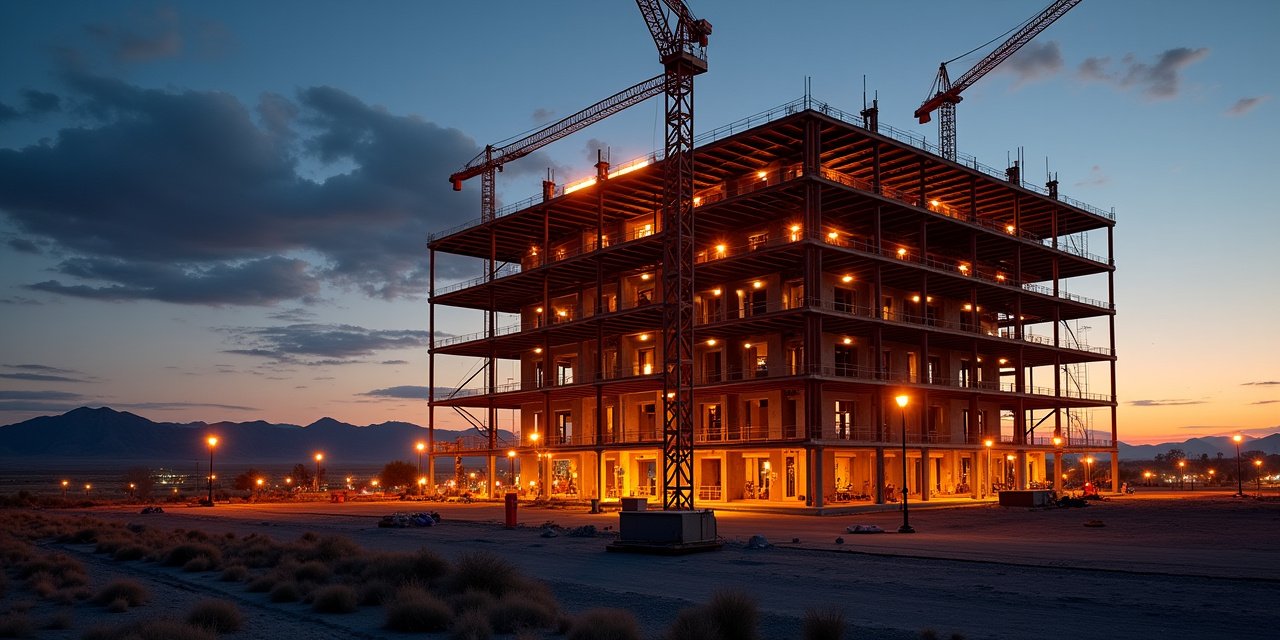
Revenue-based financing replaces collateral with cash flow rights — the lender takes a percentage of future revenue instead of a lien on assets you need to run your business.
What Banks Actually Mean by "Collateral"
When a bank asks for collateral, it's asking for a fallback: if you don't repay, we take this. The collateral is their recovery mechanism, not their approval mechanism.
For a contractor operating in Twin Falls without owned real estate, without a fleet worth six figures, and without receivables large enough to factor — the bank has no fallback. The application ends there.
Revenue-based financing doesn't need a fallback. It takes a claim on future revenue directly.
If you generate revenue — and your bank statements prove you do — that revenue claim is the security interest. No property required.
The practical implication: a contractor who rents their shop, leases their equipment, and operates with $30,000 in average monthly deposits can access capital that a bank would deny to them simply for lacking real property.
Government contracts are a special case of this problem. See government contract funding after a bank rejection for why banks discount a signed federal award instead of treating it as security.
Collateral-Free vs. Collateral-Backed Financing: The Structural Differences
Understanding what you're signing is as important as the capital itself. Here's a clear comparison of the security structures.
| Feature | Bank Loan (Collateral) | RBF (No Collateral) |
|---|---|---|
| Security interest | Lien on property / equipment | Future revenue claim |
| Risk to physical assets | Yes — assets can be seized | No lien on hard assets |
| Approval driver | Asset value + credit | Revenue consistency |
| Repayment structure | Fixed monthly payment | % of daily/weekly revenue |
| Default consequence | Asset seizure | Revenue assignment |
How to Position a No-Collateral Application Successfully
Without collateral to offer, your application must be exceptionally strong on the revenue and contract documentation side. Here's the playbook.
- Present 6+ months of bank statements with consistent, growing deposits — this is your collateral substitute and must be unambiguous.
- Provide every signed contract currently in your pipeline — active work in progress is the closest proxy to a pledged asset in RBF underwriting.
- Demonstrate low outstanding debt — if you have multiple advances already running, underwriters will see your revenue as already claimed and reduce the available advance.
- Separate business and personal finances completely — commingled accounts raise questions that slow approval and reduce advance amounts.
- Reference your client roster proactively — regular work for commercial developers, large agricultural operations, or government entities in Magic Valley is a strong character-of-business signal.
A critical distinction for Idaho contractors: Idaho's UCC filing system allows financing partners to file a UCC-1 blanket lien on business assets even in no-collateral RBF structures. This is different from a specific asset pledge — it covers all business property as a general security interest.
Read any agreement carefully and confirm the lien scope before signing.
For commercial contract work specifically, a revenue-based loan structured over 6–12 months gives you the capital runway to execute the full contract scope. Short-term working capital advances are better suited for bridging individual invoices within an ongoing commercial relationship.
Quick Check
See what you qualify for in under 3 minutes.
No personal guarantee required. No hard credit pull. Revenue history is what qualifies you.
Check Capital Eligibility →What Collateral-Free Lenders Actually Evaluate
No-collateral revenue financing does not mean unsecured in the traditional sense. Lenders in this category substitute revenue certainty for physical asset security. Understanding what replaces collateral in their underwriting helps you present the strongest possible application.
The underwriting substitutes for physical collateral:
- Revenue consistency: Three to six months of business bank statements showing stable, predictable monthly deposits. Consistent revenue is the primary security in a collateral-free structure.
- Contract quality: For contract-specific financing, the creditworthiness and payment history of your contracting counterparty substitutes for a physical asset pledge. A signed contract with a government agency or Fortune 500 company carries more underwriting weight than most physical collateral.
- Business operating history: Established businesses with 12–24 months of continuous operation qualify at better terms than newer businesses, all else equal. Operating history demonstrates survival through normal business cycles.
- Deposit health: Bank accounts with clean transaction histories — no NSF items, consistent deposit patterns, no large unexplained withdrawals — signal operational discipline that lenders reward with lower factor rates.
Operators who present strong versions of all four elements routinely access $50,000–$150,000 in no-collateral working capital within 48 hours, regardless of their personal asset position. The capital is available; the application quality is the variable within your control. A low personal credit score complicates a collateral-free application further. See how to fund a government contract with bad business credit. A confirmed contract can outweigh a weak score entirely.
Deploying No-Collateral Capital Effectively
No-collateral revenue financing carries a factor rate premium over secured bank products. The economics only work in the operator's favor when capital is deployed into uses that generate returns above the cost of capital.
High-ROI deployments for commercial contract operators:
- Contract mobilization: Equipment, materials, and labor needed to begin a signed contract before the first payment arrives. The contract proceeds retire the advance automatically.
- Payroll bridging: Covering crew payroll between project milestone payments on net-30 or net-45 terms. The cost of a missed payroll — crew departure, project delays, liquidated damages — typically exceeds the entire financing fee.
- Materials pre-purchase: Buying materials at current pricing before a project begins when market prices are favorable. Savings from locking in pricing frequently offset a significant portion of the factor rate cost.
- Equipment for specific contract needs: Acquiring equipment required to fulfill a specific contract, retired from the contract proceeds when payment arrives.
Avoid using no-collateral working capital for structural operating deficits with no corresponding revenue event to fund repayment. Revenue financing is a bridge instrument, not a permanent substitute for profitable operations.
Frequently Asked Questions
Revenue history and future revenue rights replace traditional collateral. The financing partner takes a percentage of future sales or deposits — not a lien on property or equipment.
Many revenue-based financing partners do require a personal guarantee, though the guarantee is typically unsecured. This differs from a collateral-backed guarantee where specific assets are pledged.
Advance amounts are calculated as a percentage of average monthly revenue, typically 50–150%. Collateral does not increase advance amounts in RBF structures — revenue does.
Most programs advance 1 to 2.5 times monthly revenue. At $30,000 per month in business revenue, that typically means $30,000 to $75,000 in accessible working capital without pledging physical assets. Larger advances are available for operators with strong executed contracts from creditworthy counterparties.
Yes, through SBA microloans and community development financial institution programs that underwrite on character and cash flow rather than collateral. These programs have longer timelines (2 to 6 weeks) and lower factor rates than revenue-based alternatives. For immediate needs, revenue-based financing is faster. For planned capital with adequate lead time, SBA and CDFI programs are worth pursuing in parallel.
External Resource
SBA.gov Business Loan Programs — U.S. Small Business Administration — Loans
Ready to check your options?
Rev Boost Funding connects operators with independent financing partners. Not a lender.
Affiliate partnerships present.
Check Capital Eligibility → You Finished This — Add as Preferred SourceProject Finance Intelligence
The Construction Mobilization Capital Gap
Where the cash gap lives — and where RBF deploys.
Timeline represents typical municipal and commercial construction payment cycles. Actual timelines vary by contract structure.
Revenue Financing Estimator
How Much Capital Can You Access?
Adjust the inputs to estimate your funding range. Illustrative only — no credit pull.
Illustrative estimate only. Not a lending commitment. Actual terms depend on lender underwriting and business profile. Results vary.
Verify Actual Eligibility →Related Intel
Worth comparing: funding a government contract with no cash reserves. Also see contractor funding options for bad credit.