

Contractor financing helps us overcome tight municipal budgets by providing upfront funds that cover 20-30% of contract costs, easing cash flow challenges early in projects.
This financing can increase bid approvals and allows us to manage materials, labor, and equipment expenses without out-of-pocket costs. Key eligibility includes solid credit and detailed project documents.
You may be interested


While it carries risks like payment delays, contractor financing remains essential for successful municipal work.
Exploring this further reveals how to enhance financing terms and elevate project success.
Key Takeaways
- Contractor financing bridges cash flow gaps by providing 20-30% upfront funds secured by the contract for municipal projects.
- It enables municipalities to approve more jobs by easing budget constraints and spreading payment schedules.
- Popular financing options include lender-controlled accounts, advance payments, and public-private partnership models.
- Eligibility requires solid credit scores (typically 620+), detailed project documentation, permits, and financial projections.
- Managing cash flow with drawdown schedules and prompt billing reduces risks like payment delays and cost overruns.
Why Contractor Financing Matters for Municipal Projects
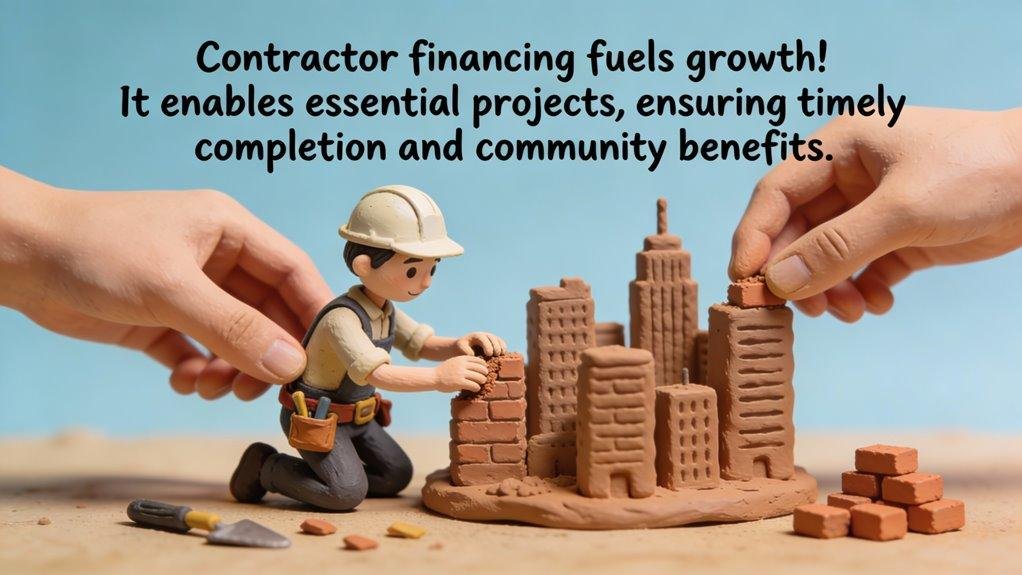
While municipal projects often face tight budgets and complex approval processes, contractor financing can play a critical role in overcoming these challenges.
We know a municipal budget rarely has extra flexibility, and project timelines can be strict. Financing options help by increasing job approvals by up to 30% and allowing clients to spread out payments. In fact, 78% of consumers consider financing a key factor in spending decisions. Additionally, exploring alternative lending when banks refuse project capital can provide municipalities with innovative solutions to fund their essential projects.
Municipal budgets are tight, but financing options boost job approvals by up to 30% and ease payment schedules.
This approach reduces financial pressure and accelerates the approval process. Better yet, longer 0% APR plans enhance project acceptance by 20%, enabling bigger and more ambitious municipal projects.
By offering contractor financing, we create opportunities to meet budget constraints while keeping timelines in check. It fundamentally supports smoother municipal operations and encourages innovation in public infrastructure development.
Contractor financing is a practical tool that aligns with today’s adaptive financial needs.
What Is Contractor Financing? Common Types Explained

Contractor financing helps contractors access funds depending the value with their contracts rather than traditional credit checks. This form of funding provides an opportunity for construction professionals to focus on their project performance. Common options include lender-controlled accounts and borrower-managed loans, each offering different levels of control and risk. By choosing the right type, contractors can improve cash flow and handle project costs more efficiently. This type of financing often bases loan amounts on the value of contracts instead of company profits, enabling contractors to secure working capital tailored to their project needs.
Definition And Purpose
A crucial tool in managing construction projects is contractor financing, which helps bridge the cash flow gaps prior to work being fully completed or accepted.
Contractor financing provides funds upfront, typically covering 20-30% of the contract value, allowing us to cover important costs at project initiation without tapping into reserves. This funding is secured by the contract itself, not traditional assets, making it more accessible.
Its main purpose is to improve cash flow, enabling the purchase of materials, labor, and equipment without out-of-pocket expenses. This support helps negotiate better supplier pricing and keeps projects moving smoothly. Additionally, contractor financing can be a form of short-term financing, often used to manage immediate project costs efficiently.
Popular Financing Options
Financing options for municipal projects vary widely, giving us flexibility in matching funding with each project’s unique needs. Common contractor financing includes lender-controlled accounts, which protect funds by having payments sent directly from the municipality toward the lender. Borrower-controlled financing lets contractors manage repayment, offering more flexibility but requiring strong cash flow. Advance payments and purchase order financing help bridge upfront costs, especially when government funding is limited or slow in arriving. Effective infrastructure financing requires careful planning to cover both construction and maintenance costs throughout the project lifecycle.
We also see growing trends like public-private partnerships and design-build-finance-operate-maintain models that combine financing with project delivery for innovation. Equipment leasing and trade credit reduce capital strain during construction. Staying aware regarding these financing trends lets us choose practical solutions that align with contract values and funding schedules, ensuring smooth project execution in today’s changing municipal finance environment.
Benefits For Contractors
We can improve project execution and financial stability by understanding the benefits contractor financing presents. This approach offers contractor advantages like bridging cash flow gaps and fueling projects early. It releases financing strategies based on contract value, not profits, reducing reliance on traditional loans. Partnering with construction experts and bypassing lengthy supplier approvals also increases our negotiating power. Additionally, project-based financing allows for higher credit limits aligned with project needs, providing greater funding flexibility.
| Benefit | Explanation | Impact |
|---|---|---|
| Immediate cash flow | Funds 20-30% of contract value upfront | Enables prompt project startup |
| Supplier discounts | Pay suppliers earlier | Increases profitability |
| Reduced financing costs | Lower interest-only payments | Improves financial stability |
| Expert partnership | Assesses project viability upfront | Amplifies risk management |
Together, these advantages enable us to innovate and compete confidently in municipal projects.
How Contractor Financing Can Boost Your Bid Success

Although municipal projects often require significant upfront investment, contractor financing can give us a competitive edge by guaranteeing smoother cash flow and stronger bid proposals.
By strengthening our financing relationships, we position ourselves to implement effective bid improvement strategies that set us apart. Financing bridges timing gaps and enables us to flexibly manage resources, ensuring that skilled tradesmen have access to necessary funds during critical phases.
Public nonresidential construction spending continues to rise, providing increasing opportunities for contractors in municipal projects.
Here’s how contractor financing amplifies bid success:
- Guarantees steady cash flow despite delayed grant receipts
- Supports phased project funding for larger contracts
- Enables proactive bidding regarding federally funded projects
- Mitigates payment timing risks to reduce bid uncertainties
- Improves flexibility with subcontractor engagement during labor shortages
Leveraging these advantages helps us win bids and maintain strong market positioning in municipal projects.
Key Eligibility Criteria for Municipal Contractor Loans
To qualify for municipal contractor loans, maintaining a solid credit score is vital, with most lenders expecting at least a 620 score. Alongside that, gathering thorough project documentation like signed contracts, blueprints, and detailed budgets plays a key role in your application. Additionally, lenders often require evidence of builder’s licensing and insurance to ensure the project’s legitimacy and reduce financing risks. Moreover, utilizing profit-sharing loans can provide a flexible financing option that allows for growth based on the project’s success.
Let’s investigate how meeting these criteria can enhance your chances of securing the financing you need.
Credit Score Requirements
A strong credit score plays a crucial role in qualifying for municipal contractor loans, as it directly impacts eligibility and loan terms. When we discuss credit score importance, we focus on how qualifying factors shape loan access.
Most conventional loans require a minimum 680 score, while FHA programs accept scores as low as 500 with higher down payments. Nevertheless, lenders often set overlays above minimums to manage risk.
Maintaining a solid credit score benefits us by revealing better loan amounts and lower rates. For innovative contractors aiming to secure financing, consider these key factors:
- Minimum scores vary by loan type, typically 620 to 680
- Scores above 700 increase approval chances and terms
- Business credit reports complement personal scores
- Scores below 620 usually need strong compensating factors
- Debt-to-income ratios and income stability interact with credit scores
Understanding these qualifying factors keeps us competitive and ready for municipal projects.
Project Documentation Needed
When we pursue financing for municipal projects, gathering the right project documentation is essential for meeting lender requirements and demonstrating our credibility. Our documents must clearly define the project scope and outline contractor responsibilities in contracts, including fixed-price agreements and construction loan terms.
We also need all necessary permits and approvals, such as zoning compliance and municipal building permits. Financial documents like detailed budgets, cash flow projections, and draw schedules linked to milestones show lenders we understand costs and timing.
Insurance certificates and bonds prove risk management, while compliance documents, including environmental reports and surveys, confirm adherence to regulations. Providing these thorough, organized materials lets lenders confidently assess our readiness, helping us secure funding and move innovative projects forward efficiently.
Preparing Financial Documents for Loan Approval
Preparing financial documents for loan approval is a critical step in securing funding for municipal projects. In order to achieve financial readiness, we must guarantee documentation accuracy throughout the process.
This aids lenders in assessing our ability to complete projects and repay loans confidently. Key financial documents include:
- Two years of company and personal tax returns to demonstrate stability
- Updated personal and company financial statements proving business standing
- A clear credit history and credit score review to highlight reliability
- Recent disclosures regarding cash advances, expenses, and loan applications for transparency
- Detailed project budgets and construction timelines showing financial planning
Managing Cash Flow With Contractor Financing
Securing loan approval is only the beginning. Managing cash flow during a municipal project shapes the overall success of the venture.
We need to carefully balance inflows and outflows for labor, materials, and equipment by using drawdown schedules to forecast spending. Maintaining clear contractor relationships is essential, especially when negotiating progress billings tied to milestones or using pay-when-paid clauses.
This approach helps us align payments with receipts and reduces financial strain. Prompt billing with detailed invoices accelerates cash flow, while mixing contract types can create liquidity buffers.
Monitoring expenses and coordinating payables with expected income guarantees smooth operations. By treating cash flow as a living document, regularly updated and forecasted, we can anticipate shortfalls early and make proactive adjustments that keep the project financially healthy.
Risks of Contractor Financing in Municipal Projects
Although contractor financing can help keep municipal projects moving ahead, contractor financing also introduces several risks that we must carefully manage. These financing challenges often stem from payment delays and cash flow disturbance, increasing pressure on contractors’ resources.
Contractor financing aids progress but brings risks from payment delays and cash flow disruptions.
Project uncertainties add to the complexity, including political shifts, budget shortfalls, and cancellations that can abruptly change the project scope.
Key risks to examine include:
- Extended payment cycles interrupting liquidity
- Political and budget-related project cancellations
- Cost overruns due to fluctuating materials prices
- Strict compliance and notice requirements
- Reduced bonding capacity from financial strain
Tips for Negotiating Better Contractor Financing Terms
When we enter negotiations for contractor financing, we need to approach the discussion with clear goals and a solid understanding regarding both the project’s financial terrain and the lender’s policies.
Effective negotiation tactics start with thorough preparation, including market analysis and budgeting. We should focus on securing loan flexibility by negotiating adjustable interest rates and repayment schedules that align with cash flow needs.
It’s crucial to limit borrowed amounts to necessities, reducing cost strain. Discuss payment timing and disbursement terms to protect our financial position.
Open, honest communication and detailed documentation are key to building trust and clarity. Including risk-sharing clauses mitigates unforeseen costs.
Frequently Asked Questions
How Does Contractor Financing Impact Tax Reporting for Municipal Projects?
When contractor financing impacts tax implications, we guarantee transparent financial reporting that aligns with regulatory requirements. We’ve innovated processes to accurately track funds and expenses, helping you traverse intricacies while optimizing project compliance and tax efficiency.
Can Contractor Financing Be Used for Project Equipment Purchases?
Yes, we can use contractor financing for equipment acquisition by exploring flexible financing options that expedite innovation. This approach enables us to secure crucial project tools upfront, enhancing efficiency while managing costs within municipal project budgets smoothly.
What Is the Typical Repayment Timeline for Municipal Contractor Loans?
We typically see repayment terms ranging from 5 to 20 years, depending upon loan duration and project scope. Embracing flexible repayment terms lets us innovate and modify for developing municipal infrastructure needs efficiently.
Are There Specific Insurance Requirements With Contractor Financing?
Yes, we require specific insurance types like workers’ compensation, builder’s risk, and professional liability to improve risk management. These innovative coverages protect projects thoroughly, ensuring financial stability and compliance throughout the contract duration and beyond.
How Does Contractor Financing Affect Subcontractor Payments?
We see contractor financing optimizes subcontractor payments by stabilizing cash flow and aligning payment schedules. This innovates project funding, ensuring subcontractors get paid promptly, keeping work moving efficiently without costly delays or interruptions.
