

Payroll financing assists subcontractors manage cash flow gaps caused by payment delays from general contractors.
By accessing payroll advances or factoring unpaid invoices, we can secure funds quickly, often within 24 hours, for cover wages, taxes, and benefits without depleting cash reserves.
You may be interested


Such keeps crews paid and projects moving smoothly, avoiding labor turnover and morale issues.
These solutions offer flexible, short-term capital that supports steady operations and profitability.
Exploring these methods reveals how one can build resilience in your subcontracting business.
Key Takeaways
- Pay-when-paid clauses cause cash flow risks, making payroll financing essential for subcontractors to maintain labor and avoid payment delays.
- Payroll advances convert approved pay applications into immediate cash for timely worker payments, reducing financial stress and project delays.
- Payroll factoring offers fast capital access using unpaid invoices as collateral, with fees between 1% and 4% per 30 days, ideal for limited credit.
- Automated payroll financing platforms ensure compliance and reduce errors by integrating real-time project data with certified payroll reporting.
- Flexible financing tied to project milestones bridges cash flow gaps, supporting consistent crew payments and sustaining subcontractor growth.
The Critical Link Between Liquidity And Labor Retention
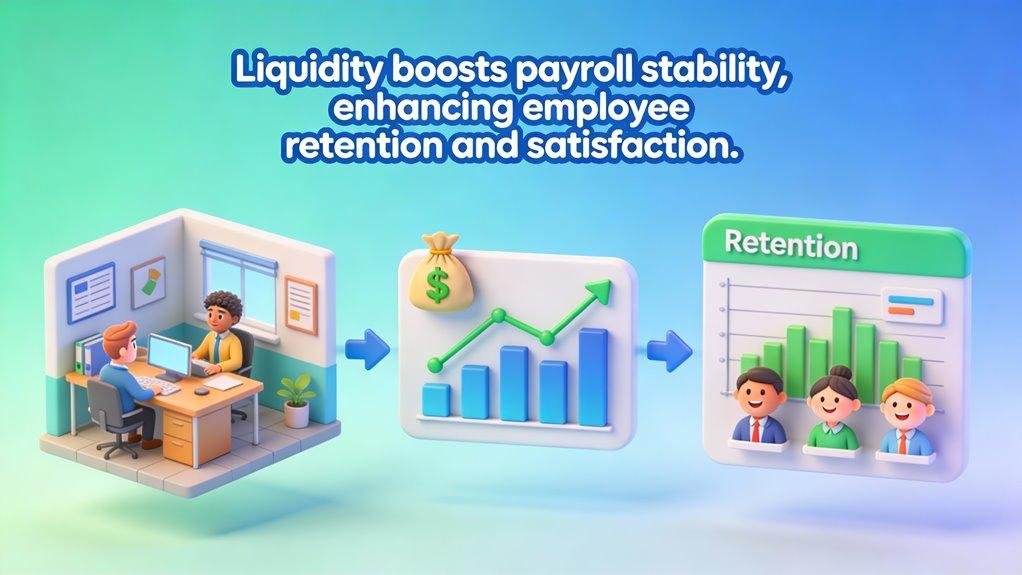
We all know that pay-when-paid clauses create serious cash flow risks that hit trades hardest. Relying on cash reserves to cover weekly payroll can drain working capital and limit our ability to respond quickly to job demands. Retainage withholding compounds these pressures by withholding a significant portion of earned revenue, further straining contractors’ liquidity. By leveraging monthly receipts as collateral, subcontractors can unlock vital growth capital that helps maintain stability and meet payroll obligations. Let’s investigate how managing this hidden cost directly impacts keeping our crews stable and projects aligned.
Why Pay-When-Paid Clauses Are The Greatest Risk To Trades
Although pay-when-paid clauses are common in construction contracts, they create a significant cash flow risk for subcontractors by tying our payments with the general contractor’s receipt from the project owner.
This linkage forces us to finance payroll costs upfront, exposing us to liquidity gaps that threaten labor retention. Smaller trades especially struggle when payments cascade slowly through the tiers. Innovative pay-when-paid solutions can decouple this timing misalignment, allowing us to maintain stable payroll flows and protect our workforce. Because a pay-when-paid clause primarily defines the timing of payment, subcontractors still have the contractual right to be paid regardless of whether the owner has paid the general contractor.
Here’s why these clauses pose such a risk:
| Risk Factor | Impact |
|---|---|
| Payment Timing | Delays payments contingent on general contractor |
| Cash Flow Burden | Forces subcontractors to front labor costs |
| Labor Retention | Payroll delays trigger skilled labor exodus |
| Market Power Imbalance | Trades accept terms due to limited advantage |
Addressing these risks with fintech-enabled tools is crucial for thriving in today’s labor market.
The Hidden Costs Of Using Cash Reserves For Weekly Payroll
Since subcontractors face payment waits exceeding 50 periods, relying regarding cash reserves for covering weekly payroll creates serious cash flow pressure. Depleting reserves to cover labor costs means less liquidity for unexpected expenses, delaying materials or putting bill payments at risk. This widespread cash flow instability in the construction industry significantly limits opportunities for business reinvestment and growth.
Such strain threatens labor retention—missed or delayed payroll leads to a rapid exodus of skilled workers. Weekly payroll advances offer an innovative solution by decoupling crew pay from slow-paying Prime Contractors.
These advances guarantee crews get paid punctually without draining cash reserves. By integrating payroll financing, subcontractors maintain stable operations, protect labor morale, and avoid costly interruptions.
This approach alters labor costs from a cash burden into a manageable expense, aligning capital velocity with labor velocity in a way that supports growth and competitiveness.
How Subcontractors Can Leverage Payroll Advances
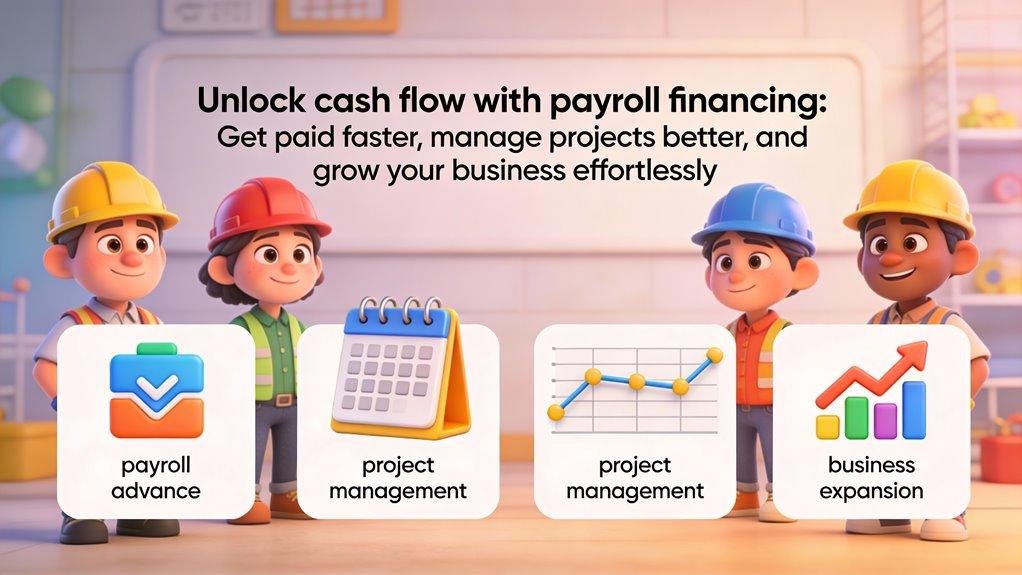
We can turn approved pay applications into immediate cash to keep our crews paid in due time, no matter how slow the Prime Contractor pays. Mechanized payroll advances help us manage certified payroll compliance while covering the full labor burden, including taxes and benefits. Such bridging strategy guarantees we maintain momentum between mobilization and the initial payment without risking cash flow. This financial flexibility is essential for subcontractors facing cash flow challenges caused by delayed payments, especially as the renovation and construction industry often requires futuristic renovations that can strain resources.
Turning Approved Pay Applications Into Immediate Labor Cash
When subcontractors turn approved pay applications into immediate payroll advances, they reveal a crucial source of cash flow that keeps their crews paid promptly. This approach opens up quick funding via direct deposits once the general contractor signs off on work scopes. It reshapes subcontractor cash flow by eliminating long waits and funding gaps that slow projects and dishearten teams. Offering payroll advances helps reduce employee financial stress, enabling crews to maintain focus and productivity on the job site.
| Step | Description |
|---|---|
| Submit Pay Application | Complete and send for approval |
| Approval by GC | Work scopes validated in 1-2 periods |
| Advance Disbursement | Funds transferred directly |
| Payroll Integration | Mechanized repayment from wages |
| Compliance & Monitoring | Guarantees lawful and fair use |
Leveraging pay apps in this way enhances liquidity, supports immediate labor payments, and sustains project momentum without relying on reserves or credit.
Managing Certified Payroll Compliance With Automated Funding
Although certified payroll compliance is a complex and demanding responsibility, subcontractors can meet these requirements efficiently by leveraging mechanized payroll advances.
Automated labor financing integrates with certified payroll systems to deliver real-time funding based on verified hours and worker classifications. This reduces errors, accelerates cash flow, and guarantees every labor burden, including taxes and benefits, is paid promptly to maintain compliance with prevailing wage laws.
Government regulations like the Davis-Bacon Act mandate strict wage reporting, making it critical for subcontractors to maintain accuracy when managing payroll advances. Using API-driven platforms, subcontractors can generate WH-347 reports quickly, track submission deadlines, and avoid penalties. By tapping into mechanized payroll advances, we safeguard crew morale and avoid costly delays tied to inaccurate or late certified payroll submissions.
In today’s digital job site, innovative labor financing solutions convert compliance from a risk into a competitive advantage.
Bridging The Gap Between Mobilization And First Payment
Because subcontractors face payment delays that often stretch 60 to 90 periods, bridging the cash flow gap between mobilization and the initial payment is critical for keeping projects moving.
We can utilize construction payroll funding solutions to secure payroll advances that cover wages, taxes, and benefits right from project start. The approach prevents halted mobilization and keeps crews productive, even when Prime Contractors’ payments lag.
By tapping into speedy, invoice-based financing integrated with digital job site tools, we gain access to capital within 24 hours grounded in certified payroll data. Regularly reviewing Operating Profit Percentage ensures this strategy aligns with overall operational profitability. Using these advances not only resolves cash flow challenges but also supports compliance and maintains workforce stability.
Leveraging construction payroll funding in this manner enables us to bridge gaps efficiently and stay competitive in today’s rapidly evolving construction environment.
Navigating The 2026 Alternative Finance Landscape
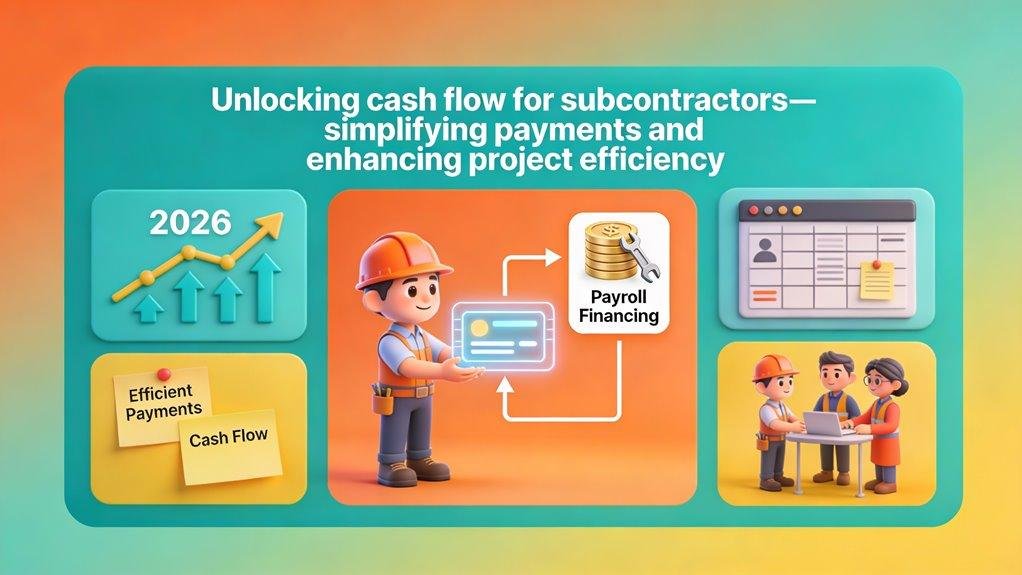
Let’s compare payroll factoring with traditional lines for credit and see which alternative fits your subcontracting needs best. By integrating your project data directly into underwriting platforms, you can speed up approvals and access funds within 24 hours. Understanding these tools helps us stay agile in closing the payroll gap and keeping our crews paid in time.
Comparing Payroll Factoring Versus Traditional Lines Of Credit
How do payroll factoring and traditional lines of credit stack up for subcontractors navigating the 2026 financial terrain?
Payroll factoring offers quicker access to capital, often same-day after approval, which takes about two business periods. It’s designed to fund payroll gaps caused by slow payments from prime contractors.
Traditional lines of credit need more time to set up and rely on strong credit history. Factoring uses unpaid invoices as collateral, making it accessible even for subcontractors with limited credit.
While factoring fees range from 1% to 4% per 30 periods, lines of credit charge interest without invoice discounts. Payroll factoring frees up reserved payroll funds without adding debt, matching cash flow to labor needs.
Integrating Your Project Data For Faster Underwriting Cycles
In 2026, integrating project data efficiently has become essential for subcontractors seeking quicker underwriting cycles in alternative finance.
By leveraging certified payroll AI, we connect our project management and payroll platforms via API, providing underwriters real-time, compliant observations. This smooth integration reduces manual reporting and accelerates funding approvals.
AI-driven analytics evaluate labor burdens, wages, taxes, and benefits, ensuring full payroll compliance is factored into the underwriting process. Tools supporting Python, R, and ETL workflows help us harmonize proprietary datasets with KPIs, streamlining decision-making.
As fintech innovation lowers technical barriers, our access to micro-factoring improves, enabling near-instant capital aligned with workforce needs. Through this energetic data integration, we shorten underwriting times and protect crews against payroll delays, making payroll financing a strategic advantage in the 2026 alternative finance environment.
Strategic Growth Through Sustainable Cash Flow
We build our business by bidding larger projects with confidence in the strength of our capital stack. Staying a reliable paymaster sets us apart in a competitive market and helps us win trust from crews and clients alike. Let’s investigate how sustainable cash flow supports strategic growth and long-term success. Additionally, effective financial strategies such as smart financing solutions can further enhance the stability of cash flow for bootstrapped businesses.
Bidding Larger Projects With Confidence In Your Capital Stack
Even when bidding for larger projects, we need to guarantee our capital stack is strong enough to cover upfront costs and unexpected expenses.
Many subcontractors face cash flow gaps from delayed payments, making retainage financing vital to maintain steady operations. By factoring working capital costs into our bids, we can protect profit margins and better manage risks like inflation and material price swings.
Accessing flexible financing tied to project milestones lets us fund labor and materials without interrupting our cash flow. This approach builds confidence when committing to bigger contracts, knowing we won’t stall due to cash shortages.
Leveraging payroll financing alongside retainage solutions guarantees we stay ahead of payment delays and keep crews productive throughout longer project timelines.
Building A Reputation As A “Reliable Paymaster” In A Competitive Market
Building a reputation as a reliable paymaster hinges regarding managing cash flow with strategic precision.
In today’s competitive market, subcontractors who use short-term labor loans can bridge the frequent payment gaps caused by delayed Prime Contractor disbursements. This approach guarantees crews get paid timely, preventing morale issues and labor loss.
We know that 46% of subs struggle with cash flow challenges, so adopting innovative payroll financing solutions is crucial. Forecasting weekly cash flow and leveraging construction-specific financing helps us maintain smooth operations and meet all payroll obligations, including taxes and benefits.
Frequently Asked Questions
How Does Payroll Financing Impact Subcontractor Bonding Capacity?
We see payroll financing enhances bonding capacity by improving cash flow and working capital ratios. Such demonstrates sureties we can meet payroll reliably, lowering risk perceptions and accessing larger project opportunities with more financial stability and confidence.
What Role Does Certified Payroll Reporting Play in Loan Approval?
Certified payroll reporting is vital for loan approval; we use it for verifying compliance, guarantee accurate labor burden calculations, and reduce risk. Such transparency accelerates funding decisions, enabling us to support your projects swiftly and compliantly.
Can Payroll Financing Be Used for Non-Labor Project Expenses?
No, payroll financing strictly covers labor-related costs—we can’t use that for materials or equipment. For those, we turn toward specialized platforms or loans designed specifically for handling non-labor project expenses efficiently and compliantly.
How Do Automated Payroll Platforms Integrate With Financing Providers?
We use unified API layers to sync data in real time, linking payroll platforms with multiple financing providers securely. Mechanized workflows verify employment and approval, enabling instant micro-factoring and smooth financing embedded directly in our systems.
What Protections Exist if a Prime Contractor Delays Payment Beyond 45 Days?
We rely upon federal Prompt Payment Act clauses enforcing 7-day prime payments, state laws allowing suspensions or penalties, and contract negotiations excluding pay-if-paid terms. Together, these safeguard us against delays beyond 45 days.
