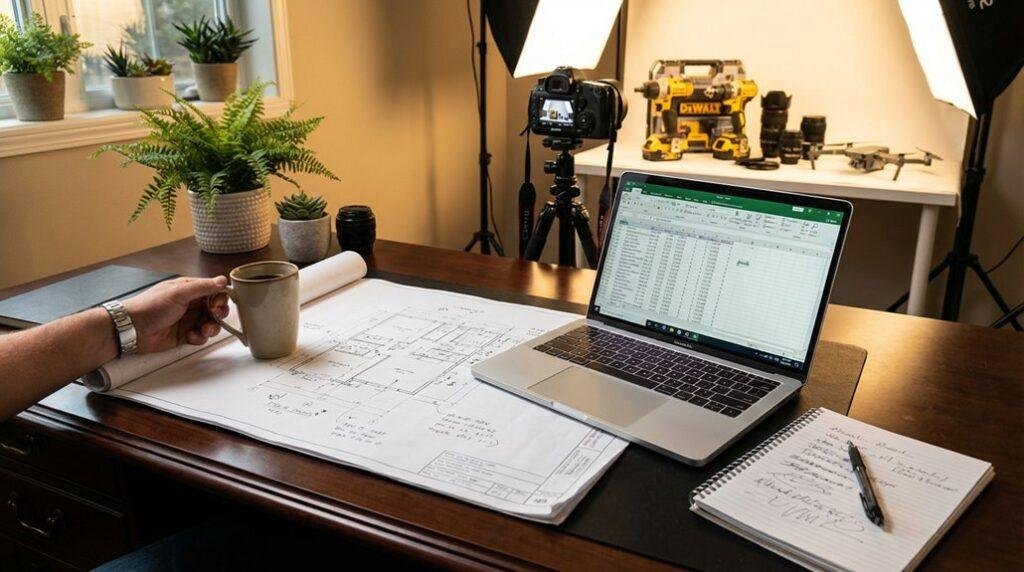
In order to finance equipment for a new contract, we suggest investigating equipment loans or leases, contingent upon your cash flow and long-term plans.
SBA 504 loans are an excellent choice for larger purchases, providing up to $5.5 million with advantageous terms.
You may be interested


Many lenders include soft costs like installation, and financing options frequently necessitate minimal or no down payment.
Ensure your credit and revenue satisfy lender criteria and collect multiple quotes.
Keep progressing in order to reveal strategies for negotiating the best financing terms.
Key Takeaways
- Use SBA loans or equipment loans to finance up to $5.5 million with flexible terms and low down payments.
- Consider leasing equipment for lower upfront costs and easier upgrades, ideal for rapidly evolving technology needs.
- Alternative lenders offer quick funding and flexible approvals, suitable for startups or businesses with limited credit history.
- Prepare thorough financial documents, gather multiple equipment quotes, and compare financing terms to negotiate better rates.
- Leverage tax benefits like Section 179 and bonus depreciation to maximize deductions and reduce upfront capital impact.
Equipment Financing Options for New Businesses

When we’re looking for funding equipment for a new business, it’s important to investigate a variety of financing choices that align with our needs and resources. SBA loans offer solid options. The 7(a) loan supports working capital and equipment, while the 504 loan targets large equipment up to $5.5 million with manageable terms.
Equipment loans, secured by the gear itself, usually have lower interest rates. They can cover up to 100% of costs, including taxes and delivery. Alternative lenders provide flexible and swifter approvals with less stringent requirements, supporting startups with minimal history or credit challenges. For example, some lenders offer financing amounts up to $250,000 with no financial statements required, expediting the application process. Many lenders focus on performance rather than credit scores, ensuring that new businesses can access vital funding despite limited credit histories.
Many options don’t require down payments, and soft costs often qualify. Exploring these pathways enables us to choose innovative funding solutions while leveraging collateral and favorable terms for growth efficiently.
How to Choose Between Equipment Loans and Leases
How do we decide whether for the purpose of securing equipment through a loan or a lease? It frequently comes down to how we plan to use the equipment and manage our cash flow. Loans lead to ownership and equity build-up but require higher upfront costs. Leases offer flexibility, lower initial expenses, and easier upgrades, ideal for rapidly changing technology.
Here’s what to contemplate:
Consider your usage, cash flow, and long-term goals when choosing equipment financing options.
- Choose loans for long-term use, building equity and leveraging assets.
- Opt for leases to preserve capital, enjoy lower monthly costs, and maintain flexibility.
- Reflect on equipment life: loans suit durable machinery, leases work for tech that quickly depreciates.
- Factor in your business stage: established firms may prefer ownership, while growing businesses benefit from leasing.
- It’s also important to consider that equipment financing can help you preserve cash flow by spreading the cost over time, allowing your business to maintain liquidity. Additionally, exploring financing options can provide alternative methods to fund your equipment needs effectively.
Understanding these points helps us align equipment financing with our innovation goals.
How SBA 504 Loans Support Large Equipment Purchases
Although securing funding for large equipment purchases can be challenging, SBA 504 loans provide a reliable solution customized to support businesses with substantial capital needs. They finance up to 90% of project costs, often requiring as little as a 10% down payment. This helps preserve your working capital.
These loans cover equipment with a useful life of at least 10 years, including manufacturing machinery, medical devices, commercial vehicles, and technology infrastructure. Innovative revenue-based loans can also complement SBA 504 financing for healthcare providers seeking additional funding sources. Loan terms range from 10 to 25 years, with fixed rates and no balloon payments, making budgeting predictable. Moreover, associated costs like transportation, installation, and certain building improvements qualify for funding. SBA 504 loans are made available through partnerships with Certified Development Companies (CDCs), who provide expert guidance throughout the process.
SBA 504 loans also require businesses to meet specific eligibility criteria. This ensures you are positioned to benefit from long-term financing. Such an option makes them a smart choice for innovative companies investing in substantial equipment.
Top Equipment Financing Lenders and What They Offer
Let’s examine some alternative equipment financing lenders and what they provide on the table. We’ll compare their rates, funding limits, and eligibility requirements in order to help you find the best fit for your business needs. Understanding these options will make securing the right financing for your equipment purchase easier. It’s also important to recognize the difference between equipment financing, leasing, and renting to select the financing method that aligns with your business goals and operational needs.
Leading Lender Profiles
When choosing the right lender for equipment financing, knowing what each top provider offers helps us make informed choices. Each lender has unique strengths that match different business needs.
Here’s what we found among leading lenders:
- Taycor Financial suits startups with no minimum business history and up to $5 million financed.
- Bank of America offers low rates, in-person support, and rewards, ideal for established firms.
- OnDeck excels in swift funding, sometimes the same day, with no down payment needed.
- Crest Capital stands out for flexibility, no tax returns, and 100% financing including soft costs.
Identifying the right profile helps us align financing with our operational goals. This process keeps innovation moving ahead.
Financing Options Comparison
Since equipment financing needs vary widely, comparing top lenders assists us find the best fit for our business goals. Each lender offers unique benefits, from quick funding to flexible terms and high financing limits.
Let’s break down some key options to help us innovate and grow.
| Lender | Highlights |
|---|---|
| OnDeck | Quick loans up to $250K, same-day funding |
| Initial Citizens Bank | Up to $3M, flexible terms, 100% financing |
| U.S. Bank | 125% financing including soft costs |
| SBA Loans | Large loans up to $5.5M, attractive rates |
How Much Equipment Financing Can Your Business Qualify For
LET’S LOOK AT HOW MUCH FINANCING YOUR BUSINESS CAN REALISTICALLY QUALIFY FOR BASED UPON KEY FACTORS LIKE CREDIT SCORES, TIME IN BUSINESS, AND REVENUE. These eligibility criteria set limits regarding funding amounts and influence the speed with respect to approval. Understanding these basics helps us find the best fit for your equipment needs. Additionally, exploring loans designed for growth-stage businesses can provide you with tailored options that match your unique requirements.
Financing Amount Limits
Although the amount for equipment financing your business can qualify for varies widely, understanding typical limits helps us plan effectively. Lenders offer equipment loans from $5,000 up until $2 million or more, with some credit unions providing as much as $5 million.
SBA programs can enhance these limits with loans up until $5.5 million, and options like SBA 7(a) loans offer tiers depending upon your needs. Financing often covers 80-100% of the equipment’s value, sometimes requiring a 10-20% down payment.
Key points include:
- Standard loans typically max out at $2 million, with full or partial financing options.
- SBA loans can extend terms and financing up until $5.5 million.
- Down payments may be necessary, usually between 10-20%.
- Loan APRs range from around 4% promotional to 30% standard rates.
Knowing these limits helps us secure the right funding for innovative growth.
Eligibility Criteria Basics
Understanding typical financing amount limits gives a helpful structure, but how much your business actually qualifies for depends on meeting specific eligibility criteria. Lenders generally look for businesses operating at least 12 to 24 months, with some online lenders accepting younger companies if they show strong plans or collateral.
Credit scores around 600 to 650 are usually the minimum, though higher scores improve options. Annual revenue plays a key role, with traditional lenders expecting $150,000 to $250,000, but some online lenders may approve as low as $50,000. Most equipment financing is self-collateralized by the equipment itself. Offering down payments or additional assets can help overcome challenges.
Preparing solid documentation and demonstrating steady cash flow also strengthens qualification.
Funding Speed Factors
When we look at how much equipment financing your business can qualify for, several key factors come into play, starting with your credit score and revenue. Your credit history, whether personal or business, plays a critical role, especially scores above 600. Revenue consistency also proves your repayment ability, with thresholds varying by lender type.
Time in business signals stability, and collateral, like the equipment itself, can impact financing amounts. Here’s what matters most:
- Credit scores above 660 offer better terms, while strong cash flow can offset lower scores.
- Annual revenue typically needs to be $50,000 or more for qualifying.
- A business operating for at least 12 months shows reliability.
- Equipment often serves as collateral, reducing lender risk and increasing funding potential.
These factors accelerate approval and help determine suitable financing limits.
How to Speed Up Equipment Loan Approval
Anyone looking to accelerate equipment loan approval can take several practical steps to simplify the process. Initially, we prepare a complete application with all required documents, including equipment quotes and financial statements.
Maintaining a strong credit profile with scores near 650 helps secure quicker decisions. Next, we choose the right lender, favoring online or specialized lenders known for rapid approvals. Providing clear financial documentation and explaining how the equipment benefits our business also simplifies approval.
Here’s a checklist to get started:
| Step | Key Action |
|---|---|
| Complete Application | Submit full docs, quotes |
| Strong Credit Profile | Guarantee 650+ score |
| Choose Right Lender | Opt for online, industry-focused |
| Financial Documentation | Provide tax returns, bank statements |
| Explain Equipment Benefit | Describe specs and purpose |
Following these steps leads to quicker funding and smooth onboarding.
How Section 179 and Tax Benefits Lower Equipment Costs
Let’s investigate how Section 179 can help us reduce equipment costs by allowing a full deduction of qualifying purchases in the year we buy them. This tax benefit encourages investment by offering immediate savings rather than spreading deductions over several years.
Understanding these advantages can help us make smarter decisions when funding new equipment.
Section 179 Overview
Although buying equipment often means significant upfront costs, Section 179 helps us reduce the financial burden by allowing full deduction from the purchase price in the same year the equipment is placed into service. This incentive fuels innovation by freeing capital sooner rather than spreading expenses over time.
Here’s what makes Section 179 beneficial for us:
- Deduct the entire cost of new or used equipment, including machinery, office tech, and vehicle equipment.
- Eligible property must be installed and operational within the tax year to qualify.
- Deduction limits are generous, with millions allowed according to total purchases.
- Equipment must be used at least 50% for business to meet criteria.
Tax Savings Advantages
Taking full advantage from Section 179 means understanding how that operates alongside other tax benefits for lowering the overall cost from acquiring equipment. Section 179 allows us to deduct up to $4 million of qualifying equipment in 2025 immediately.
That deduction works perfectly with bonus depreciation, enabling us to write off almost the entire cost in the initial year, whether we buy or lease. Here’s a quick look:
| Tax Benefit | Key Feature |
|---|---|
| Section 179 | $4 million max immediate deduction |
| Bonus Depreciation | 100% deduction after Section 179 |
| Leasing Advantages | 100% deductible lease payments |
| Financing Flexibility | Deduct expense even if financed |
How to Finance Soft Costs Like Installation and Training
How can we effectively finance the often-overlooked soft costs like installation and training that accompany new equipment? These expenses are essential to getting your technology up and running. Yet they can strain budgets if not planned properly.
Fortunately, many lenders include soft costs in their financing packages, helping spread payments and ease cash flow. Leasing also offers bundled solutions that cover installation and training, often with lower monthly costs. To maneuver these options, consider these key strategies:
Many lenders finance soft costs, while leasing bundles installation and training to lower monthly expenses.
- Look for lenders offering up to 125% financing, including installation and taxes.
- Investigate leasing programs that integrate training with equipment delivery.
- Use grants or SBA loans to cover labor-related soft costs.
- Negotiate payment terms or staged delivery to manage cash flow.
Leveraging these approaches lets us innovate without sacrificing installation and training quality.
How to Match Equipment Financing Options to Your Industry
Since each industry has unique equipment needs and financial challenges, tailoring our financing approach is essential for success.
In construction, leasing dominates because it supports acquiring large machinery while preserving cash flow. Healthcare favors specialized lenders, leveraging their knowledge for medical equipment financing, often through leasing or bank loans.
Agriculture relies upon flexible options like secured loans and leasing to match seasonal cash flows and use equipment as collateral. Transportation benefits from captive finance programs, enabling 100% financing for trucks with leasing preferred to manage fleet upgrades.
Restaurants, with frequent equipment turnover, lean towards leasing to spread costs and maintain liquidity with shorter terms. By aligning financing options with each industry’s demands, we can secure efficient funding that supports innovation without interfering with operations or capital structure.
What Equipment Ownership and Equity Mean in Financing
Understanding equipment ownership and equity plays a crucial role in deciding how to fund your business assets. When we own equipment, we gain full control and build equity as each payment reduces the loan principal. Equity strengthens our balance sheet and creates collateral for future financing. Ownership also offers tax benefits like depreciation and possible Section 179 deductions.
Owning equipment builds equity, strengthens your balance sheet, and provides valuable tax benefits like depreciation and Section 179 deductions.
Nevertheless, this demands upfront capital and ties up resources. To stay innovative, we weigh these factors:
- Equity builds value with every payment, enhancing long-term asset control.
- Full ownership allows customization without limits.
- Ownership risks include depreciation and cash flow strain.
- Balancing equity benefits against capital costs drives smarter funding decisions.
Tips for Negotiating Equipment Financing Terms and Rates
Where should we start when negotiating equipment financing terms and rates? Initially, we need a clear visualization of our financial situation and equipment needs. Gathering multiple quotes from banks and manufacturers lets us compare APRs, fees, and terms.
We should utilize these quotes to negotiate better interest rates and lower down payments. It’s essential to balance term length for manageable monthly payments without inflating total interest costs. We also want to avoid prepayment penalties and minimize origination fees.
Maintaining open communication and positioning ourselves as long-term clients helps build strong lender relationships. Ultimately, negotiating additional terms like warranty, installation, and flexible repayment options will support cash flow while maximizing benefits like tax deductions. This approach enables us to secure innovative financing customized to our developing business goals.
Frequently Asked Questions
What Documents Are Needed to Apply for Equipment Financing?
We’ll need personal IDs like driver’s licenses, full contact details, and Social Security numbers. For your business, gather your company info, licenses, and ownership details. Financial documents like profit and loss statements, tax returns, and recent bank statements are crucial. Don’t forget equipment specifics—quotes, invoices, and purchase agreements. Having a clear business plan or executive summary really strengthens your application as well. These documents show lenders your readiness and reliability for equipment financing.
Can I Refinance Existing Equipment Loans for Better Terms?
Yes, we can refinance existing equipment loans to secure better terms. Refinancing often lowers monthly payments by extending the loan term or reducing interest rates. This also consolidates debt, simplifying payments and improving cash flow. In order to qualify, we need well-maintained equipment with clear ownership. By refinancing, we free up working capital that can be reinvested in innovation or operational needs, helping us adjust and grow strategically.
How Does Equipment Financing Impact My Business Credit Score?
Equipment financing directly influences our business credit score by creating trade lines reported to credit agencies. Making timely payments elevates our score, showcasing reliability and strengthening our credit profile. Such circumstances can lead to better loan terms and higher approval chances for future financing. Conversely, missed or late payments hurt our score and limit options. By managing equipment loans responsibly, we actively build and maintain strong credit for sustainable growth.
Are There Penalties for Early Repayment of Equipment Loans?
Yes, many equipment loans include early repayment penalties, often between 1-5% from the remaining balance during the initial few years. These penalties can impact your savings from paying off early, so we recommend comparing them with your interest savings. Some lenders waive penalties after a year or offer simple interest loans without penalties. This is important to review and negotiate these terms upfront for the best financial flexibility and innovation in your equipment financing.
What Happens if I Default on an Equipment Lease or Loan?
If we default regarding an equipment lease or loan, the lessor can terminate the lease and repossess the equipment. They may also demand all payments immediately and pursue legal actions if needed. We’ll be responsible for returning the equipment and any related costs. In some cases, courts can order equipment recovery without confrontation. It’s essential we stay vigilant about payments and understand our obligations in order to avoid these consequences.
