
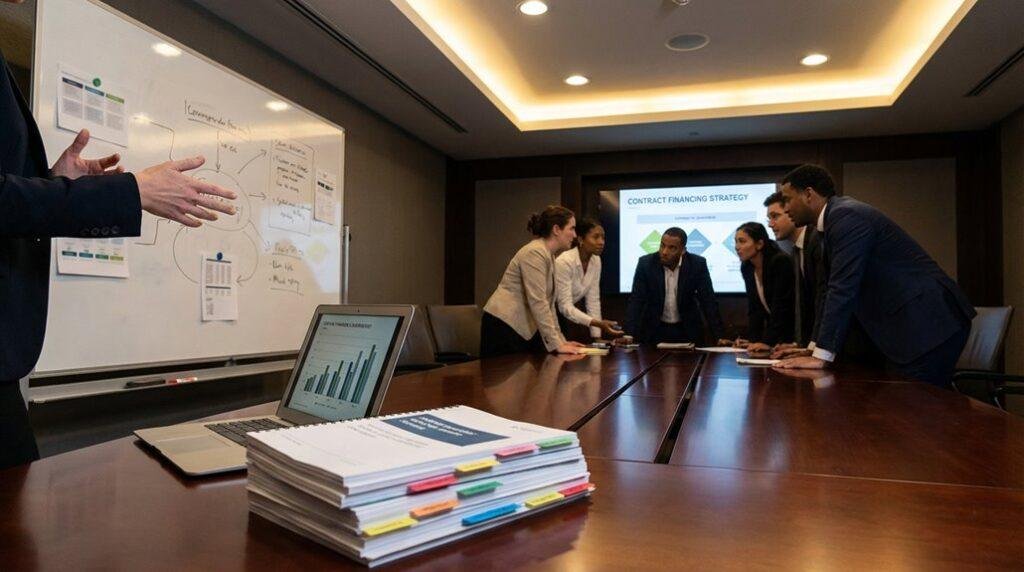
We recommend starting by evaluating your total material costs and planning your budget carefully to manage cash flow.
Negotiating flexible payment terms or milestone-based schedules can ease upfront expenses. Supplier credit and short-term loans help fund material purchases without straining working capital, while leasing equipment preserves cash.
You may be interested


Invoice factoring can also improve cash flow by advancing funds against unpaid invoices. Comparing these options guarantees you choose the best fit.
Further details can guide you toward smart financing decisions.
Key Takeaways
- Calculate total material costs, allocate budgets, and include contingencies to manage cash flow and avoid financing gaps during large contracts.
- Negotiate flexible payment terms like milestone-based or extended schedules to align material payments with project progress and cash flow needs.
- Utilize early payment discounts to reduce material costs and improve supplier relationships, enhancing overall project financing efficiency.
- Explore alternative financing options such as supplier credit, short-term loans, or leasing to secure materials without straining working capital.
- Consider invoice factoring to convert outstanding invoices into immediate cash, supporting continuous material purchases and smooth project operations.
Assess Your Material Financing Needs for Big Contracts
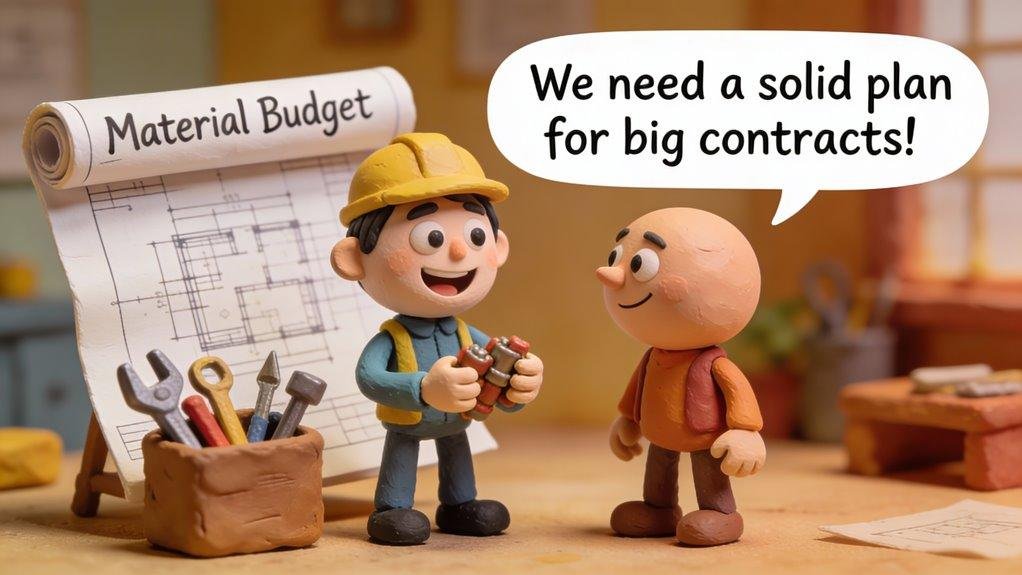
When we assess our material financing needs for big contracts, we start by calculating the total material costs and understanding their impact on our cash flow.
Material cost often accounts for 30 to 50 percent of the contract value, making it critical to factor in fluctuations and upfront payments. Our financing strategy must address substantial cash flow gaps that can last for up to 83 days, especially since we often need to front supplier payments before receiving client billing. Materials financing allows contractors to make these upfront purchases by providing payments directly to suppliers, easing cash flow strains. In addition, leveraging performance-based funding can open up more opportunities for securing necessary financing, allowing contractors to focus on project completion rather than credit scores.
We also consider project timelines because early-stage expenditures dominate costs, and delays can increase expenses. By projecting these expenses and timing carefully, we guarantee that our financing covers scaled-up material purchases beyond available cash.
This approach helps us innovate confidently, avoid project delays, and expand our capacity for larger contracts.
Negotiate Payment Terms to Ease Material Financing Costs
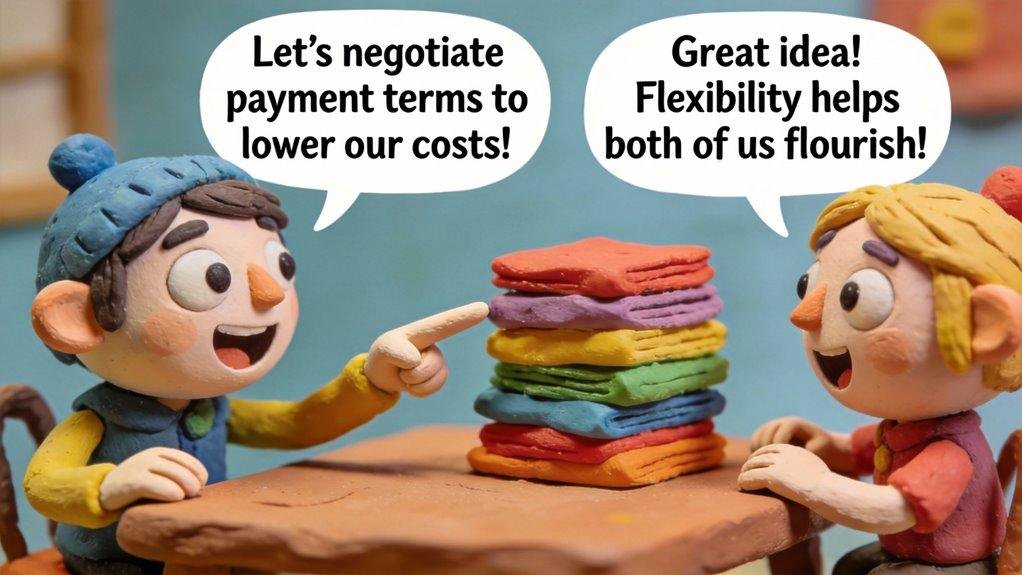
We can ease material financing costs by negotiating flexible payment schedules that align with our project milestones and cash flow. Offering early payment discounts encourages suppliers to provide better terms while improving our overall costs. Extended payment terms can free up significant working capital, helping bridge cash flow gaps during construction. By effectively managing accounts receivable, firms can ensure that they maintain steady progress on projects despite initial cash flow challenges. Let’s investigate how these strategies create a win-win situation that supports both our financial needs and strong supplier relationships.
Flexible Payment Schedule
Several flexible payment schedules can help us negotiate terms that ease the financial burden from purchasing materials for large contracts.
By exploring various payment schedule strategies, we reveal payment flexibility options customized for project needs. Time-based schedules let us plan cash flow predictably with fixed intervals.
Milestone-based schedules tie payments to project phases, offering verification and reducing upfront costs. Progress-based payments align disbursements with work completed, supporting ongoing material financing.
Stage payment structures spread costs across project stages, motivating timely completion. These schedules often include project information, such as start date and duration, which help define clear payment timelines. We must negotiate these payment models during contract discussions for maximum benefit.
Adjustments remain viable mid-project with approvals for delays or changes. Employing these innovative payment flexibility options improves our material financing approach, balancing cash flow with project progress and ensuring smoother operations in large contracts.
Early Payment Discounts
A variety of early payment discounts can greatly reduce the cost for financing materials for large contracts.
Implementing early payment strategies allows us to negotiate payment terms that ease cash flow demands while enhancing supplier relationships. By securing discounts like “2/10 Net 30,” we save considerably and enhance working capital. This approach helps mitigate the risk of delayed payments that commonly cause job site bottlenecks and reduced productivity.
These discount negotiations not only cut costs but also reduce the duration of sales outstanding and minimize default risks. Consider these possibilities:
- Save 2% on invoices by paying within 10 periods, yielding a 37% annualized return
- Decrease supply interruptions by offering prompt payments
- Improve supplier prioritization by 35% during material shortages
- Increase contract renewals by 38% with consistent early payments
Strategically applying early payment discounts alters financing materials efficiently and innovatively.
Use Supplier Credit to Fund Your Materials

Although cash flow can be tight in construction projects, supplier credit offers a practical method for funding materials without immediate payment. By leveraging trade credit, we can obtain necessary supplies while delaying payment until our clients settle their invoices. This approach preserves our working capital and helps us manage cash flow more efficiently. Building strong supplier relationships is key to negotiating favorable payment terms, often ranging from 30 to 120 days, which align with project timelines. Additionally, supply chain finance involves a finance company paying suppliers immediately, ensuring prompt payment and reducing supplier risk through this financing process.
Supplier credit also supports bidding for larger contracts by removing upfront cash constraints. Moreover, suppliers benefit from steady sales and improved cash flow, which encourages them to maintain these flexible arrangements. Utilizing secure liquidity options can further enhance cash management strategies and ensure that businesses have the resources needed to fulfill contract requirements without relying solely on traditional lending methods.
Supplier credit removes upfront cash barriers and fosters stronger, mutually beneficial supplier relationships.
Using supplier credit consequently creates a win-win situation, allowing us to innovate in financing materials without taking on extra debt.
Lease Equipment to Finance Materials Without Buying Upfront
When we lease equipment, we free up cash flow and avoid large upfront costs that come with buying. In today’s market, many companies are exploring liquidity options to navigate challenges, including outstanding federal debt.
Lease benefits include preserving working capital for materials and labor while maintaining predictable budgeting. With flexible equipment options, we can modify for project demands without long-term commitments. Leasing also lets us access the latest technology without the burden of ownership or depreciation. This flexibility in payment structure aligns well with businesses dealing with fluctuating workloads.
Consider these lease advantages:
- No down payment or large initial outlay needed
- 100% financing covering equipment and soft costs
- Adjustable lease terms for matching project length
- Ability to upgrade or return equipment after lease
Use Short-Term Loans for Material Purchases
Since managing cash flow is vital in large projects, we can use short-term loans for financing material purchases without locking up our working capital. These loans usually span 12 months or less and offer short-term advantages like rapid funding tied to project milestones. This setup helps us secure supplier discounts by paying cash upfront, reducing overall expenses. Billd, for example, provides a capital solution that enhances financial flexibility to simplify upfront purchasing. Nevertheless, a thorough risk assessment is significant because high-interest rates reflect the risks of project delays and collateral exposure.
We must prepare detailed project documentation and maintain creditworthiness to get approved. Ultimately, short-term loans enable bidding for bigger contracts and swift access to funds, supporting growth without draining reserves. They’re a practical, innovative tool to keep projects moving seamlessly.
Use Invoice Factoring to Finance Materials and Improve Cash Flow
Let’s investigate how invoice factoring can help us finance materials by turning unpaid invoices into immediate cash. This method improves cash flow by providing quick access to funds without adding debt or waiting for payment cycles.
We’ll also cover how one can choose the right factoring company to get the best terms for your business.
Understanding Invoice Factoring
How can we improve cash flow and finance material purchases without taking on traditional debt? Invoice factoring offers a strategic solution by converting unpaid invoices into immediate cash.
Here’s how it functions: we sell invoices to a factoring company, which advances 70-90% of the invoice value upfront. The factor performs invoice verification and handles payment collection from customers.
Afterward, we receive the remaining balance minus factoring fees.
With this approach, we:
- Secure working capital quickly
- Avoid traditional loan processes
- Transfer collection responsibilities
- Maintain steady cash flow for materials
Invoice factoring doesn’t create debt but utilizes assets efficiently. Understanding the process, including invoice verification and factoring fees, equips us to use this innovative tool confidently.
Benefits For Cash Flow
When we use invoice factoring to finance materials, it significantly improves our cash flow by providing immediate access to funds that would otherwise be tied up in unpaid invoices.
This approach changes receivables into quick liquid assets, shortening our cash cycle and supporting steady operations even with delayed customer payments. By integrating invoice factoring into our cash management, we gain liquidity strategies that offer rapid funding without adding debt or interest.
This elevates operational stability by enabling timely payroll, inventory purchases, and supplier payments. Moreover, factoring enhances our ability to forecast and control cash flow, reducing financial strain and fueling growth.
Ultimately, invoice factoring is an innovative solution that strengthens our financial agility and supports sustained business expansion in competitive markets.
Choosing The Right Factor
Although invoice factoring offers a beneficial way to improve cash flow, choosing the right factor requires careful evaluation regarding several key elements.
Successful factor company selection depends on understanding credit checks regarding customers, advance rates, and timely fund availability. We need to focus on transparent factoring fee structures to avoid surprises. Considering these components helps us utilize factoring with confidence.
Let’s keep these in mind when choosing a factor:
- Clear terms regarding advance rates and reserve releases
- Flexible factoring fee structures with competitive pricing
- Efficient approval based on customer creditworthiness
- Quick fund access, typically within 1, 2 business periods
Plan Your Budget to Manage Cash Flow and Avoid Debt Risks
Since managing cash flow effectively is crucial for avoiding debt risks, we must plan our budget carefully from the start.
Budget forecasting helps us predict expenses accurately by analyzing historical data and applying methods like analogous or parametric estimation. We allocate costs precisely to each project phase, combining direct expenses like materials with indirect ones, ensuring nothing slips through the cracks.
Incorporating contingency funds ranging from 5-20% prepares us for unexpected issues without hindering the flow. Regular budget reviews allow us to adjust forecasts based on real-time data, preventing surprises that cause debt.
Compare Financing Options and Choose the Right One
Choosing the right financing choice can greatly impact how smoothly we manage cash flow during a big contract. To develop effective finance strategies, we must perform thorough contract evaluation and weigh each option’s benefits against our project needs.
Choosing the right financing strategy ensures smooth cash flow and supports successful contract execution.
Consider these possibilities:
- Invoice factoring for immediate cash for unpaid invoices without debt.
- Materials financing offering upfront payment for bulk purchases with flexible terms.
- Revenue-based loans adjusting repayments based upon income flow.
- Trade and contract financing using contract value as collateral for early fund access.
Each approach offers innovative flexibility, protecting cash flow and credit while matching repayment for project timelines. By comparing these options thoughtfully, we can select the right financing path that supports growth and maintains financial stability throughout the contract lifecycle.
Frequently Asked Questions
How Do Credit Scores Impact My Ability to Finance Materials?
We know credit utilization and strong credit scores enhance loan approval chances, letting us finance materials more easily. Lower scores complicate approvals and increase costs, so managing credit smartly fuels innovative project financing and growth opportunities.
Can Material Financing Options Vary by Industry?
Yes, material financing varies by industry. We find construction supplies often use contract-specific plans, while manufacturing equipment financing integrates with production needs. This innovation allows us to enhance cash flow and keep projects moving efficiently.
What Are the Tax Implications of Financing Materials?
We know tax deductions can lessen our material financing costs, so exploring innovative financing options lets us enhance cash flow while complying with tax rules. Together, we can utilize deductions and smart strategies to fuel growth efficiently.
How Does Material Financing Affect Long-Term Business Credit?
We know material financing affects long-term business credit by impacting credit utilization and strengthening business relationships. By managing balances wisely and maintaining strong supplier ties, we enhance our innovative capacity and creditworthiness, fueling future growth opportunities.
Are There Any Government Grants Available for Material Financing?
Yes, we can access government funding like the Innovative Finance and ADCMS Grants to support material financing. By meeting grant eligibility criteria, we access innovative resources to fuel our projects and scale efficiently with confidence.
