

We understand that insurance delays and increased claim scrutiny can tie up your medical practice’s cash flow and create payroll challenges.
Revenue-based financing helps by converting future receivables into immediate working capital linked to patient volume, avoiding rigid bank debt. This approach relies on actual claim data rather than credit scores, offering flexibility and preserving practice independence.
You may be interested


It smooths cash flow gaps, letting you focus regarding patient care despite payer delays.
Keep exploring to uncover how such finance method strengthens your practice’s resilience.
Key Takeaways
- Revenue-based financing provides instant liquidity tied to patient receivables, helping practices manage cash flow amid insurance payment delays.
- It bypasses traditional credit checks by using claims data and payer reliability to underwrite funding, preserving confidentiality and patient relationships.
- Advances from approved claims reduce reliance on rigid bank debt, offering flexible repayment linked directly to actual revenue.
- Real-time claims analytics and clearinghouse data enhance forecasting accuracy, lowering Days Sales Outstanding (DSO) and speeding collections.
- This financing helps practices maintain operational continuity and financial independence, avoiding equity loss from private equity buyouts during reimbursement delays.
The Strategic Battle Against Insurance Payer Float

We’re facing a new challenge as AI-driven audits stretch out payment cycles, making cash flow unpredictable and forcing practices to wait longer for reimbursement. This delay in reimbursement effectively increases the insurance float, which insurers strategically use to generate substantial investment income. Understanding the real cost of Time Sales Outstanding (TSO) is fundamental because each delayed claim drastically reduces the actual revenue we receive. Moreover, leveraging revenue-based loans can provide immediate capital to offset these delays, allowing practices to maintain operations without interruption. It’s clear that managing these delays strategically is crucial for maintaining financial stability and independence in today’s environment.
Why AI-Driven Audits Are Extending Medical Payment Cycles
Many medical practices face longer payment cycles because AI-driven audits are reshaping how insurance carriers review claims. These audits use machine learning to flag discrepancies and tighten medical necessity criteria, resulting in more claims undergoing detailed scrutiny.
Although AI speeds initial eligibility checks, they also extend payment cycles by triggering intense manual reviews. This creates cash flow challenges, making medical RCM funding a critical solution. Manual processes continue to drive inefficiencies and delays despite technological advancements.
Practices must bridge revenue gaps caused by delayed payments without sacrificing control or equity. By understanding how AI audits impact reimbursement timing, we can utilize revenue based financing to maintain operational stability.
As AI-driven scrutiny grows, adopting strategic liquidity options enables us to maneuver through this advancing environment and defend against extended insurance floats more effectively.
Understanding The Real Cost Of Days Sales Outstanding (DSO)
Although doctors deliver critical care every moment, the financial flow behind that care often gets stuck in a prolonged waiting game known as Days Sales Outstanding, or DSO.
High DSO means cash is tied up, limiting growth and threatening operational stability. With insurance delays and rising denials, medical AR financing becomes crucial to bridge capital gaps and avoid the “float” trap. This delay in payment collection frequently creates significant cash flow challenges that require immediate attention.
| Metric | Average Days | Industry Benchmark (DSO) |
|---|---|---|
| HCA Healthcare | 49.73 | 46+ days common |
| UnitedHealth Group | 18.8 | 14% maintain <30 days |
| Median Healthcare DSO | 51.56 | 75% companies >46 days |
Understanding DSO’s cost helps us innovate liquidity solutions, ensuring practices stay independent and forward-moving.
The Mechanics Of Revenue Based Financing For Clinics
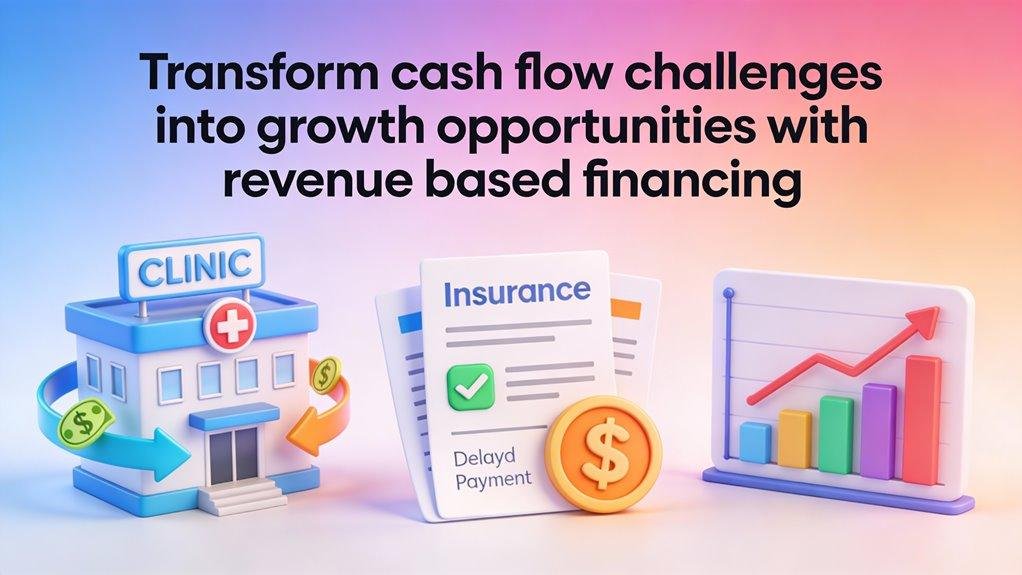
Let’s investigate how revenue-based financing uses clearinghouse data to verify your future receivables and bypasses the usual credit obstacles through claims-based underwriting. This approach lets lenders assess your actual revenue patterns instead of relying upon traditional credit checks. Additionally, with non-notification funding, your patient relationships stay private while you access the capital you need. This method is especially valuable for clinics needing cash flow stabilization during delays in insurance reimbursements, as it allows practices to maximize their practice capital through tailored strategies for managing payment volume.
Using Clearinghouse Data To Verify Future Receivables
When we look at revenue based financing, the key to this efficacy lies in how clearinghouse data verifies future receivables. Clearinghouses capture thorough claim submission information, track real-time claim status, and deliver detailed payment advice electronically.
This data provides lenders with a clear, auditable view of upcoming cash flow. By leveraging clean claim rates and error detection metrics, we accurately assess approval probabilities, reducing uncertainty.
Real-time eligibility and coverage confirmations further tighten receivables forecasts, preventing surprises from rejected claims. This precise verification forms the backbone of an insurance reimbursement bridge, ensuring that funding aligns directly with validated revenue streams.
For clinics, this innovative use of clearinghouse data changes delayed insurance payments from a cash flow risk into a predictable financial asset, enabling them to maintain liquidity without sacrificing independence.
How Claims-Based Underwriting Bypasses Traditional Credit Hurdles
Claims-based underwriting offers a potent alternative for traditional credit checks by focusing in the actual revenue clinics generate from submitted claims. This approach fuels claims-based lending, bypassing old credit obstacles that often slow down funding.
By tapping into data from submitted claims, lenders can quickly assess a clinic’s cash flow and use that as collateral. Here’s how it transforms financing:
- Advances up to 85% of claim value are provided within intervals, speeding access to capital.
- Personal guarantees and credit scores become irrelevant, protecting providers from extra debt risk.
- Funding decisions rely on verified, real-time claim data, reducing paperwork and delays.
This method also benefits from accurate payment posting, which helps identify discrepancies quickly to ensure the claims used for financing are reliable and up to date.
We believe claims-based lending enables clinics to maintain autonomy while securing predictable working capital in today’s complex insurance environment.
Non-Notification Funding: Keeping Your Patient Relationships Private
Although revenue-based financing involves third-party funding, non-notification structures guarantee your patient relationships stay private and unaffected. With an alternate approach, claims are submitted through your usual billing channels, so patients remain unaware of any financing. It is crucial that all claims utilize accurate coding practices to avoid denials and ensure smooth processing.
Funding partners evaluate outstanding claims based on payer reliability and claim quality, not patient credit. Medical billing advances come directly from approved claims, providing your practice with immediate capital while insurers handle payments for the funder.
This method preserves your confidentiality and prevents interruptions to patient care or trust. By bridging your cash flow gaps without involving patients, you maintain operational continuity. This innovative financing mechanism lets you focus on providing care, all while expertly managing revenue delays behind the scenes, safeguarding both your practice’s financial health and your valued patient relationships.
Solving Operational Bottlenecks With Instant Liquidity
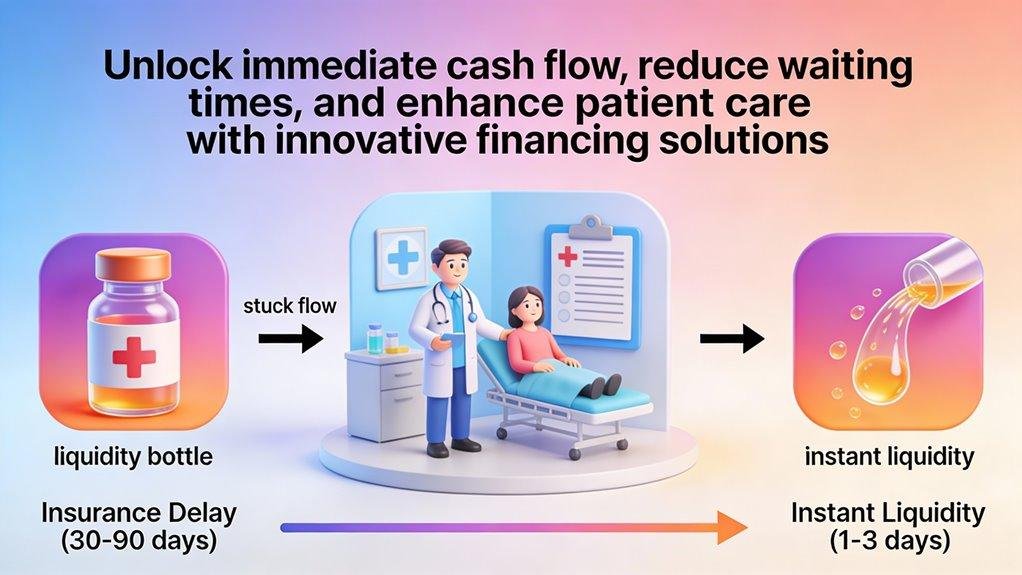
We know seasonal reimbursement delays can create payroll challenges that strain your practice’s operations. By tapping into instant liquidity, we can smooth out those cash flow gaps without turning toward inflexible bank loans. This approach also lets you invest in advanced medical technology that keeps your practice competitive and autonomous. Additionally, flexible sales-linked payment structures allow medical centers to update diagnostic gear while managing their finances effectively.
Bridging The Payroll Gap During Seasonal Reimbursement Lulls
When seasonal reimbursement lulls hit, practices face a harsh reality: payroll doesn’t pause just because payments slow down. For many, December and summer months bring credentialing delays and lower cash flow, creating a payroll gap that traditional reserves often can’t cover.
That’s where rbf for doctors 2026 steps in as a strategic solution. Here’s how we bridge the gap:
- Tap into instant liquidity linked directly with submitted claims via claims-based underwriting.
- Smooth cash flow during credentialing slowdowns without sacrificing equity or control.
- Maintain staff stability and operational momentum despite delayed reimbursements.
Financing Advanced Medical Technology Without Rigid Bank Debt
Financing advanced medical technology no longer requires practices to tackle rigid bank debt that can strain cash flow and limit operational flexibility.
Revenue-based financing offers instant healthcare receivable liquidity directly tied to patient volume and claim payments. This approach avoids the bottlenecks caused by insurance delays, allowing practices to invest in state-of-the-art equipment without fixed repayment schedules.
By linking repayments to actual revenue, we reduce risk and keep operations fluid. Scenario planning and ongoing dialogue help modify financing as patient visits vary, ensuring tech investments remain viable.
With instant liquidity bridging reimbursement gaps, practices overcome operational slowdowns and expand their capabilities confidently. This financing model enables us to innovate while preserving financial autonomy and adjusting swiftly to market changes, all without the burden of traditional bank loans.
Protecting Practice Independence In A Consolidated Market
We know that today’s market pressures make this tempting to evaluate private equity buyouts as a quick fix. But by building a resilient financial stack centered around strategic cash flow, we can protect our practice independence and avoid sacrificing control.
Let’s investigate how targeted revenue financing strengthens our position in a world where consolidation is the norm.
Avoiding The Private Equity Buyout Through Strategic Cash Flow
Since private equity firms have dramatically increased their acquisitions of physician practices, maintaining control over cash flow has become crucial for preserving independence. We must innovate physician cash flow management to resist buyouts and safeguard autonomy.
Here’s how strategic cash flow helps:
- Optimize Revenue Cycles: Accelerate collections by leveraging data-driven tools aligned with your practice’s claims flow.
- Leverage Predictable Financing: Use revenue-based financing to bridge insurance delays without surrendering equity.
- Invest in Operational Tech: Improve analytics and billing systems to reduce business days sales outstanding and enhance financial clarity.
Building A Resilient Financial Stack For The Modern Physician
Building a resilient financial stack starts with recognizing the unique pressures modern physicians face in today’s healthcare marketplace.
Private practice working capital must be agile to absorb insurance delays and rising costs without sacrificing independence. Revenue-based financing offers strategic liquidity, bridging cash flow gaps while avoiding equity loss.
| Challenge | Solution |
|---|---|
| Insurance delays increase DSO | Revenue-based financing |
| Rising operating expenses | Strategic cash flow management |
| Pressure to sell into systems | Maintain autonomy with capital |
| Inflation eroding profits | Timely private practice working capital |
Frequently Asked Questions
How Does Claims-Based Underwriting Impact My Practice’s Financing Terms?
Claims-based underwriting lets us tailor your financing terms by analyzing real-time claim data. We adjust loan amounts and rates based upon reimbursement stability and payer diversity, ensuring your capital matches your practice’s cash flow realities and reduces financial risk.
What Technology Integrations Are Required for RBF Eligibility?
We need smooth integrations with your Clearinghouse API, EHR billing modules, bank account APIs for real-time revenue tracking, and practice management software. These connections enable precise claims verification and flexible repayment adjustments, powering smart, data-driven RBF eligibility.
Can RBF Be Combined With Traditional Lending Options?
Yes, we can combine RBF with traditional loans to enhance flexibility and cost. Pairing revenue-based repayments with fixed-rate loans lets us balance cash flow agility and long-term stability, fueling growth while managing risk smartly and innovatively.
How Does RBF Affect My Practice’s Credit Rating?
We see RBF as a smart tool that can elevate your credit by ensuring timely repayments, avoiding late fees, and improving cash flow stability—helping your practice sustain strong credit profiles and accessing future financing innovation opportunities.
What Happens if an Insurance Claim Is Denied After Funding?
If a claim is denied after funding, we still repay the advance, since this is based on receivables collateral. But we collaborate with you regarding recovery strategies, ensuring your cash flow stays resilient and your practice stays enabled.
