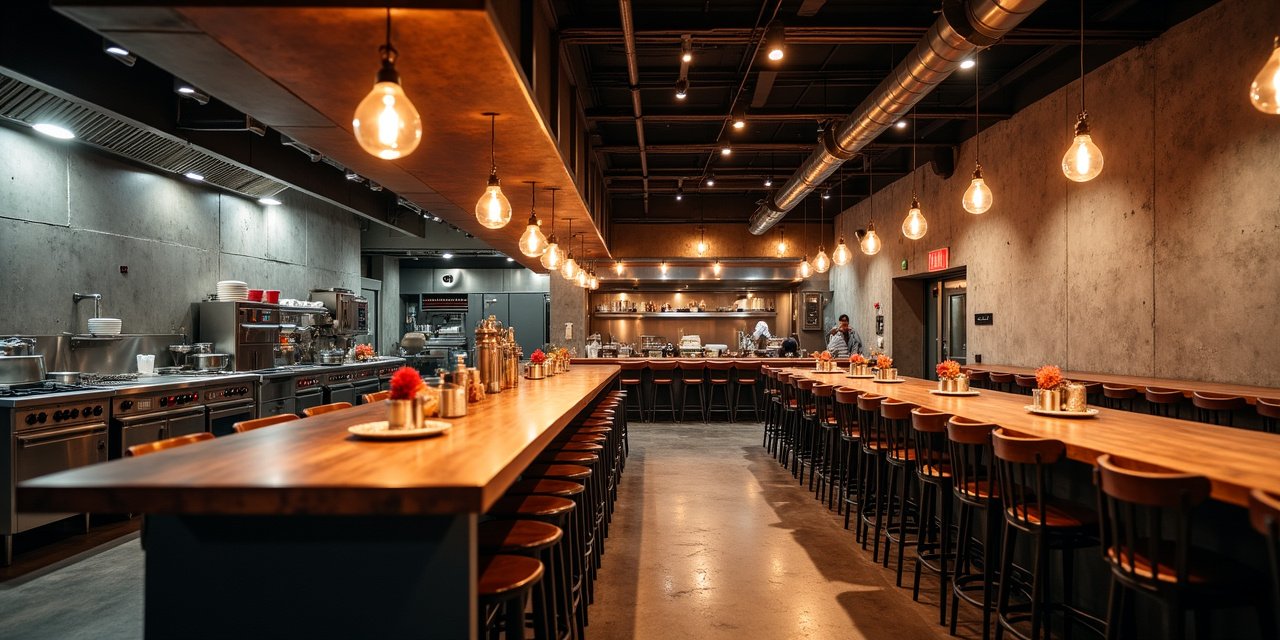
Revenue-based and equipment financing allow full kitchen renovations with zero equity dilution — your ownership percentage stays exactly where it is.
The Equity Trap in Restaurant Renovation Financing
When capital is scarce, operators sometimes accept equity investors to fund renovations. This creates a permanent cost — ongoing profit-sharing — that outlasts the renovation itself.
A kitchen renovation funded at 15% equity stake can cost the operator $80,000–$200,000 in lost profits over five years. The renovation may have cost $60,000.
Non-dilutive financing has a defined, finite cost. You pay the factor rate and the advance is discharged.
Your ownership stays intact.
Non-Dilutive Financing Options for Kitchen Renovations
Multiple products can finance a kitchen renovation without equity involvement. The right choice depends on renovation scope, timeline, and current revenue level.
| Product | Best For | Typical Range |
|---|---|---|
| Revenue-Based Advance | Full kitchen overhauls | $25K–$500K |
| Equipment Financing | New equipment only | $10K–$250K |
| Working Capital Line | Phased renovation | $15K–$150K |
| SBA 504 Loan | Property owners | $50K–$5M |
Renovation ROI: Sizing the Right Advance
A disciplined operator sizes renovation financing against the projected revenue increase, not the maximum available offer. This keeps repayment manageable as throughput ramps up.
Planned renovation is one thing. A sudden equipment failure that forces a closure is another. Our 24-hour breakdown playbook covers the emergency response timeline instead.
- Calculate current average weekly covers and projected post-renovation capacity
- Estimate incremental revenue per additional table turn at your average ticket
- Apply a conservative 60% of projected revenue increase to your repayment model
- Size the advance so repayment is covered within 12–18 months of post-renovation revenue
- Build in a 20% contingency for renovation overruns — they are the rule, not the exception
- Confirm your landlord's consent for structural modifications before committing capital
For a full breakdown of how factor rates and holdback percentages adjust automatically during a construction-phase revenue dip, see restaurant renovation revenue-based loans.
Quick Check
See what you qualify for in under 3 minutes.
No personal guarantee required. No hard credit pull. Revenue history is what qualifies you.
Check Capital Eligibility →What Kitchen Renovation Projects Qualify for Non-Equity Financing
Non-equity kitchen renovation financing is available for a wide range of restaurant improvement projects. Unlike traditional bank renovation loans — which often require the real estate as collateral and effectively require building ownership — revenue-based financing is secured entirely against future revenue. This makes it accessible to operators who lease their space, which represents the majority of Magic Valley restaurant operators.
Renovation projects commonly funded through revenue-based programs:
- Full kitchen redesigns — hood systems, line reconfiguration, workflow optimization
- Equipment upgrades integrated into the renovation (ranges, ovens, refrigeration)
- Flooring, wall treatment, and structural improvements to the kitchen space
- Front-of-house renovation — dining room refresh, bar buildouts, accessibility improvements
- Outdoor seating and patio construction or expansion
- Utility and HVAC upgrades — electrical panel upgrades, gas line additions, ventilation
- Grease trap installation or replacement (often required by local health code)
Projects that require contractor work — not just equipment purchases — can be funded through a single revenue-based advance. Operators pay contractors directly from the advance proceeds, eliminating the need to manage separate equipment loans and construction financing simultaneously.
Buying the equipment and remodeling the space it sits in are different financing decisions. If your project is equipment replacement only — no walls, plumbing, or permits involved — see our guide to quick loans for kitchen equipment.
Renovation ROI: Modeling the Return Before Drawing Capital
Kitchen renovations financed without equity are still capital with a cost. Before drawing an advance for a renovation, model the expected revenue impact to confirm the project economics are sound. Not every renovation increases revenue proportionally — some improve operations without a corresponding top-line impact.
Revenue-positive renovation categories (strong ROI justification for financing):
- Throughput upgrades: A kitchen redesign that reduces ticket time by 3 minutes during peak service adds 20–30% more covers per hour. At $45 average check, this directly increases revenue from the same labor base.
- Capacity expansions: Adding an outdoor patio that seats 20 additional covers extends revenue capacity during high-demand periods without proportional fixed cost increases.
- Compliance renovations: Grease trap replacements and code-required improvements protect the operating license — the foundational revenue asset. These justify financing even without direct revenue growth.
Renovations with less certain revenue ROI (caution before financing):
- Aesthetic refreshes without functional throughput impact
- Expansions into markets or dayparts without tested demand
- Technology installations with unproven adoption in your specific customer base
A disciplined approach: fund only the renovations where you can model a specific revenue or cost impact, and finance aesthetic improvements from operating cash flow rather than leveraged capital.
Kitchen Build-Out Reality: Permits, Code, and Closure Costs
A kitchen renovation is a construction project, not a purchase. Walls, plumbing, and ventilation trigger regulatory steps that equipment-only upgrades skip entirely.
Most jurisdictions require a separate health department plan review before construction starts. That's typically 2–6 weeks, on top of standard building permits.
Fire departments add their own approval. Kitchen exhaust hood inspection certification is a distinct sign-off, not bundled into a general building permit. See Boston's restaurant construction and renovation permitting guide for a representative process.
Ventilation work must meet NFPA 96, the fire code for commercial cooking exhaust. It requires quarterly inspections for high-volume cooking, semi-annual for standard kitchens.
Fire suppression systems need checks at least every 6 months. A hood system that doesn't meet current NFPA 96 clearances can block your final inspection, regardless of financing.
Cost scales with scope, not just square footage. Commercial kitchen renovation runs $175–$700 per square foot, averaging $250–$400 for comprehensive projects.
Projects typically take 8–16 weeks. The kitchen generates no revenue during active construction — budget 3–4 months of operating expenses to cover the closure window.
This is why non-dilutive financing structured as a lump sum matters here. Permit delays and inspection failures extend closure unpredictably, and a fixed-payment loan doesn't flex when the health department pushes your reopening date.
A revenue-based advance's repayment scales down automatically if reopening slips past your original timeline.
Frequently Asked Questions
Non-dilutive financing means no equity stake is surrendered. Revenue-based advances, equipment financing, and working capital lines are all non-dilutive.
Equity investment from partners or investors is dilutive.
Revenue-based programs can fund renovation projects up to $500,000 for high-revenue operators. Most restaurant renovations in the $50,000–$150,000 range are well within program limits.
Yes. Revenue-based funding is disbursed as a lump sum and is yours to deploy on your timeline. You control whether to renovate in phases or shut down briefly for a full overhaul.
The financing itself does not require landlord approval. However, your lease likely contains provisions about structural modifications to the space. Review your lease carefully before beginning any renovation — many leases require written landlord consent for work beyond routine maintenance.
Yes. Staged renovations — completing one phase per advance cycle — are a common approach. Phase one might cover kitchen equipment and ventilation; phase two, front-of-house. Each advance is sized and repaid independently, keeping individual repayment obligations manageable relative to your revenue.
External Resource
SBA.gov Small Business Financing — U.S. Small Business Administration — Restaurant Funding
Ready to check your options?
Rev Boost Funding connects operators with independent financing partners. Not a lender.
Affiliate partnerships present.
Check Capital Eligibility → You Finished This — Add as Preferred SourceOperator Decision Matrix
Which Capital Instrument Fits Your Situation?
Match your equipment status and revenue profile to the right financing structure.
$25K+/mo
$10K–$25K/mo
Instrument recommendations are illustrative. Actual eligibility depends on lender underwriting criteria and business profile.
Revenue Financing Estimator
How Much Capital Can You Access?
Adjust the inputs to estimate your funding range. Illustrative only — no credit pull.
Illustrative estimate only. Not a lending commitment. Actual terms depend on lender underwriting and business profile. Results vary.
Verify Actual Eligibility →