

We understand that traditional healthcare loans with fixed payments can strain your clinic’s cash flow. That’s why we focus upon revenue-aligned financing, where repayments adjust based upon your actual practice income.
This flexible approach reduces financial stress, especially during slow periods or reimbursement delays.
You may be interested


Additionally, swift approval processes powered by real-time data mean quicker access to capital for upgrades and staffing.
Exploring these options can reveal strategies that support your practice’s financial health and independence.
Key Takeaways
- Revenue-aligned financing adjusts loan payments based on clinic cash flow, reducing financial strain compared to fixed bank loans.
- Flexible healthcare funding offers variable repayments tied to patient volume, enhancing cash flow management and operational agility.
- Real-time underwriting using clinical cash flow data accelerates loan approval processes, often within 24 hours.
- Funding supports investments in AI and staffing with adaptable terms while maintaining strict HIPAA compliance for data security.
- Non-dilutive, flexible financing options preserve practice independence and prevent reliance on corporate buyouts or rigid loan structures.
The Evolution Of Medical Practice Capital
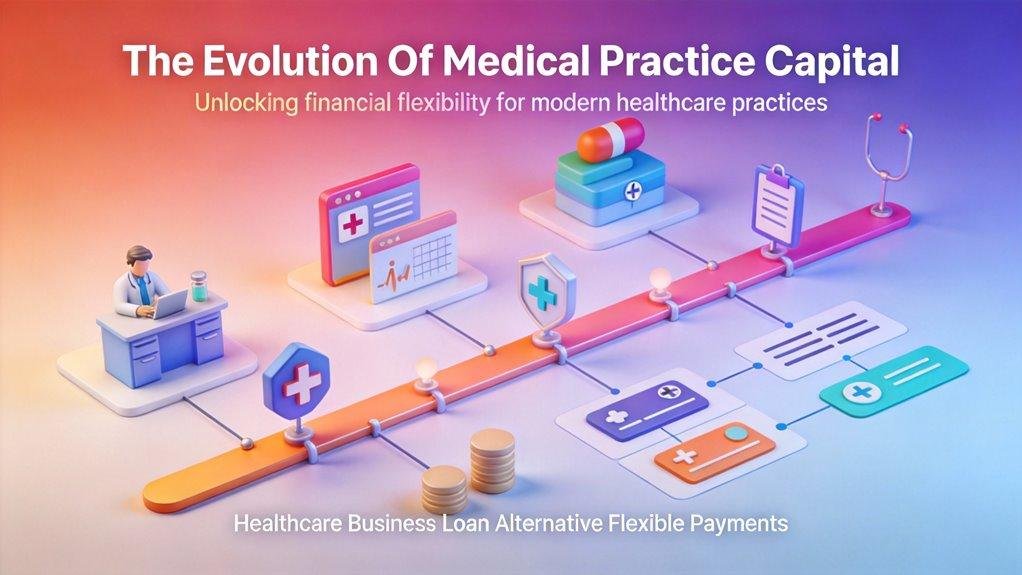
Fixed bank loans are no longer a reliable option for many medical practices because they demand rigid monthly payments regardless from fluctuating revenues. We’re seeing a clear shift toward revenue-aligned financing that adjusts with a clinic’s cash flow, reducing financial stress during slower periods. This trend aligns with the increasing preference for financing solutions that consider practice revenue multiples, typically ranging from 0.5 to 1.0x for small to mid-sized practices, providing more tailored and realistic repayment structures. Revenue-based loans are emerging as a key solution for providers looking to navigate these challenges successfully.
This new approach better supports high-value operators who need flexible capital in match the unpredictable pace of healthcare today.
Why Fixed Bank Loans Are Becoming A Liability For Clinics
Because healthcare practices face fluctuating revenue and unpredictable expenses, traditional bank loans with rigid monthly payments can put significant strain on cash flow. Fixed repayment schedules often mismatch with the variable income patterns seen in healthcare working capital, especially during seasonal slowdowns or unexpected costs.
These loans can also hide balloon payments or fees that suddenly increase financial pressure, threatening practice stability. Furthermore, strict credit and collateral requirements limit access and flexibility, while long approval timelines interrupt timely growth investments. Most traditional loans require good credit and collateral, which can be challenging for many medical practices to provide.
Such rigidity forces clinics to allocate funds toward fixed debt instead of expanding patient services or upgrading equipment. For forward-thinking practices, relying on fixed bank loans is increasingly risky. We need capital solutions that adjust to real-time revenues and support sustainable growth in today’s changing healthcare environment.
Understanding The Shift Toward Revenue-Aligned Financing
How can medical practices thrive amid rising costs and fluctuating revenues? The answer lies in healthcare revenue based financing, an innovative alternative for rigid bank loans.
Unlike fixed payments that strain cash flow when patient volume drops, this adaptable model links repayments to actual revenue. In 2026, lenders now use practice telemetry to assess current billing data, enabling them to offer capital aligned with a practice’s cash flow velocity. This approach helps address ongoing concerns about financial sustainability inherent in traditional funding models.
This approach acts as a financial shock absorber, helping practices manage seasonal shifts and insurance changes without risking payroll or operations. By focusing on future receivables as bankable assets, revenue-aligned financing enables high-value operators to stay competitive, accelerate growth, and avoid the pitfalls of traditional debt in today’s evolving healthcare environment.
The Anatomy Of Flexible Healthcare Funding
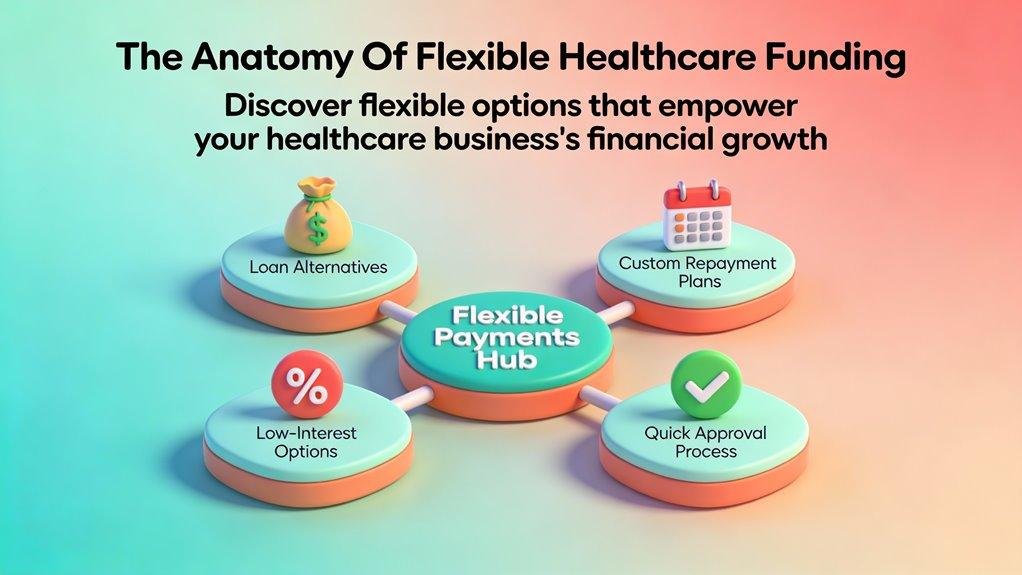
We know that variable payments align directly with patient volume, helping to ease the stress caused by delays in insurance reimbursements. Such flexibility lets us use capital when we need that most, like upgrading AI diagnostic tools or managing sudden staffing demands. By syncing payments with real-time practice activity, we maintain steady operations without overextending our resources. Access to flexible benefits like healthcare FSAs can similarly support employees managing healthcare costs, enhancing financial stability. This approach is vital as flexible sales-linked payment structures can significantly improve cash flow for healthcare organizations.
How Variable Payments Synchronize With Patient Volume
When patient volume changes, the costs associated with running a practice shift right along with that. Variable payment healthcare funding aligns payments with these volume fluctuations, matching expenses for medications, supplies, and staffing. This approach allows us to cover the true variable costs tied to patient demand, creating a versatile global budget model that adjusts fluidly. Instead of fixed fees, payments scale proportionally with incremental volume changes, reducing the pressure to deliver unnecessary care just to meet rigid budgets. Single-payer financing has been shown to improve payment distribution significantly by income, which could enhance financial fairness in healthcare funding. This synchronization means we’re not locked into payments that can stress cash flow during slow periods. By embracing variable payments that directly correspond with patient volume, we gain financial agility, staying flexible and competitive while managing our resources more effectively in the changing healthcare climate.
Protecting Your Practice Against Insurance Reimbursement Lags
Although insurance reimbursement delays are nothing new, their growing impact in 2026 is forcing practices into rethink cash flow strategies.
Rising Medicare and Medicaid payment lags, combined with ACA marketplace instability, create unpredictable revenue gaps that challenge traditional financing. To remain adjustable, we must welcome flexible practice capital, aligning repayments with actual cash inflows. The expiration of ACA subsidies and expected coverage losses further complicate revenue predictability, increasing the need for adaptable funding solutions coverage loss.
This approach shields us from the rhythm of delayed reimbursements and fluctuating insurance cycles. Unlike fixed loans, flexible capital acts as a financial shock absorber, automatically modifying to the pace of settlements.
Using Capital For AI-Diagnostic Upgrades And Staffing Surges
Protecting against reimbursement lag is only one component in maintaining smooth operations in 2026. We know that utilizing private practice growth capital strategically enables practices to invest in AI-diagnostic upgrades and staffing surges.
Flexible funding options, including revenue-based financing and lines of credit, allow us to phase AI system rollouts or swiftly hire temporary staff without traditional loan rigidity. With loans up to $500K for AI equipment and up to $5 million for staffing, capital is accessible with rapid approvals and flexible repayment structures. The quick eligibility check process takes only seconds, empowering practices to secure funds efficiently through a streamlined application.
This approach shields us from fixed payment stress and aligns repayment with cash flow, helping us scale efficiently. Embracing flexible capital keeps our practices innovative and competitive, ensuring that technology and staffing needs are met without compromising operational stability.
Digital Integration And The 24-Hour Approval
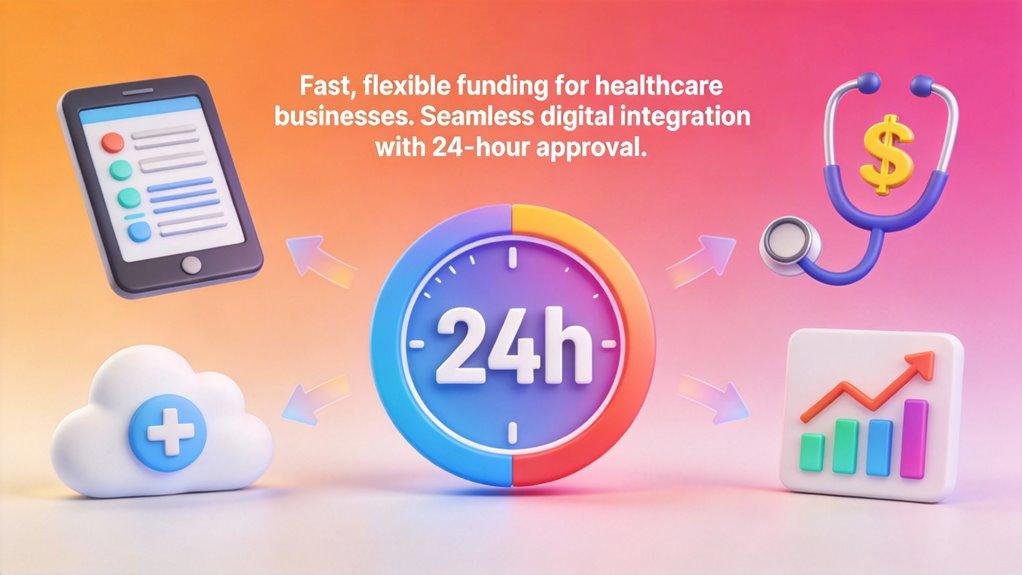
Let’s investigate how connecting your billing clearinghouse enables real-time underwriting that accelerates approval in just 24 hours. We can do so while carefully maintaining HIPAA compliance to protect your practice’s sensitive data. Such integration gives you quicker access to growth capital without the usual paperwork delays. Additionally, leveraging private credit can provide options when federal loan applications fall short, expanding your financing opportunities.
Connecting Your Billing Clearinghouse For Real-Time Underwriting
How can connecting your clearinghouse alter the underwriting process for your healthcare practice? By integrating your clearinghouse via secure APIs, underwriting becomes a fluid, real-time activity.
This digital link feeds live clinical cash flow solutions data directly to lenders, replacing outdated tax returns with current revenue streams. It speeds up approvals, often within 24 hours, by providing immediate claim status, eligibility verification, and mechanized validations. This shift guarantees payments align with actual cash flow, reducing fixed payment stress.
| Feature | Benefit |
|---|---|
| Real-Time Claims Routing | Instant claim updates |
| Mechanized Claims Validation | Increased accuracy |
| Predictive Clearinghouse | Enhanced billing workflows |
| Unified Dashboards | 24-hour approval tracking |
| AI Claim Scrubbing | Reduced errors & quicker funding |
Connecting digitizes underwriting and powers smarter growth capital decisions.
Maintaining HIPAA Compliance While Accessing Growth Capital
Maintaining HIPAA compliance while accessing growth capital requires careful integration from digital tools and secure processes. In medical alternative lending, leveraging practice management software and encrypted billing systems keeps protected health information safe.
We guarantee payments flow through HIPAA-compliant processors with role-based access and activity monitoring to prevent unauthorized disclosures. Digital integration enables 24-hour approval without compromising privacy by sharing only the minimum necessary data.
We follow documented risk management and manage regular staff training to uphold compliance. This approach not only protects patient information but also simplifies flexible financing options aligned with your practice’s revenue.
Strategies For Long-Term Practice Independence
In order to maintain long-term independence, we must concentrate around securing strategic liquidity that keeps us agile and out from corporate buyout reach. Constructing a resilient cash flow framework helps us manage revenue fluctuations and seasonal challenges without depending around rigid loan payments. Together, these strategies create a strong foundation for private medicine that supports our growth and autonomy. Additionally, tapping into non-dilutive funding can provide flexible financial solutions without sacrificing ownership or control.
Bypassing Corporate Buyouts Through Strategic Liquidity
Strategic liquidity acts as a vital shield against the rising tide of corporate buyouts threatening independent practices. By organizing our cash into tiered liquidity structures, operating, reserve, and strategic pools, we maintain flexibility during revenue fluctuations and regulatory shifts.
This approach allows us to pursue growth without risking stability. Medical debt restructuring is a key tool here; it liberates capital tied up in legacy obligations, permitting us to reallocate funds toward innovation and expansion.
We utilize real-time data and AI-driven revenue cycle management for sharper liquidity decisions. This strategic cash management helps us avoid rigid loans and protects our autonomy.
When we focus on liquidity as an adaptive asset, we limit dependency on corporate buyouts and enhance long-term independence for our practices in a changing healthcare economy.
Building A Resilient Cash Flow Architecture For Private Medicine
Even when patient volume and reimbursement rates fluctuate, we can keep our practice financially strong by building a resilient cash flow system.
In order to achieve this, we must track weekly cash flow and monitor expense categories closely, aligning our budgets with actual healthcare delivery costs.
Optimizing revenue cycle management reduces billing errors and speeds up reimbursements, improving financial visibility. Embracing patient volume financing through flexible payment models lets us adjust debt service based upon daily receipts, cushioning revenue swings.
Mechanized claims submissions and rapid insurance clearance accelerate payments, while multiple payment options ease patient collections.
Maintaining reserves and securing strategic credit lines guarantee liquidity during slow periods. Together, these strategies create a fluid cash flow structure that supports long-term independence and shields us from fixed payment stress in today’s shifting healthcare market.
Frequently Asked Questions
How Does Revenue-Based Financing Affect My Credit Score?
We know revenue-based financing doesn’t usually impact your credit score directly since repayments are tied with revenue, not fixed debt. While some funders check credit up front, ongoing payments act like operating expenses, keeping your credit healthier.
Can Flexible Payments Accommodate Unexpected Practice Closures?
Yes, we’ve seen flexible payments absorb revenue shocks from unexpected closures by adjusting repayment amounts in real time. Such agility keeps cash flowing and practice operations stable, allowing us to innovate without being trapped by fixed debt obligations.
What Industries Beyond Healthcare Benefit From Revenue-Aligned Capital?
We see industries like SaaS startups, renewable energy, fitness, and impact-driven ventures thrive with revenue-aligned capital. This fuels growth without equity loss, adjusts to seasonality, and accelerates innovation—perfect for flexible, forward-thinking businesses like yours.
How Secure Is the Data Shared via Practice Telemetry APIS?
We trust practice telemetry APIs because they use strong encryption like TLS 1.2+, OAuth for secure access, and strict authentication. Furthermore, continuous monitoring and HIPAA-compliant policies guarantee your sensitive data stays safe and private at every step.
Are There Penalties for Early Repayment With Flexible Capital?
No, we don’t face penalties for early repayment with flexible capital. It’s designed to adjust to our cash flow, letting us pay off quickly without extra fees—fueling our growth without the burden from traditional loan constraints.
