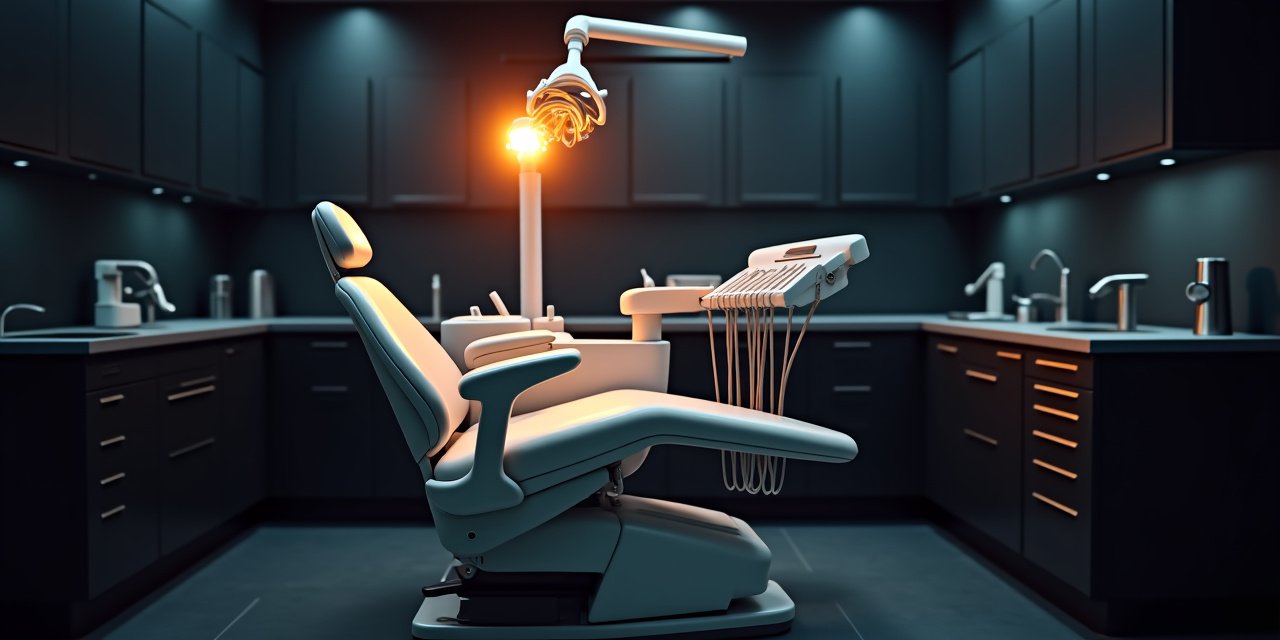
Dental practices with $10K+ in monthly collections can access working capital in 24–72 hours through revenue-based financing, with no collateral and no personal guarantee required in most cases.
Why Dental Practices Need Capital and Can't Always Wait for It
Modern dentistry is capital-intensive. The equipment that patients expect, and that insurance companies increasingly require for documentation, costs serious money. A CBCT cone beam scanner runs $80,000 to $150,000. A CAD/CAM unit for same-day crowns is $50,000 to $80,000. Replace four operatory chairs with current-generation units and you're looking at $35,000 to $60,000 before installation. That's before you touch digital X-ray systems, practice management software, or intraoral cameras.
The list doesn't stop at equipment. A second location — even a modest one — means $120,000 to $250,000 in leasehold improvements before a single patient walks in. Hiring an associate dentist or specialist means carrying payroll months before the new revenue materializes. Digital marketing to compete in a saturated market runs $2,000 to $5,000 per month. Continuing education and subscription technology platforms add more recurring overhead every year.
None of those costs pause while a bank processes your loan application.
The problem isn't that dental practices can't afford capital. Most well-run practices can service debt easily. The problem is timing. Equipment decisions have windows. Lease opportunities don't wait. And associate hiring is a market, not a scheduled event — when a qualified candidate is available, you either move or lose them.
The same timing pressure shows up across specialty medicine. Radiology practices finance imaging equipment against a payer collections cycle. Veterinary practices bridge seasonal working capital gaps.

Why Banks Struggle With Dental Practice Financing
Banks aren't bad at lending. They're just built for a different kind of borrower.
Bank underwriting for practice loans is heavily collateral-focused. They want real estate. They want equipment with strong residual value. Dental chairs and digital imaging systems don't depreciate well, which makes them poor collateral in a bank's eyes even though they're the engine of your revenue. Most dental practices are in leased space, so real estate collateral is off the table unless the dentist owns property personally.
That leads directly to the personal guarantee. Banks almost universally require it for healthcare practice loans. Your personal financial life, your home, your retirement accounts, all of it becomes security for a business loan. That's a significant exposure many practice owners are unwilling or unable to accept.
The debt service coverage ratio requirement creates another obstacle. Banks typically want to see that your practice earns 1.25x or more the amount of all existing debt obligations including the new loan. If you're carrying student loans, an existing equipment note, and office lease obligations, hitting that DSCR threshold is harder than it looks on paper even for a genuinely profitable practice.
Then there's the timeline. Thirty to ninety days is normal for a bank healthcare loan. Some take longer. By the time you get a decision, the specific scanner you wanted is back-ordered, the associate took a job somewhere else, or the lease opportunity is gone. Speed matters. Banks simply aren't structured to move fast.
How Revenue-Based Financing Works for a Dental Practice
Revenue-based financing cuts straight to the point. You have monthly production. That production is predictable. Lenders fund against it.
The underwriting process is built around 3 to 6 months of bank statements showing your practice's actual collections. No tax returns required in most cases. No business plan. No audited financials. The lender wants to see consistent monthly revenue, and dental practices typically have exactly that — predictable production driven by patient schedules, insurance reimbursements, and recurring treatment plans.
Funding amounts are typically 1x to 2x your average monthly production. A practice collecting $60,000 per month can generally access $60,000 to $120,000 within 24 to 72 hours of approval. The factor rate on that capital ranges from 1.15x to 1.35x depending on the provider, your revenue history, and the term length.
Repayment works as a fixed daily or weekly ACH debit drawn from your operating account. Some providers structure it as a percentage of monthly revenue, which means slower months produce smaller payments. That flexibility matters for practices with seasonal patterns, insurance plan changeovers, or periods of transition like adding a new associate whose schedule hasn't filled yet.
There's no collateral requirement. The revenue is the collateral. And most RBF providers don't require a personal guarantee, which is the single biggest structural advantage over traditional equipment financing for most practice owners. For more on this, see our full guide on how to avoid a personal guarantee when accessing business capital.
The cost isn't free — factor rates mean you pay back more than you borrowed. A $100,000 advance at a 1.25x factor costs $125,000 total. That's real money. But compared to delaying equipment that will generate revenue for the next 10 years, the math usually works clearly in favor of moving.
What Dental Practices Actually Use RBF For
The use cases are broader than most practice owners realize.
Equipment purchases are the obvious one. CBCT scanners, CAD/CAM units, laser systems, digital X-ray upgrades, intraoral scanners — all of it qualifies. There's no restriction on use. The capital goes to your business account and you write the check for whatever the practice needs.
Expansion is equally common. Opening a second location means construction, dental equipment, signage, staffing, and marketing all happening simultaneously before revenue at the new site materializes. RBF bridges that gap without requiring you to personally guarantee the entire buildout.
Associate hiring is a use case that surprises people. An associate dentist adds production capacity, but they cost salary plus benefits from day one while their patient schedule builds over three to six months. RBF funds that gap cleanly. You're not pulling from practice reserves or going to a bank — you're funding the payroll ramp with capital borrowed against the very revenue the associate will eventually generate.
Marketing and patient acquisition is another solid use case. Google Ads, local SEO, direct mail, new patient specials, community outreach — all of these cost money now and produce patients over time. Banks won't touch intangible marketing expenses. RBF doesn't care. You're borrowing against your revenue, not your marketing ROI projections.
Before committing to any capital product, take time to understand what to look for in the term sheet. Factor rates, prepayment terms, renewal clauses, and daily debit amounts all vary by provider and they all affect the true cost of the capital.
What RBF Lenders Look for in a Dental Practice Application
Qualifying for dental practice RBF is significantly simpler than qualifying for a bank loan. That's the point. But there are still things lenders want to see.
Monthly production consistency matters most. A practice doing $40,000 one month and $15,000 the next raises questions. A practice doing $35,000 to $45,000 consistently for six months gets funded fast. Lenders want to see that your revenue is real and repeatable, not an aberration.
Minimum monthly collections for most providers sit around $10,000. That's a very low bar for most active practices. A solo practitioner with a modest schedule will likely clear that. Multi-provider practices with strong production are typically funded at higher multiples with better rates.
Time in business matters. Most RBF providers want at least six months of operating history, preferably twelve. A brand-new practice won't qualify. A practice that's been operating for two or more years with clean bank statements is a strong candidate.
There's no hard minimum credit score for most RBF providers, but severe derogatory marks — recent bankruptcies, tax liens, significant judgments — can create friction. The credit review is a factor, not the entire underwriting decision.
The application itself is fast. Most providers require three to six months of business bank statements, a voided check, and basic business information. No tax returns in most cases. No financial projections. No business plan. You can go from application to funded in under 72 hours with a clean bank statement file. Our healthcare financing options guide covers what's available specifically for practices across multiple specialties.
Bank Loan vs Revenue-Based Financing for Dental Equipment
| Factor | Bank Equipment Loan | Revenue-Based Financing |
|---|---|---|
| Approval time | 30–90 days | 24–72 hours |
| Personal guarantee | Usually required | Not required in most cases |
| Collateral | Equipment + practice assets | None |
| Funding amount | Up to equipment cost | Up to 2x monthly production |
| Revenue requirement | $200K+ annual | $10K+ monthly collections |
| Credit score minimum | 680+ | No hard minimum |
| Application docs | Tax returns, financials, business plan | 3–6 months bank statements |
| Rate structure | Fixed APR | Factor rate (1.15–1.35x) |
Capital Intelligence
Dental Practice Capital Needs vs Approval Speed
Comparing typical equipment costs and funding timelines: traditional bank vs revenue-based financing
Source: Rev Boost Funding analysis of dental practice capital timelines, 2026
Quick Check
See what you qualify for in under 3 minutes.
No personal guarantee required. No hard credit pull. Revenue history is what qualifies you.
Check Capital Eligibility →Frequently Asked Questions
Yes. Dental practices are well-suited for RBF because they produce consistent monthly collections. Most RBF providers fund based on 3–6 months of bank statements showing monthly production, not on real estate collateral or business plans. A practice with $20,000 or more in monthly collections can typically get funded within 72 hours.
Most RBF providers look for $10,000 or more in monthly collections. A practice producing $30,000 to $80,000 per month can typically access $30,000 to $160,000 within 24 to 72 hours of application. Higher monthly production unlocks higher funding amounts at better factor rates.
Yes. RBF is general-purpose business capital. Dental practices regularly use it for CBCT scanners, CAD/CAM units, chair upgrades, digital imaging systems, and other equipment. There's no restriction on use. The capital goes directly to your business account and you purchase what you need through your normal vendor.
Repayment is typically structured as a fixed daily or weekly ACH debit based on your revenue. Some providers use a percentage of monthly collections. Slower production months mean smaller payments, which is structurally different from a fixed bank loan that demands the same payment regardless of what your practice collects that month.
In most cases, no. RBF providers fund against business revenue, not personal assets. This is one of the main reasons dental practice owners prefer RBF over traditional equipment loans, which almost always require a personal guarantee and expose the owner's personal financial assets to business risk.
External Resource
American Dental Association Practice Management Resources — ADA's practice management hub covers equipment investment planning, staffing considerations, and financial benchmarks for dental practices of all sizes.
Ready to check your options?
Rev Boost Funding connects operators with independent financing partners. Not a lender.
Affiliate partnerships present.
Financial figures, rate ranges, and cost estimates on this page are illustrative only. They are modeled from published market data and do not represent guaranteed outcomes. Individual terms vary by lender and operator profile.
Check Capital Eligibility → You Finished This — Add as Preferred Source