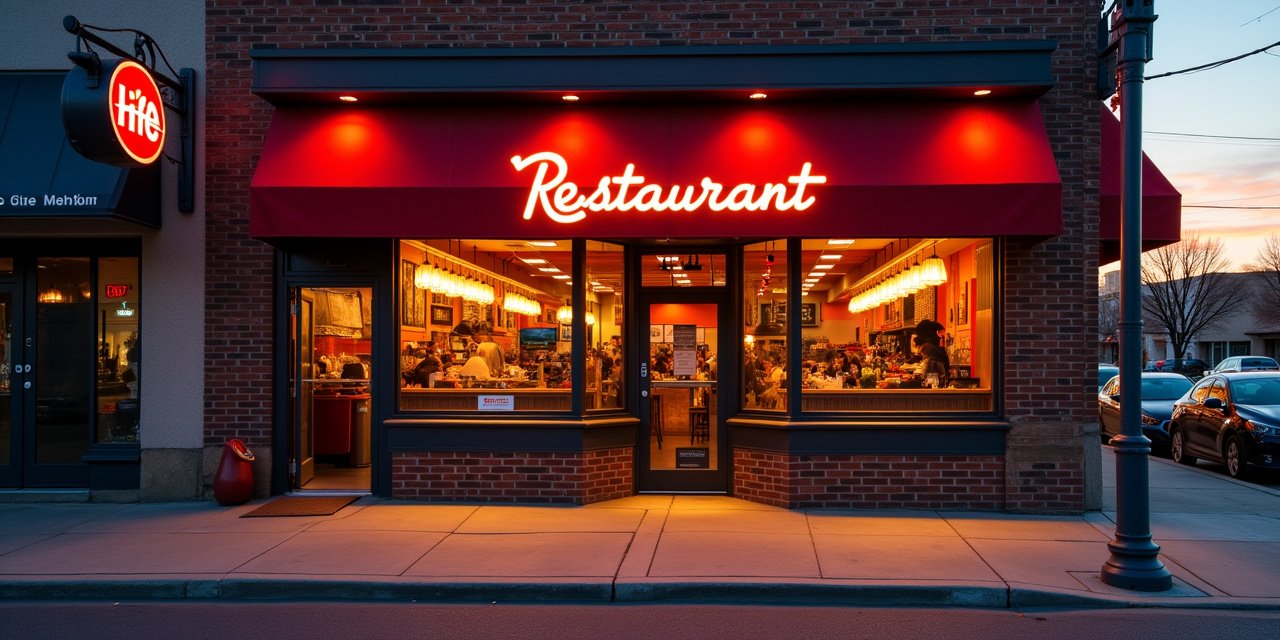
MCAs deliver speed and flexibility but carry higher effective costs than traditional loans — know your factor rate before committing.
What Is a Restaurant Cash Advance?
A restaurant cash advance (also called a merchant cash advance or MCA) is a lump-sum payment made to a restaurant in exchange for a portion of its future sales. It is not technically a loan — there is no fixed interest rate, no fixed repayment term, and no monthly payment schedule.
Instead, the advance provider takes a fixed percentage of your daily card receipts (the “holdback”) until the full agreed amount is repaid. The total repayment is determined by a “factor rate” — typically 1.15× to 1.49× the amount advanced.
Example: Borrow $25,000 at a 1.25 factor rate → total repayment is $31,250, collected at 12% of daily card volume until paid back.
How Restaurant Cash Advances Work
The mechanics of a restaurant MCA differ from traditional loans in several important ways.
- Approval: Based primarily on average monthly card volume — not credit score or tax returns
- Funding: Capital deposited to your business account within 24–48 hours of approval
- Repayment: Automatic daily deduction of a fixed percentage of credit/debit card receipts
- Duration: No fixed term — repayment ends when the total payback amount is reached
- Cost: Measured in factor rates (not APR) — factor rate × advance amount = total repayment
What Operators Report: The Approval Experience
Most restaurant operators report that MCA applications take 4–24 hours from submission to decision. Funding hits the business account within 24–48 hours of approval.
The documentation burden is minimal compared to bank products. Three months of bank statements and a voided business check are typically sufficient for advances under $50,000.
Operators with longer track records and higher average monthly revenues consistently report being offered better factor rates on first contact.
MCA Term Comparison: What the Numbers Look Like
Understanding factor rates versus APR is critical before signing any MCA agreement. A 1.30 factor rate on a 6-month advance is very different from a 1.30 on a 12-month term.
| Advance Amount | Factor Rate | Total Repayment | Estimated APR |
|---|---|---|---|
| $25,000 | 1.20x | $30,000 | ~65% (6-month) |
| $50,000 | 1.25x | $62,500 | ~58% (8-month) |
| $100,000 | 1.30x | $130,000 | ~50% (12-month) |
| $25,000 | 1.45x | $36,250 | ~130% (6-month) |
What Operators Wish They Knew Before Signing
Pattern analysis across operator experiences reveals consistent themes. The issues below appear repeatedly in post-funding conversations.
- Always ask for the effective APR, not just the factor rate — providers are rarely forthcoming with this calculation
- Renewal offers come fast — sometimes before 50% repayment — and often carry worse terms than the original
- Daily remittances hit regardless of whether the kitchen was closed for a holiday or emergency
- Prepayment discounts exist but must be explicitly negotiated upfront, not requested later
- Stacking multiple advances compounds the daily drain and has caused closures for operators with thin margins
- Reconciliation processes for weekly or monthly holdback adjustments vary significantly by provider
Better Alternatives to Restaurant Cash Advances
Cash advances are fast but expensive. For restaurants that can wait 2–5 business days, these alternatives typically cost significantly less.
| Option | Cost | Speed | Best For |
|---|---|---|---|
| Revenue-Based Financing | 1.10×–1.35× factor rate | 2–5 days | Restaurants with $10K+ monthly revenue |
| SBA Microloan | 8–13% APR | 2–4 weeks | Established restaurants needing $50K or less |
| Bank Line of Credit | Prime + 2–5% | 4–8 weeks | Profitable restaurants with 2+ years history |
| Merchant Cash Advance | 1.15×–1.49× factor rate | Same day | Emergency capital when speed is the only priority |
Revenue-based financing is typically the best MCA alternative for restaurants. It uses the same revenue-based underwriting (no tax returns, no collateral) but carries a lower factor rate and more flexible repayment structure than standard MCAs.
What Legal Protections Actually Cover Your MCA Offer
MCA contracts sit outside most consumer lending law. A handful of state rules still apply. Few restaurant operators check which ones cover their deal.
New York's Commercial Finance Disclosure Law forces sales-based providers to disclose costs upfront. Coverage extends to advances up to $2,500,000.
New York also closed a favorite enforcement loophole. S6395, signed in 2019, bars filing confessions of judgment against out-of-state operators.
Before 2019, out-of-state judgments needed no hearing. That path is closed now for operators outside New York.
Confession-of-judgment clauses often travel with a personal guarantee on the same term sheet. Review both together, not separately.
Federal oversight lags behind. The CFPB has moved to exclude MCAs from its small-business lending data-reporting rule entirely.
Idaho has no MCA-specific disclosure statute of its own. Confirm which state's law governs your contract before signing. Request the annualized rate in writing either way.
A provider that won't produce that number is telling you something already.
Quick Check
See what you qualify for in under 3 minutes.
No personal guarantee required. No hard credit pull. Revenue history is what qualifies you.
Check Capital Eligibility →Frequently Asked Questions
Restaurant MCAs typically hold back 8–18% of daily credit and debit card receipts. The rate depends on your average monthly revenue and the size of the advance.
Stacking advances is possible but significantly increases your cost of capital and daily cash drain. Most experienced operators advise against stacking more than two positions simultaneously.
Revenue-based remittances flex with your sales. If card volume drops, your daily payment automatically adjusts downward, unlike fixed-payment loan products.
A restaurant cash advance is a lump-sum payment made to a restaurant in exchange for a portion of its future sales. The advance provider collects a fixed percentage of daily credit/debit card receipts (the holdback) until the total payback amount is reached. Unlike a loan, there is no fixed repayment term or interest rate — repayment speeds up when sales are high and slows when sales drop.
Restaurant cash advances are priced using a factor rate, typically 1.15×–1.49× the advance amount. On a $25,000 advance at a 1.25 factor rate, total repayment is $31,250 — a cost of $6,250. In APR terms this translates to roughly 58–130% depending on repayment duration. Always ask for the effective APR, not just the factor rate, before signing.
External Resource
SBA.gov Small Business Financing — U.S. Small Business Administration — Restaurant Funding
Ready to check your options?
Rev Boost Funding connects operators with independent financing partners. Not a lender.
Affiliate partnerships present.
Check Capital Eligibility → You Finished This — Add as Preferred SourceOperator Decision Matrix
Which Capital Instrument Fits Your Situation?
Match your equipment status and revenue profile to the right financing structure.
$25K+/mo
$10K–$25K/mo
Instrument recommendations are illustrative. Actual eligibility depends on lender underwriting criteria and business profile.
Revenue Financing Estimator
How Much Capital Can You Access?
Adjust the inputs to estimate your funding range. Illustrative only — no credit pull.
Illustrative estimate only. Not a lending commitment. Actual terms depend on lender underwriting and business profile. Results vary.
Verify Actual Eligibility →