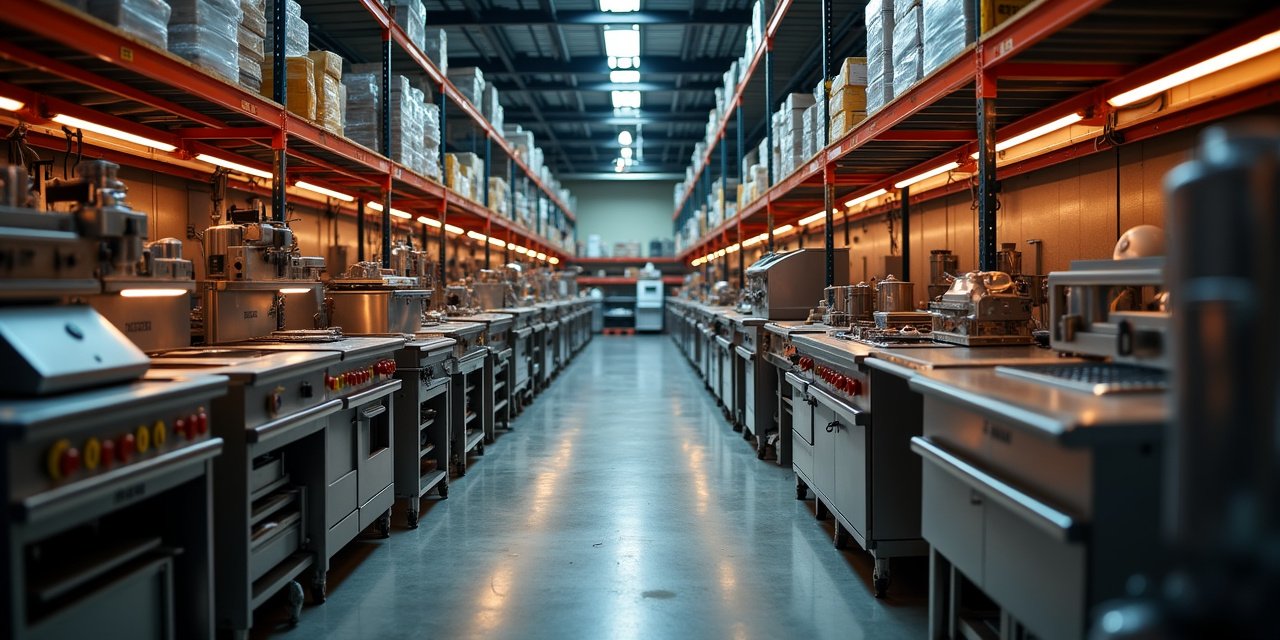
Magic Valley operators can access $5,000–$150,000 in kitchen equipment capital within 24–72 hours using revenue-based or equipment financing products.
Two Paths to Quick Kitchen Equipment Capital
Equipment financing and revenue-based working capital are the two dominant quick-capital paths. They serve different operator profiles and equipment scenarios.
Equipment financing uses the asset as collateral and typically carries lower effective rates. It works best for new equipment purchases from vendors who accept financing at point of sale.
Revenue-based working capital is unrestricted. It covers used equipment, installation, extended warranties, and delivery fees equipment financing often excludes.
Advance size scales off your deposit history. See how monthly revenue maps to advance amounts before you size a request.
Equipment Financing vs. Revenue-Based: The Real Numbers
The right choice depends on the nature of the purchase, your timeline, and whether the equipment you're buying qualifies as collateral under the specific program.
| Factor | Equipment Financing | Revenue-Based Advance |
|---|---|---|
| Funding speed | 2–5 business days | 24–48 hours |
| Rate range | 6–25% APR | 40–130% effective APR |
| Down payment | 10–20% | None |
| Used equipment | Varies by program | Yes, unrestricted |
| Covers install costs | Rarely | Yes |
| Collateral | Equipment itself | None |
What Magic Valley Operators Should Know Before Signing
Regional operators in Twin Falls and the broader Magic Valley area face specific considerations that national financing guides often miss.
- Idaho's agricultural economy creates seasonal revenue spikes — document these for underwriters reviewing Magic Valley restaurant statements
- Equipment delivery to Twin Falls may take longer than national delivery estimates suggest — factor this into your capital timing
- Local equipment vendors sometimes offer in-house financing at competitive rates — always compare before going to an independent program
- Revenue-based programs with daily holdback work well in Twin Falls because weekend volume is typically strong, accelerating paydown
- Always confirm that the financing program has funded Idaho-based restaurants before — some programs exclude specific states
Quick Check
See what you qualify for in under 3 minutes.
No personal guarantee required. No hard credit pull. Revenue history is what qualifies you.
Check Capital Eligibility →What Kitchen Equipment Qualifies for Quick Loan Programs
Quick kitchen equipment loans cover a broader range of equipment than most operators realize. This guide covers planned, proactive purchases — menu expansion, new-location buildout, scheduled replacement of aging equipment. Already dealing with a failure instead of a future purchase? See our 24-hour breakdown response plan instead.
Equipment commonly funded through quick restaurant capital programs:
- Commercial refrigeration — walk-in coolers, reach-in units, display cases, ice machines
- Cooking equipment — commercial ranges, fryers, ovens, griddles, combi ovens
- Prep equipment — commercial food processors, slicers, mixers, immersion circulators
- Warewashing — commercial dishwashers, glasswashers, conveyor systems
- HVAC and ventilation — hood systems, exhaust fans, make-up air units
- POS and technology — point-of-sale systems, online ordering infrastructure, kitchen display systems
- Furniture and fixtures — booths, bar equipment, service stations (typically at lower advance rates)
Equipment purchased new, used, or leased can be funded through revenue-based advances. Unlike traditional equipment loans — which require the equipment itself as collateral — revenue-based programs advance against future sales, giving operators flexibility to purchase from any vendor, including private sellers or auction houses.
Buying the equipment and remodeling the space it sits in are different financing decisions — see our guide to funding a kitchen renovation without equity for structural and contractor work.
New vs. Used Equipment: Financing Considerations for Restaurant Operators
Revenue-based kitchen equipment financing doesn't discriminate between new and used equipment — the advance is against your revenue, not the equipment's value. This flexibility opens up the used commercial equipment market as a cost-effective alternative to new purchases.
Financial comparison for a commercial range replacement ($18,000 new vs. $7,500 refurbished):
- New range financed at 1.28 factor rate: Total repayment $23,040 — $5,040 in fees
- Refurbished range financed at 1.28 factor rate: Total repayment $9,600 — $2,100 in fees
- Net savings from buying refurbished: $10,500 in total capital outlay (purchase + financing)
The risk with used equipment is reliability. A $7,500 refurbished range that fails in 18 months puts you back in an emergency financing situation with less operating history than you need for optimal terms.
Best practice: For core equipment that operates 10+ hours daily — ranges, fryers, refrigeration — buy new or factory-refurbished with warranty coverage. For secondary equipment with lighter daily use — prep tables, slicers, storage units — used market purchases with revenue-based financing offer excellent economics.
Always confirm warranty status on any equipment purchase funded through a revenue advance. The advance covers the purchase; it does not cover a replacement if the equipment fails outside warranty.
Planning a Purchase: Real Equipment Costs and the Section 179 Window
A planned equipment purchase is not an emergency repair. You control the timing, the vendor, and the financing structure.
That control has real value. Current market pricing helps you size the advance correctly before you apply.
A commercial walk-in cooler runs $5,000–$40,000 installed, or roughly $100–$150 per square foot, per Koller's 2026 walk-in cooler pricing guide.
A full-size combi oven typically runs $10,000–$41,000. Price depends on capacity, fuel type, and brand, per current WebstaurantStore combi oven listings.
Commercial dishwashers span a wider range — $1,800 for an undercounter unit to $45,000+ for a high-volume conveyor system. Source: CZC Kitchen's 2026 dishwasher cost guide.
Approval speed also varies by lender type, per Crestmont Capital's approval benchmark data. Online lenders decide in hours.
Independent equipment lenders take 24–72 hours. Banks take 5–21 business days.
Timing matters for taxes too. The 2026 Section 179 deduction lets you expense up to $2,560,000 in qualifying equipment the year it's placed in service.
Financed equipment still qualifies, as long as it's operating before December 31. Planning a purchase — instead of reacting to a breakdown — lets you time delivery to capture the deduction in the tax year that benefits you most.
Frequently Asked Questions
Equipment financing uses the purchased equipment as collateral and typically carries lower rates. A working capital advance is unsecured, funds faster, and can cover installation, accessories, and training costs as well.
Yes. Revenue-based advances and working capital products can fund used equipment purchases. Equipment-specific financing programs may require equipment appraisal for used units over $10,000.
Revenue-based advances require no down payment. Equipment financing programs typically require 10–20% down or equivalent equity in the equipment purchased.
Yes. Revenue-based advances are a lump sum — you can use a single advance to purchase multiple pieces of equipment simultaneously. Many operators bundle planned replacements into one advance to minimize application frequency and total financing cost.
A revenue-based advance gives you full ownership of the equipment immediately and repayment is tied to your actual daily revenue. Leasing provides equipment use without ownership and typically carries a fixed monthly payment regardless of revenue. For operators with variable revenue, revenue-based advances are generally more cash-flow-friendly than fixed-payment leases.
External Resource
SBA.gov Equipment Financing Guide — U.S. Small Business Administration — Equipment Financing
Ready to check your options?
Rev Boost Funding connects operators with independent financing partners. Not a lender.
Affiliate partnerships present.
Check Capital Eligibility → You Finished This — Add as Preferred SourceOperator Decision Matrix
Which Capital Instrument Fits Your Situation?
Match your equipment status and revenue profile to the right financing structure.
$25K+/mo
$10K–$25K/mo
Instrument recommendations are illustrative. Actual eligibility depends on lender underwriting criteria and business profile.
Revenue Financing Estimator
How Much Capital Can You Access?
Adjust the inputs to estimate your funding range. Illustrative only — no credit pull.
Illustrative estimate only. Not a lending commitment. Actual terms depend on lender underwriting and business profile. Results vary.
Verify Actual Eligibility →