

When you’ve got a contract approved but no money to start, it’s essential to initially review your payment terms to understand when and how funds will be released.
We recommend exploring rapid financing options like lines of credit or revenue-based financing to cover initial costs.
You may be interested


Leveraging milestone-based invoicing can accelerate cash flow, and clear communication with clients about any payment delays helps maintain trust.
You’ll also want strategies to prevent future cash gaps and manage expenses efficiently, which we can explain next.
Key Takeaways
- Avoid starting work without contract funds to comply with the Antideficiency Act and prevent financial losses.
- Negotiate upfront or front-loaded payments tied to project milestones to secure initial funding.
- Utilize fast financing options like lines of credit or revenue-based financing for immediate cash flow needs.
- Establish clear payment terms and invoicing schedules to enable timely payments and avoid delays.
- Communicate proactively with clients about funding gaps to negotiate flexible payment arrangements and maintain trust.
What Happens When You Have a Contract But No Money

When you have a contract but no available funds, you face significant risks that can affect your work and payment.
Continuing performance without funds exposes us to contract performance risks since the government isn’t obligated to pay beyond the allotted funding without explicit written direction. Without proper funding, payment for work we do might delay or never come, causing financial strain. Additionally, exploring project funding opportunities can help secure the capital needed to start the work.
That’s why funding contingency planning is critical. We should always seek written confirmation from the Contracting Officer before proceeding when funds run out. This safeguards our right to payment and avoid unforeseen losses. Additionally, the Antideficiency Act prohibits accepting services without appropriations, highlighting the legal boundaries governing contract performance during funding lapses.
If no funds are accessible, we have the right to stop work to limit exposure. Steering through these risks smartly keeps our innovation efforts sustainable and financially sound.
How to Review Your Contract’s Payment Terms
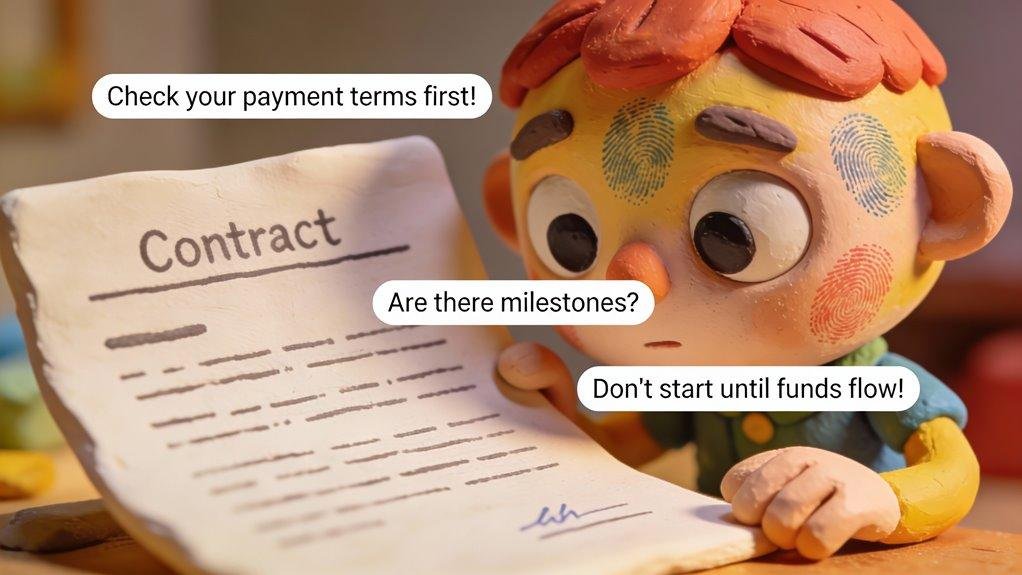
Let’s start by understanding the key payment milestones laid out in your contract and how they trigger payments. It’s important to watch for any potential delays and assess how those might impact your cash flow. By reviewing these details carefully, we can guarantee payments remain in line and avoid unexpected financial setbacks. Ensuring that the payment terms are both realistic and aligned with your company’s financial obligations is crucial to maintaining a healthy cash flow throughout the contract duration. Moreover, understanding contract language protections can help safeguard your interests in the event of disputes or payment delays.
Understanding Payment Milestones
Understanding payment milestones is essential for effectively managing your construction contract’s financial terms. These milestones drive payment strategies that keep projects financially in alignment while ensuring quality outputs. Let’s break down the milestone importance into three key points:
- Defining Clear Milestones: Each milestone corresponds to specific deliverables or phases, such as completion of foundations or framing, making payment expectations transparent.
- Linking Payments to Progress: Milestone payments align funds with completed work, which encourages accountability and steady cash flow throughout the project timeline. This approach promotes smooth project progression by ensuring contractors receive timely payments.
- Contractual Flexibility: While milestones are legally binding, they can be modified via formal amendments if project demands change, ensuring ongoing financial alignment.
Identifying Payment Delays
Because payment delays can interrupt a project’s cash flow and timeline, it’s crucial we carefully review our contract’s payment terms to identify potential issues early.
We should prioritize contract clarity by examining scheduled payments to confirm due dates and invoice triggers align with our cash flow needs. A contract review checklist can help ensure all payment terms are precise and free from ambiguity. Payment verification involves checking penalties for late payments and incentives like early payment discounts that impact finances.
Understanding invoicing procedures and timelines helps us avoid costly delays or disputes. We also need to align payment terms with our budget and long-term strategy, watching for hidden fees or ambiguous language that can cause unexpected challenges.
Fast Financing Options When Contract Is Approved But No Money
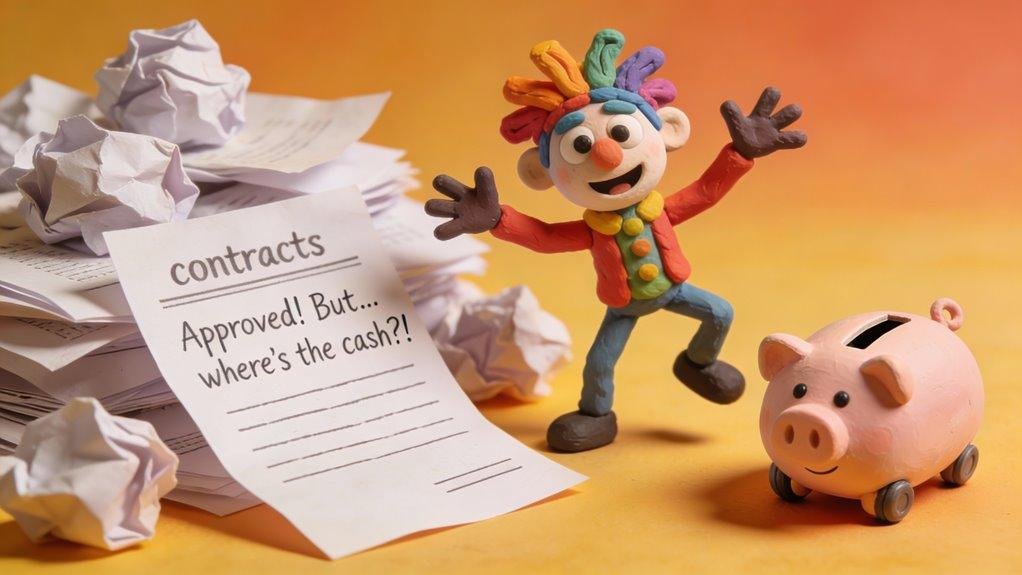
When a contract is approved but funds aren’t yet available, securing swift financing becomes vital to keep operations running smoothly. Let’s investigate rapid financing options that enable us during contract negotiation:
- Lines of Credit offer flexibility to draw funds up to a limit, with same-day access after approval. We only pay interest on what we use, easing cash flow management. These loans are designed to provide quick access to capital to address immediate financial needs, and they are particularly useful for flourishing businesses that require ongoing operational support.
- Term Loans provide lump sums repaid in fixed installments. Some lenders fund the same day, ideal when pace matters most.
- Revenue-Based Financing advances funds based on future income, with quick approval and daily or weekly repayments. This suits urgent expenses without heavy credit demands.
Choosing one of these innovative approaches guarantees we stay agile, providing results without financial delay as we finalize contracts.
Using Invoices and Milestones to Boost Cash Flow
We can strengthen our cash flow by tying invoices directly with project milestones, ensuring payments come as work progresses. Using milestone tracking lets us invoice immediately following sign-off, which reduces Days Sales Outstanding and keeps cash moving steadily. This system also enhances compliance by providing clear billing structures for each project phase. Additionally, incorporating revenue-based loan agreements can provide us with flexible funding options that align with our cash flow cycles. Invoice automation enhances this process by generating accurate bills instantly once a milestone is achieved, removing manual errors and speeding collections. This approach aligns billing with real-time progress, providing clients clear value at each stage, which builds trust and minimizes disputes.
How to Negotiate With Clients When Payments Are Delayed
When payments are delayed, setting clear payment terms upfront helps us avoid confusion and maintain control. We need to communicate any delays promptly and transparently in order to keep the dialogue open and constructive. This is important because late payments are a significant burden on businesses, affecting cash flow and operations. Such approach strengthens trust and paves the way for effective negotiation.
Setting Clear Payment Terms
Although negotiating payment terms can feel challenging, setting clear agreements from the start helps prevent delays and misunderstandings. When setting payment expectations, it’s vital to be precise and transparent.
Here’s how we approach defining payment schedules effectively:
- We assess all operational costs and profit margins so we can confidently set realistic payment requirements that align with our cash flow.
- We specify payment arrangements early, clearly outlining amounts, frequency, and due dates in contracts to avoid vague terms like “upon receipt.”
- We build flexibility into the negotiation by proposing options such as net 30, 45, or 60 days, allowing room to adjust based on client needs while protecting our interests.
Communicating Payment Delays Promptly
Since delayed payments can interfere with cash flow and strain relationships, it’s vital to communicate about them promptly and clearly.
Effective client communication and payment transparency build trust and encourage timely resolution. We should invoice immediately and confirm receipt, then follow up with programmed notifications.
When payments fall behind, move quickly from friendly reminders to firmer measures to protect our interests without damaging rapport.
| Communication Step | Purpose |
|---|---|
| Immediate Invoice | Start prompt payment process |
| Programmed Notifications | Maintain consistent follow-up |
| Escalation Procedures | Enforce deadlines firmly yet fairly |
This method supports innovative negotiation by combining clarity with flexibility, ensuring smoother cash flow and healthier client connections.
Partnering With Subcontractors to Start Work on a Budget
Several proven strategies help us partner effectively with subcontractors while staying within budget from the start. Building subcontractor loyalty is crucial, as it drives project efficiency and consistent quality.
- Establish exclusive partnerships or long-term contracts to secure steady work and build trust.
- Involve subcontractors in planning and quality control via real-time collaboration tools to reduce delays and improve outcomes.
- Use clear contracts and performance monitoring to align expectations and maintain accountability.
These approaches not only nurture loyalty but also improve project efficiency by minimizing rework and conflicts.
By sharing risks and rewards through profit-sharing or joint ventures, we motivate subcontractors to deliver their best even when funds are limited at the outset.
Together, this creates a reliable, innovative partnership model that keeps projects moving forward within tight budgets.
How to Prevent Cash Flow Gaps on Future Contracts
When we plan ahead for cash flow management, we can prevent costly gaps that hinder project progress. One key strategy is negotiating front-loaded payment schedules tied to clear milestones.
Proactive cash flow planning with milestone-based front-loaded payments prevents costly project delays.
This approach guarantees cash inflows match early project costs, easing financial strain during the startup phase. Next, establishing explicit payment terms and clear contract language helps avoid misunderstandings that interrupt cash flow.
Efficient invoicing and billing systems, including digital progress tracking and mechanized compliance documentation, enable rapid, accurate payments. Ultimately, maintaining strong cash reserves and securing lines of credit offer safety nets against unexpected delays or payment gaps.
Together, these tactics improve project management by guaranteeing steady cash flow, allowing us to innovate confidently without financial interruptions.
Frequently Asked Questions
How Can I Build Business Credit Before My First Contract Payment?
We can build business credit strategies by registering our business, opening credit accounts, and using vendor net-30 terms. Exploring innovative financing options like secured credit cards lets us enhance credit before initial contract payments arrive.
What Legal Protections Exist if a Client Cancels Contract Funding?
We’ve got contract termination clauses that limit financial liability if funding’s canceled. Let’s innovate by documenting breaches promptly and pursuing compensatory or liquidated damages for protecting our cash flow and keeping momentum in uncertain situations.
Can Insurance Cover Losses From Delayed Contract Payments?
We can utilize insurance claims customized for contract delays, like Delay in Start-Up or business interruption policies, to innovate our risk management and secure financial stability during funding holdups, turning setbacks into strategic advantages.
How Do Taxes Impact Income From Delayed Contract Payments?
We know tax implications regarding delayed payments matter. Income is recognized only when received, so deferrals can shift taxable events, potentially lowering taxes. Let’s innovate payment structures for enhancing timing and tax burdens creatively together.
What Software Tools Help Track Contract-Related Expenses and Payments?
We recommend software like FinQuery and Ramp to transform expense tracking and payment management. They streamline alerts, consolidate contracts, and offer real-time dashboards, helping us innovate how we monitor and control contract-related finances effortlessly.
