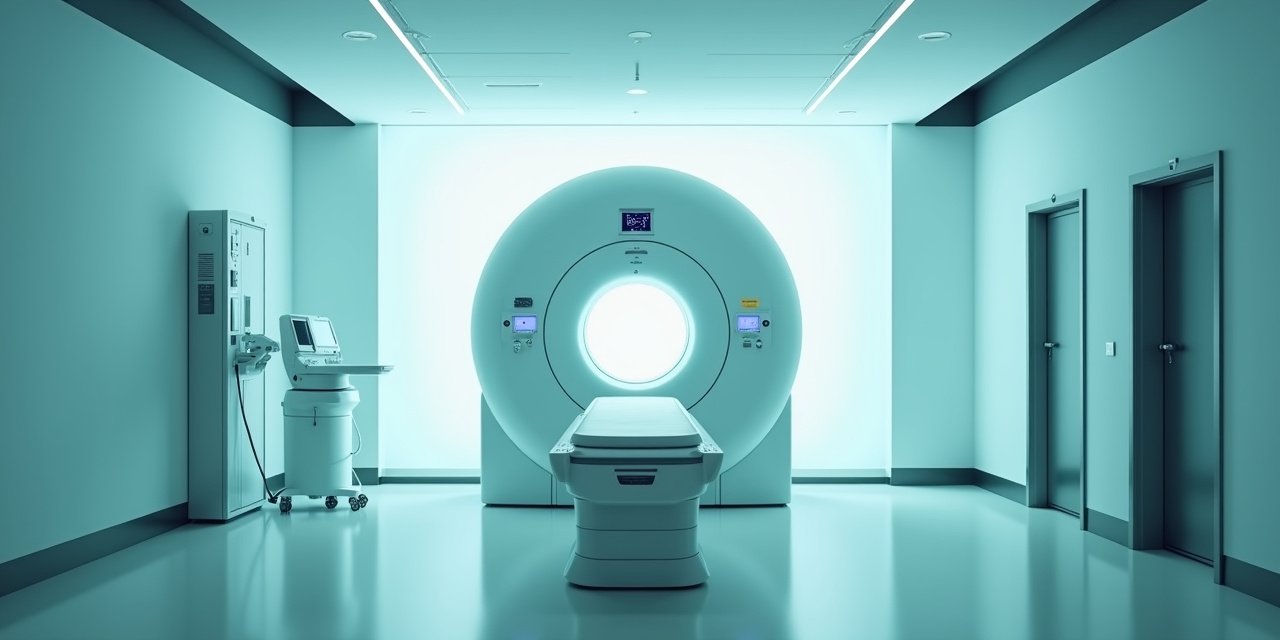
Imaging center revenue-based loans underwrite on billing volume and collections consistency — no collateral, no personal guarantee, no equity dilution.
How Revenue-Based Loans Work for Imaging Centers
A revenue-based loan for an imaging center is structured as a lump-sum advance repaid through a percentage of monthly collections. The lender analyzes 3–6 months of bank statements and billing remittance data to establish average monthly collections — not billings, but actual deposits from insurance payers and patient payments. That collections figure drives the advance amount and the repayment terms.
Once approved, the advance is wired directly to the imaging center's business account — typically within 24–72 hours of signed agreements. Repayment is collected as a fixed daily or weekly ACH debit sized to equal a predetermined percentage of monthly revenue, usually 8%–18% depending on advance size and risk profile. If a month is slow — due to payer delays, seasonal volume dips, or a week of equipment downtime — the effective repayment amount adjusts accordingly because the lender is collecting from actual deposits rather than a fixed invoice.
There is no fixed term. Repayment continues until the advance amount plus the factor rate cost has been fully repaid. A clinic that grows its collection volume after taking the advance repays faster; a clinic with flat or declining collections takes longer but is never in technical default for missing a fixed payment. This structure differs fundamentally from term loans, which impose a fixed monthly payment regardless of revenue performance, and from lines of credit, which require interest payments even when the facility isn't drawing.
The cost of the advance is expressed as a factor rate — a multiplier applied to the principal. A 1.25x factor rate on a $200,000 advance means $250,000 total repayment, with the $50,000 spread representing the total cost of capital. There are no origination fees layered on top in most RBL structures, and no prepayment penalties — paying off faster costs no more than the stated factor rate.
Why Imaging Centers Qualify for Revenue-Based Loans
Imaging centers have a revenue profile that aligns exceptionally well with revenue-based lending criteria. Insurance reimbursements from Medicare, Medicaid, and commercial payers create a diversified, predictable income stream with limited single-payer concentration risk. Unlike retail businesses where revenue can vary 50% month over month, a well-run imaging center with a stable referral base typically sees monthly collections vary by only 10%–20% — exactly the kind of consistency that makes RBL underwriting straightforward.
Payer mix matters significantly. Imaging centers with a heavy Medicare/Medicare Advantage mix — common in radiology — have predictable reimbursement schedules set by CMS fee schedules. This makes forward-looking collections estimates reliable, which reduces lender risk and often results in more favorable factor rates. Centers with a higher commercial insurance concentration also qualify well, as commercial payers typically reimburse at higher rates than government programs, improving collections-per-study metrics.
Patient volume stability — driven by physician referral relationships rather than consumer marketing — is another qualifying factor that traditional lenders often overlook. An imaging center with established referral agreements with orthopedic practices, neurology groups, and primary care networks has predictable forward revenue even if the current month's collections are temporarily depressed by payer processing delays. RBL lenders evaluate these referral dynamics as part of the qualitative underwriting process.
The combination of recurring revenue, predictable payer schedules, and high collections consistency makes imaging centers among the strongest healthcare candidates for revenue-based lending. Clinics generating $75,000 or more in monthly net collections are typically well within the qualifying range for meaningful advance amounts.
What Imaging Centers Use Revenue-Based Loans For
CT and MRI equipment upgrades are the most common use case. A 64-slice CT scanner that was state-of-the-art in 2015 is now a referral liability compared to a 256-slice or dual-energy system. Revenue-based loans give imaging centers the capital to upgrade without waiting for a bank's 60-day underwriting process or pledging real estate the clinic doesn't own. Equipment upgrade projects typically run $250,000–$1.5 million including installation, and RBL advances can be sized to cover the full project cost based on the center's collections history.
Patient financing program setup and working capital bridge gaps are the second most common application. When insurance payers process batches late — a not-uncommon occurrence with CMS claims during system transitions — an imaging center may face a 30–45 day gap between services rendered and payment received. An RBL advance bridges that gap without the center needing to draw on a credit line or delay vendor payments. Some centers also use RBL capital to self-fund patient financing programs, offering extended payment terms directly to uninsured or underinsured patients and capturing volume that would otherwise go to competitors.
Facility expansion is a growing use case as outpatient imaging demand increases. Adding a second reading room, expanding waiting areas to support higher throughput, or opening a satellite location all require capital that banks are reluctant to provide against a radiology practice's balance sheet. Revenue-based loans sized on the combined collections of the existing facility fund these expansions without requiring new collateral. Multi-modality centers adding PET/CT or interventional capabilities have used RBL advances to fund shielding modifications and equipment deposits simultaneously.
Qualification Requirements for Imaging Center RBL
Monthly net collections are the primary qualification criterion. Most RBL lenders require a minimum of $50,000 in average monthly collections, though healthcare-focused lenders frequently set the floor at $75,000 for imaging-specific programs. "Collections" means actual bank deposits from insurance payers and patients — not gross billings, not charges, not accounts receivable. Lenders review 3–6 months of bank statements to verify the collections figure independently of what the practice reports.
Collections history length is the second gating factor. Most lenders require a minimum of 12 months of operating history, with at least 6 months of consistent monthly collections. Clinics with shorter histories but exceptional monthly volume may qualify at slightly higher factor rates. The most favorable terms are available to centers with 24+ months of consistent collections above the minimum threshold. Lenders view operating longevity as a proxy for referral relationship stability — a center that has been collecting $150,000 per month for three years is demonstrably not dependent on any single referral source.
Documentation requirements are light compared to bank lending. The standard package includes: 3–6 months of complete business bank statements (all accounts where payer deposits arrive), a current aging report or billing summary from the practice management system, a copy of the business entity formation documents, and a voided business check for ACH setup. Some lenders with direct API integrations to major practice management platforms (Epic, Athenahealth, Kareo) can pull billing data automatically, reducing documentation to just bank statements and business formation documents.
Credit score is reviewed but is not a disqualifying factor for most healthcare RBL programs. Personal FICO scores below 600 may result in higher factor rates, but a clinic with consistent collections above $100,000 per month will typically qualify for an advance even with a below-average personal credit profile. The underwriting logic is straightforward: the lender is advancing against revenue that has already been demonstrated to exist, not against future revenue the clinic must generate for the first time.
Revenue-Based Loan Amounts for Imaging Centers
Advance amounts are directly correlated with monthly collections volume. The table below shows typical advance ranges by collections band, along with indicative factor rates and estimated repayment periods at a 12% monthly repayment rate. Actual terms vary by lender, operating history, and payer mix.
| Avg. Monthly Collections | Typical Advance Range | Indicative Factor Rate | Total Repayment (Mid) | Est. Repayment Period |
|---|---|---|---|---|
| $50,000 | $50,000 – $75,000 | 1.28 – 1.35x | ~$82,500 | 14 – 18 months |
| $100,000 | $100,000 – $175,000 | 1.22 – 1.30x | ~$173,250 | 13 – 16 months |
| $250,000 | $250,000 – $400,000 | 1.18 – 1.25x | ~$393,750 | 12 – 15 months |
| $500,000 | $500,000 – $900,000 | 1.15 – 1.22x | ~$823,500 | 11 – 14 months |
| $1,000,000+ | $1,000,000 – $2,000,000+ | 1.12 – 1.18x | Negotiated | 10 – 13 months |
Illustrative ranges only. Actual terms depend on lender, operating history, payer mix, and credit profile. Not a lending commitment.
Imaging Center RBL vs. Other Financing Options
Choosing the right capital structure for an imaging center requires comparing not just cost but speed, collateral impact, and operational fit. Revenue-based loans are not always the lowest-cost option in absolute terms — but they are frequently the best fit for imaging centers that need capital fast, lack pledgeable assets, or want to avoid personal guarantees. The comparison below covers the primary alternatives.
| Financing Type | Speed | Collateral | Personal Guarantee | Advance Size | Best Use |
|---|---|---|---|---|---|
| Revenue-Based Loan | 24–72 hours | None | Not required | 1x–2x monthly collections | Equipment upgrades, working capital, expansion — fast timeline |
| Equipment Lease | 1–3 weeks | Equipment (lender owns) | Often required | Equipment cost only | New equipment acquisition with intent to return or upgrade at term |
| Bank Term Loan | 30–60 days | Real estate or equipment | Always required | Up to collateral coverage value | Long-term capital needs with strong credit and owned real estate |
| SBA 7(a) | 60–90 days | All available assets | Always required | Up to $5M | Large capital needs where lowest cost matters more than speed |
| Business Line of Credit | 1–4 weeks | Often required | Usually required | Varies by bank / credit limit | Recurring short-term gaps; best when you already have banking relationship |
Quick Check
See what you qualify for in under 3 minutes.
No personal guarantee required. No hard credit pull. Revenue history is what qualifies you.
Check Capital Eligibility →Frequently Asked Questions
A revenue-based loan for imaging centers is a capital advance sized on monthly billing collections. The lender reviews 3–6 months of bank statements and billing reports, advances a lump sum, and collects repayment as a fixed percentage of monthly revenue until the advance plus a factor rate cost is repaid. No collateral is required.
Advance amounts typically range from 1x to 2x average monthly collections. An imaging center collecting $200,000 per month might access $200,000 to $400,000. Larger facilities with longer operating histories and stronger payer mixes qualify for advances at the higher end of that range.
No. Revenue-based loans for imaging centers are approved on billing history and collections volume, not on pledged assets. No real estate, no equipment lien, and no personal guarantee is required. The lender's security interest is in future receivables only.
External Resource
SBA.gov Business Financing Guide — U.S. Small Business Administration
Ready to check your options?
Rev Boost Funding connects operators with independent financing partners. Not a lender.
Affiliate partnerships present.
Check Capital Eligibility → You Finished This — Add as Preferred SourceRevenue Financing Estimator
How Much Capital Can You Access?
Adjust the inputs to estimate your funding range. Illustrative only — no credit pull.
Illustrative estimate only. Not a lending commitment. Actual terms depend on lender underwriting and business profile. Results vary.
Verify Actual Eligibility →