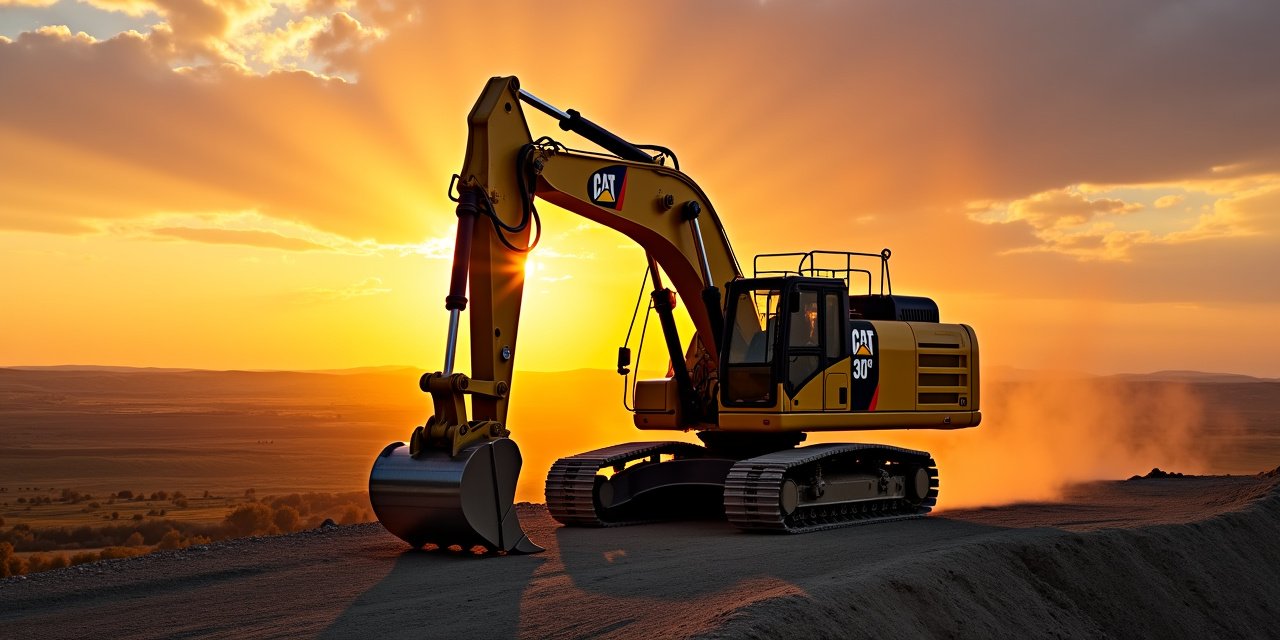
Equipment availability determines whether you can fulfill the contract — finance the equipment against the contract's own future revenue before day-one performance is required.
The Equipment Gap in Contract Execution
Many construction contracts in Magic Valley are awarded to the contractor who demonstrates capability to perform — including specific equipment requirements written into the contract specifications.
Winning the contract is the hard part. But between contract award and mobilization deadline, there's often a 7–14 day window to acquire or rent equipment that you may not currently have.
That window is shorter than any bank loan process.
Equipment rental yards in Twin Falls and Burley can have specific machinery reserved and delivered within 24–48 hours of deposit. Equipment dealers can complete a purchase in the same window for cash or same-day wire buyers.
Revenue-based financing bridges the gap precisely: you apply with the signed contract, receive approval within 24 hours, and wire payment to the equipment yard before anyone else learns you didn't have the equipment when you bid the job.
If your gap spans more than equipment — labor and materials too — see construction mobilization cost loans for the full pre-performance funding picture.
Buy vs. Rent: Equipment Finance Decision Matrix
The right structure depends on equipment longevity, project duration, and your pipeline visibility. Use this framework to choose.
| Scenario | Recommended Approach | Financing Structure |
|---|---|---|
| Single-project, specialized use | Rent | Working capital advance (short-term) |
| Recurring use across 3+ jobs | Purchase | Growth capital loan (longer term) |
| Uncertain future pipeline | Rent with option to buy | Working capital advance |
| Resale value is strong | Purchase | Growth capital loan |
| Project is 30 days or less | Rent | Short advance tied to project |
Equipment Funding Application: What Underwriters Need
Equipment funding applications move fastest when you've already decided — rent or buy — and you present the specific equipment and vendor information upfront.
- Signed contract or NTP confirming the project that requires the equipment
- Vendor quote or rental agreement for the specific equipment — showing model, cost, and delivery terms
- Three to six months of business bank statements — underwriters confirm your revenue can support the repayment cadence
- Equipment use justification — a one-paragraph explanation of how this equipment enables the contracted scope reduces underwriter questions
- Documentation of current fleet inventory — shows you're not over-leveraging your equipment base relative to your revenue
A valuable insight for Magic Valley contractors: farm equipment dealers in the Jerome-Rupert corridor regularly facilitate same-day purchase transactions for contractors with wire transfer capability. Revenue-based capital deployed same-day can close an equipment deal before competing buyers in a tight supply market.
For contractors building a fleet across multiple contracts, a growth capital loan structured over 12–24 months amortizes equipment cost over the asset's useful life rather than a single project. Pair it with a working capital advance for job-by-job operating costs.
Quick Check
See what you qualify for in under 3 minutes.
No personal guarantee required. No hard credit pull. Revenue history is what qualifies you.
Check Capital Eligibility →Matching Equipment Financing to Contract Payment Timing
Equipment purchased to fulfill a new contract should be financed with instruments whose repayment schedule aligns with when the contract generates cash flow. Misaligning equipment repayment timing with contract payment timing creates a cash flow compression that is entirely avoidable with proper structuring.
Alignment framework for contract-specific equipment financing:
- Identify your first contract payment date: When does the first milestone, progress billing, or invoice become payable? This is the earliest date reliable cash flow arrives from the contract.
- Calculate the cash gap period: From equipment purchase to first payment, you are carrying the full equipment cost with zero contract revenue. This is your maximum cash exposure.
- Choose a repayment structure that starts after first payment: Revenue-based repayment automatically defers larger payments to higher-revenue periods. Some lenders will also negotiate a 30–60 day repayment deferral period for equipment specifically purchased for a new contract.
Example timeline for a new $180,000 commercial landscaping contract:
- Week 1: Contract signed, equipment needed immediately — $45,000 in mowers and trailers
- Week 4: First crew deployment, contract work begins
- Week 8: First progress billing submitted — $40,000
- Week 10: First payment received — advance repayment begins from this cash flow
A revenue-based equipment advance drawn at Week 1 with repayment starting from incoming contract revenue at Week 10 aligns perfectly — no cash flow pressure during the gap period.
Rent vs. Finance: Choosing the Right Equipment Acquisition Path
Not all contract-related equipment needs should be financed through purchase. For contracts with uncertain renewal or for specialized equipment needed for a single project scope, renting or leasing may produce better economics than financing a purchase.
Decision framework for rent vs. finance on contract equipment:
- Finance (buy) when: The equipment will be used across multiple contracts over 2+ years. Utilization exceeds 70% over the expected ownership period. The equipment has strong resale value if the contract is not renewed.
- Rent when: The contract is a one-time or uncertain-renewal engagement. The equipment is highly specialized with limited alternative uses. Storage and maintenance costs between contracts exceed the interest savings from ownership.
- Finance with accelerated payoff when: The contract is strong and renewal is likely, but you want to minimize long-term debt obligations. Draw the advance, complete the project, use contract proceeds to retire the advance early, and own the equipment debt-free for future contracts.
Revenue-based financing applies most cleanly to the first and third scenarios. The financing cost is highest in absolute terms but provides ownership — an asset that retains value and supports future contract bids by demonstrating equipment capacity without requiring re-rental for each engagement.
The Real Numbers: Section 179, Buy-vs-Lease Cost, and What Newer Contractors Can Actually Get
Decision frameworks matter less than the actual dollars. Three data points change the math on equipment for a new contract.
Tax treatment first. Section 179 lets you expense up to $2,560,000 of qualifying equipment in the year it's placed in service, with the deduction phasing out above $4,090,000 in purchases (IRS Rev. Proc. 2025-32).
Financed equipment — not leased — typically qualifies. That shifts the buy/rent math in the table above toward ownership for any equipment you'll use past this contract.
Buy-vs-lease, in real numbers. A $120,000 excavator financed over five years runs about $2,432/month, $145,920 total, including $25,920 in interest (Crestmont Capital, 2026).
Leased, that same excavator runs $1,800–$2,200/month, cheaper on paper. Financing still wins for equipment you'll redeploy across future contracts, since the lease builds no resale equity at all.
Newer contractor? You still qualify. Because the equipment itself is collateral, businesses under two years old can secure equipment financing in 24–72 hours.
Expect a larger down payment requirement if you're under two years in business, since the lender leans harder on the equipment itself to offset the thin track record (Crestmont Capital, 2026). Revenue-based structures skip the collateral lien entirely, underwriting against your bank statements instead.
Timing matters too. Used equipment trades 10–18% cheaper November through January than in peak buying season, and transaction volume is up 6% year-over-year (HeavyDutyYard, 2026). A new contract awarded in Q4 can land you better equipment pricing than the same contract in April.
If the Contract Falls Through After You've Financed the Equipment
Contracts get canceled. Scopes shrink. A GC replaces a sub mid-project.
None of that makes your equipment advance disappear. The repayment stays tied to your overall revenue, not to that one contract.
This is the real risk in financing equipment against a single new contract. Plan for it before you draw the advance, not after.
Three ways to protect yourself:
- Confirm the equipment has resale or redeployment value. If the contract ends early, can the equipment work on other jobs? Specialized single-use equipment carries more risk than general-purpose machinery.
- Size the advance to the equipment cost, not the contract's full value. Borrowing $45,000 for mowers and trailers is safer than borrowing $180,000 against the landscaping contract.
- Check the factor rate terms for early payoff. Some revenue-based structures let you retire the balance early without penalty. Others charge a fee. Ask before signing.
Rental remains the safer default when contract renewal is uncertain, as the table above shows. If you do finance a purchase and the contract ends early, redeploy fast.
Don't let it sit idle while the advance keeps amortizing. A working capital advance sized separately from equipment financing helps here. The two obligations won't compound if one contract goes sideways.
Insurance Requirements for Financed Equipment
Financed equipment still needs the right insurance before it touches a job site. Most equipment lenders require proof of coverage before funds release. General liability alone won't cover it.
Inland marine coverage protects equipment while it's in transit or stored off-site. Skip this and a stolen machine in a staging yard becomes your loss alone.
Many general contracts require you to name the GC as an additional insured. Confirm this before the equipment ships. Don't wait for a site inspector to flag it.
Replacement cost coverage matters more than actual cash value for financed equipment. Say the equipment is totaled in year two of a five-year term. Actual cash value coverage can leave you paying for equipment that no longer exists.
Budget for the premium increase before you sign. A $150,000 excavator typically adds $3,000 to $6,000 a year in coverage. The exact number depends on your loss history and how the equipment gets used.
Some revenue-based financing partners bundle a basic coverage referral into the funding process. Ask directly. It saves a separate application and keeps the equipment covered from day one.
None of this changes the underwriting math covered above. It changes whether you're actually protected once the equipment is on-site. The clock doesn't pause for a coverage gap.
Frequently Asked Questions
Yes. Revenue-based financing can fund equipment purchases, deposits, and rentals. For large equipment acquisitions, some RBF partners specialize in contract-backed equipment capital with repayment structured over the project timeline.
For single-project equipment needs, rental funded by an advance is often more capital-efficient. For equipment you'll use across multiple contracts, purchase financing — especially if it builds your asset base — may be the stronger long-term decision.
With a complete application, equipment funding can be approved and deployed within 24–72 hours. Equipment dealers in Idaho often accept same-day wire transfers, so the full cycle from contract signing to equipment on-site can complete in 3–5 days.
Some programs permit stacking a second advance when the first is 50%+ repaid. Others require the first advance to be fully retired before a new one is issued. Disclose any outstanding advances when applying and ask specifically about your program's stacking policy before drawing.
Most revenue-generating equipment qualifies: vehicles, heavy machinery, tools, technology, and specialized production equipment. The advance is against your revenue, not the equipment's residual value, so unusual or highly specialized equipment that wouldn't qualify for traditional equipment loans is often fundable through revenue-based programs.
External Resource
SBA.gov Equipment Financing Guide — U.S. Small Business Administration — Equipment Financing
Ready to check your options?
Rev Boost Funding connects operators with independent financing partners. Not a lender.
Affiliate partnerships present.
Check Capital Eligibility → You Finished This — Add as Preferred SourceProject Finance Intelligence
The Construction Mobilization Capital Gap
Where the cash gap lives — and where RBF deploys.
Timeline represents typical municipal and commercial construction payment cycles. Actual timelines vary by contract structure.
Revenue Financing Estimator
How Much Capital Can You Access?
Adjust the inputs to estimate your funding range. Illustrative only — no credit pull.
Illustrative estimate only. Not a lending commitment. Actual terms depend on lender underwriting and business profile. Results vary.
Verify Actual Eligibility →