

We’ve moved beyond traditional credit scores, focusing upon your Shopify store’s real-time performance to open funding, even with a 500 credit score.
Revenue-based financing uses sales data like gross merchandise value and customer lifetime value to offer flexible capital from $200 to $5 million.
You may be interested


Repayments align with your daily revenue, easing cash flow stress and helping you grow.
By connecting your digital sales ledger, you can get quick access to funds and scale confidently.
There’s more to investigate regarding how this works in practice.
Key Takeaways
- Revenue-based financing for Shopify stores uses real-time sales data, not traditional credit scores, to approve loans starting around $500.
- Funding decisions rely on gross merchandise value (GMV) and customer lifetime value, reflecting actual store performance over credit history.
- Repayments fluctuate with daily sales, easing cash flow stresses by aligning payments with store revenue rather than fixed monthly dues.
- Shopify API integration enables fast underwriting within minutes, offering quick access to capital for inventory and marketing spend.
- No personal credit checks are needed, making financing accessible to stores with limited or poor traditional credit scores.
The Paradigm Shift From FICO To Performance Data
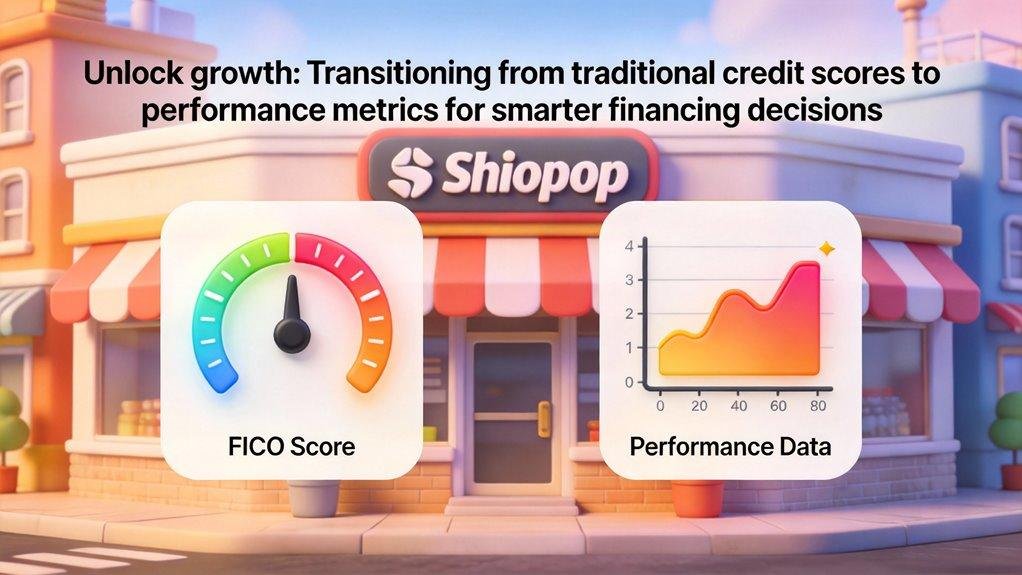
We no longer depend upon personal credit scores to evaluate the potential of a Shopify store. Instead, API-driven underwriting utilizes real-time performance data from your sales and customer activity to assess your business health. This approach aligns with the rise of non-equity funding products tailored for online retail growth, enabling founders to retain full ownership while scaling. Such a shift signifies your store’s success speaks louder than a three-digit number ever could.
Why Personal Credit Scores Are Irrelevant To Ecommerce Success
Personal credit scores have long held a dominant role in lending decisions, but their relevance for ecommerce businesses is rapidly diminishing.
Today, we rely on gmv-based financing, where lenders focus on your Shopify store’s real-time performance data rather than outdated FICO scores. Metrics like gross merchandise value, customer lifetime value, and return on ad spend illustrate a clearer depiction of your business health.
Personal credit, rooted in traditional bureau data, misses this operational understanding. Incorporating alternative data such as business transaction records and real-time sales performance allows lenders to make more accurate credit decisions based on actual business behavior. With this shift, your Shopify API connection acts as a live ledger, proving your ability to generate steady revenue.
This data-driven approach cultivates trust through transparency, removing bias against low personal credit scores. In 2026, your ecommerce success depends on your business performance, not personal credit history.
Understanding API-Driven Underwriting For Shopify Merchants
A fundamental shift is underway in how lenders evaluate Shopify merchants.
Shopify API underwriting replaces outdated credit scores with real-time performance data from your store. Instead than FICO, underwriters analyze metrics like Customer Lifetime Value, ROAS, and monthly GMV.
This approach offers transparency, letting your live ledger prove your revenue potential directly. To ensure accuracy, it is crucial to consider timezone discrepancies, which significantly affect calculation results.
| Metric | Data Source | Impact upon Underwriting |
|---|---|---|
| Customer Lifetime Value | Shopify API | Shows long-term customer value |
| ROAS | Shop Campaigns API | Measures marketing efficiency |
| Month-over-Month GMV | Shopify Analytics | Tracks consistent growth |
This model shift lets us fund operationally strong merchants quickly. Shopify API underwriting is innovation driving access toward capital.
How RBF Unlocks Capital For Credit-Scarred Brands
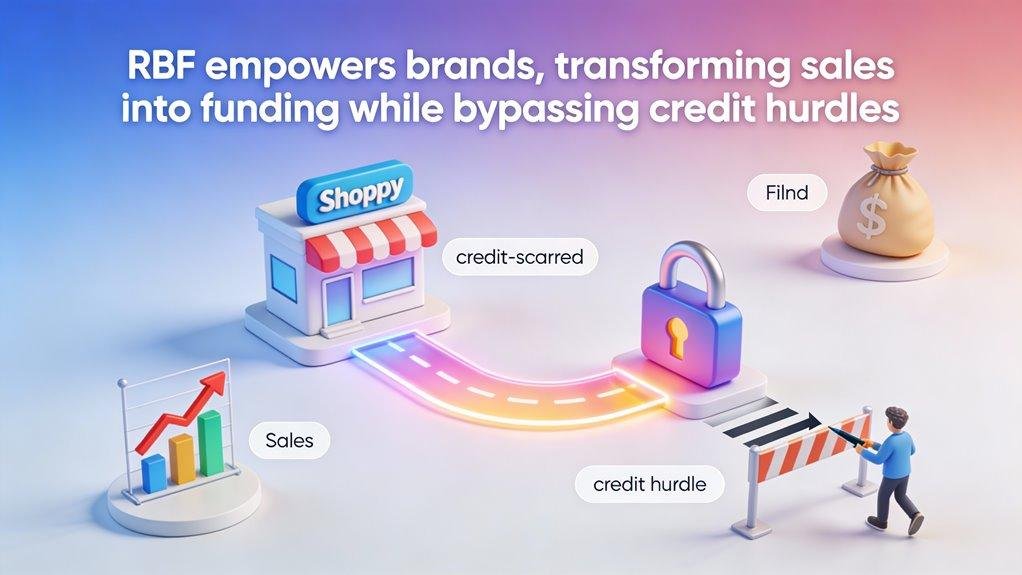
We use your GMV as real collateral, showing lenders the actual strength of your business instead of relying upon outdated credit scores. Real-time cash flow data lets us quickly assess your ability to repay, speeding up approvals without the need for hard credit pulls. This soft-pull technology protects your credit while releasing the funds you need in order to grow confidently. Because repayments vary according to your revenue performance, you maintain flexible repayments aligned with your business cash flow. Additionally, this model provides uncapped revenue financing options, ensuring that your funding can scale with your business growth.
Leveraging Your GMV As Business Collateral
Although a low FICO score might have sealed doors in traditional lending, your store’s Gross Merchandise Value (GMV) now serves as a powerful form regarding collateral in revenue-based financing (RBF).
Shopify revenue based financing utilizes your actual sales performance rather than outdated credit scores. By connecting your Shopify API, you create a transparent “live ledger” that shows consistent revenue flow, freeing up capital without personal guarantees. This form of financing requires payments that fluctuate directly with your sales, ensuring you are never overburdened during slower months due to its flexible monthly repayment.
Key benefits include:
- Quick approval based on GMV and recurring revenue
- No need for personal or physical collateral
- Flexible repayments tied to sales volume
- Funding amounts scale with your business growth
This approach changes your GMV into tangible credit, fueling your store’s next phase even if past credit appears limiting.
The Role Of Real-Time Cash Flow In Funding Approvals
When lenders shift their focus from outdated credit scores towards real-time cash flow, they gain a clearer image regarding your business’s ability for handling debt.
Real-time cash flow funding evaluates your live deposit patterns and revenue trends, providing an energetic and predictive underwriting method. This means approval depends on your actual business health, not legacy credit marks. Additionally, the overall evolution of small business funding in 2026 includes faster approvals driven by cash-flow underwriting models, making it easier for businesses to access capital quickly.
Here’s how it stands out:
| Factor | Traditional Credit Score |
|---|---|
| Static Data | Energetic Business Performance |
| Historical Snapshot | Real-Time Revenue Tracking |
| Limited View regarding Debt Service | Predictive Cash Flow Ability |
Bypassing Hard Inquiries With Soft-Pull Technology
How can Shopify store owners with less-than-perfect credit avoid the score damage that often comes with traditional loan applications?
Revenue Based Financing (RBF) uses soft-pull technology to bypass hard credit inquiries, a transformative solution for those seeking bad credit ecommerce loans.
Instead of triggering a score drop, soft pulls allow lenders to pre-qualify merchants without impacting their credit. This means you get quicker access to capital without the usual risks.
Key benefits include:
- No credit score impact from initial inquiries
- Swift approval often within 48 hours
- Underwriting focused on revenue, not credit scores
- Higher approval rates for Shopify stores with 500 credit scores
RBF offers quick approvals by focusing on recent revenue performance, enabling funding to be received often within 48 hours post-approval.
With soft pulls, RBF opens up funding options that recognize your business’s true performance, not legacy credit data.
Strategic Growth Steps For 500 Credit Merchants
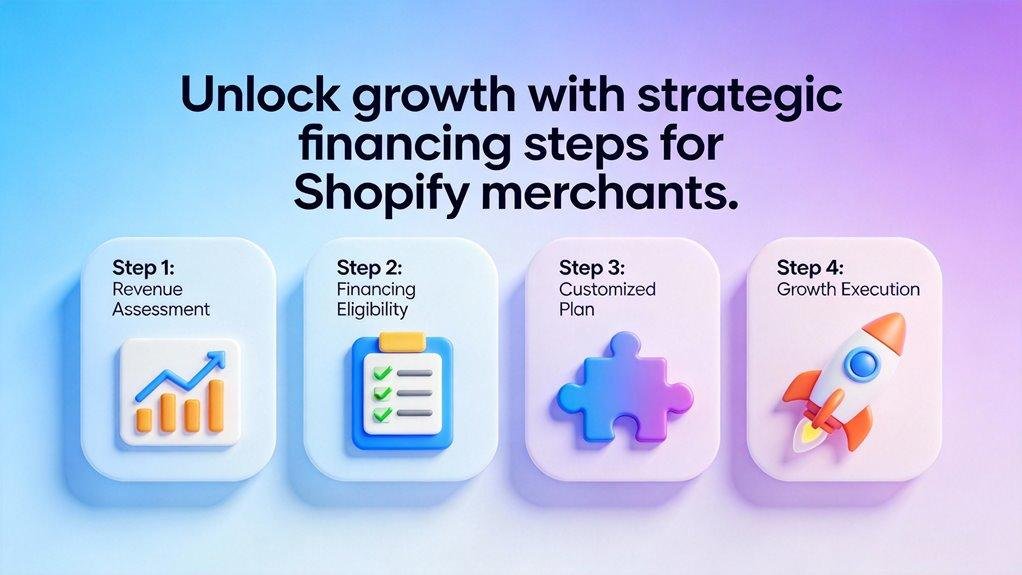
Let’s focus upon using revenue-based financing to invest in inventory and advertising that bring the highest returns. This approach assists us scale our brand responsibly while rebuilding our financial reputation. Over time, we can shift from relying upon frequent, costly debt to promoting sustainable, long-term growth.
Using RBF To Fund High-ROI Inventory And Ad Spend
Although a 500 credit score might have closed doors with traditional lenders, Revenue Based Financing (RBF) opens new pathways by focusing on your Shopify store’s actual performance.
With RBF, a merchant cash flow advance funds inventory and ad spend that fuel measurable growth. You can allocate capital swiftly and repay as sales come in, aligning costs with cash flow.
Key advantages include:
- Funding from $200 up to $5 million based on sales data
- Repayments tied to daily or monthly revenue, easing cash pressure
- Quick deposit within 2-5 business periods for swift inventory or marketing enhancements
- No credit checks—eligibility hinges on Shopify’s AI evaluation of your store’s health
This strategic funding turns your proven sales engine into scalable growth capital.
Scaling Your Brand While Rebuilding Your Financial Reputation
When rebuilding your financial reputation while scaling your Shopify brand, it is crucial to focus on transparent growth strategies that reinforce trust with customers and partners.
Leveraging high-growth Shopify funding means more than just capital, it demands a live ledger showcasing your real-time revenue health. We recommend integrating brand monitoring tools and customer surveys to identify and fix pain points quickly, maintaining a loyal customer base.
Building social proof through genuine reviews and influencer partnerships further strengthens your market position. Transparency measures like clear shipping policies and secure payment options reassure buyers and reduce friction.
Transitioning From High-Frequency Debt To Sustainable Growth
Scaling your Shopify brand while rebuilding financial reputation sets the foundation for more disciplined growth.
Revenue-based financing offers us a clear path from high-frequency debt cycles to sustainable scalability. By aligning repayments with sales performance, we reduce financial stress during slower periods and accelerate debt payoff when sales surge.
This flexible model supports smarter capital use, encouraging consistent revenue growth without traditional credit obstacles.
Key strategic steps include:
- Leveraging flexible repayment tied directly to daily sales
- Avoiding fixed monthly dues to ease cash flow management
- Using Shopify’s live sales data to qualify swiftly for funding
- Building creditworthiness through transparent, successful repayment
Together, we reshape short-term debt burdens into strategic investments that fuel long-term growth.
Connecting Your Digital Ledger For Instant Liquidity
Connecting your digital ledger takes just five minutes and opens the door to instant liquidity. By linking your Shopify store through a simple API integration, we gain immediate access to real-time sales and expense data. This quick setup lets us verify your store’s performance instantly and release the financing you need without delay. Additionally, revenue-based financing can be a great option for businesses looking to drive sustainable growth without losing equity.
The 5-Minute API Integration Process
Let’s plunge into the 5-minute API integration process that rapidly turns your Shopify store into a live ledger for instant liquidity. This fluid setup is key for merchants seeking Shopify capital alternatives with a 500 credit challenge. Here’s how we do it:
- Connect your Shopify Store Credit API to sync credit allocation and tracking instantly.
- Link your checkout and customer accounts to enable credit redemption at purchase.
- Integrate with revenue-based financing platforms like Softloans for automatic repayment deductions.
- Use real-time sales and marketing data to reveal quick, transparent funding offers.
This optimized connection utilizes your current operations as collateral, bypassing outdated credit checks. By embracing this innovation, we change your Shopify store into an energetic financial engine ready to fuel growth immediately.
Frequently Asked Questions
How Does Agentic AI Protect My Shopify Store Data Privacy?
We guarantee Agentic AI safeguards your Shopify store data privacy by enforcing real-time intent detection, requiring explicit user confirmations, adhering to PCI DSS and GDPR standards, and maintaining human oversight to prevent unauthorized access or misuse while nurturing innovation.
Can Revenue Based Financing Impact My Existing Merchant Relationships?
We believe revenue based financing strengthens your merchant relationships by fueling growth without fixed payments. Sharing transparent, performance-driven data builds trust, showing partners you’re committed toward innovation and long-term success alongside them, not bound by old credit limits.
What Happens if My Monthly GMV Declines Unexpectedly?
If your monthly GMV dips unexpectedly, we’ll adjust repayment terms for keeping your operations smooth. By monitoring data closely, we innovate solutions that sustain growth, preventing strain and turning challenges into fresh opportunities for your business.
Are There Specific Shopify App Integrations Required for RBF Eligibility?
We don’t need specific Shopify apps for RBF eligibility. What truly matters is connecting your store for validate revenue, letting lenders assess your sales history and growth directly through API integration—speeding your path toward smart, data-driven capital.
How Soon After Approval Can I Access Funded Capital?
Once approved, we typically access funded capital within 1-3 business periods, sometimes as quick as two. By integrating our Shopify API, we release near-instant funding—turning approval into immediate growth fuel for our store.
